

El software EMR de gastroenterología facilita la elaboración de informes de endoscopia y ofrece plantillas específicas para gastroenterología, lo que permite a tu equipo centrarse en mejorar el rendimiento de los procedimientos. Documentar las exploraciones e integrar los resultados de laboratorio puede ser complicado, pero contar con el soporte adecuado puede mejorar la precisión y reducir el tiempo dedicado a las tareas administrativas.
En este artículo, comparo y analizo las mejores herramientas de software EMR de gastroenterología para ayudarte a tomar una decisión de compra.
Por qué confiar en nuestras recomendaciones de software
6,700+
Reviews
20
Industry experts
16+
Evaluation factors
14
Years
Nuestro equipo lleva probando y evaluando software desde 2012. Como líderes de centros médicos, sabemos lo difícil —y lo importante— que es elegir el software adecuado.
Para esta guía, evaluamos las herramientas mediante pruebas prácticas e investigación independiente, puntuando las herramientas según nuestros criterios de selección.
Nuestras reseñas reflejan nuestro criterio editorial humano, no un discurso de ventas.
Tabla comparativa: software EMR de gastroenterología
Esta tabla comparativa resume los detalles de precios de mis principales selecciones de software EMR de gastroenterología.
| Tool | Best For | Trial Info | Price | ||
|---|---|---|---|---|---|
| 1 | El mejor por su sólido soporte móvil | Demostración gratuita disponible | $429/usuario/mes | Website | |
| 2 | Ideal para sistemas de salud a gran escala | Precios a consultar | Website | ||
| 3 | Ideal por sus capacidades de análisis de datos | Demostración gratuita disponible | $449/usuario/mes | Website | |
| 4 | Ideal para la gestión integral de flujos de trabajo | Demostración gratuita disponible | Precios bajo solicitud | Website | |
| 5 | La mejor opción para la facturación y la automatización de la vigilancia en gastroenterología | Demostración gratuita disponible | Desde $229/usuario/mes | Website | |
| 6 | Ideal para consultas multiespecialidad | Demostración gratuita disponible | Precios bajo solicitud | Website | |
| 7 | La mejor opción para la documentación de endoscopias basada en IA | Demostración gratuita disponible | Precios bajo solicitud | Website | |
| 8 | La mejor opción para la codificación de GI y los recordatorios vinculados a patología | Demostración gratuita disponible | Desde 200 $ por profesional con capacidad de prescribir al mes | Website | |
| 9 | La mejor para soluciones flexibles y escalables | Demo gratis disponible | $299/usuario/mes | Website |


Análisis de los mejores programas EMR de gastroenterología
A continuación, encontrarás mis resúmenes detallados de los mejores programas EMR de gastroenterología que llegaron a mi lista de opciones. Mis análisis ofrecen una visión detallada de las funciones principales, ventajas y desventajas, integraciones y casos de uso ideales de cada herramienta para ayudarte a encontrar la más adecuada para ti.
 El mejor por su sólido soporte móvil
- Demostración gratuita disponible
- $429/usuario/mes
Visit WebsiteCustomer Rating:4.4/5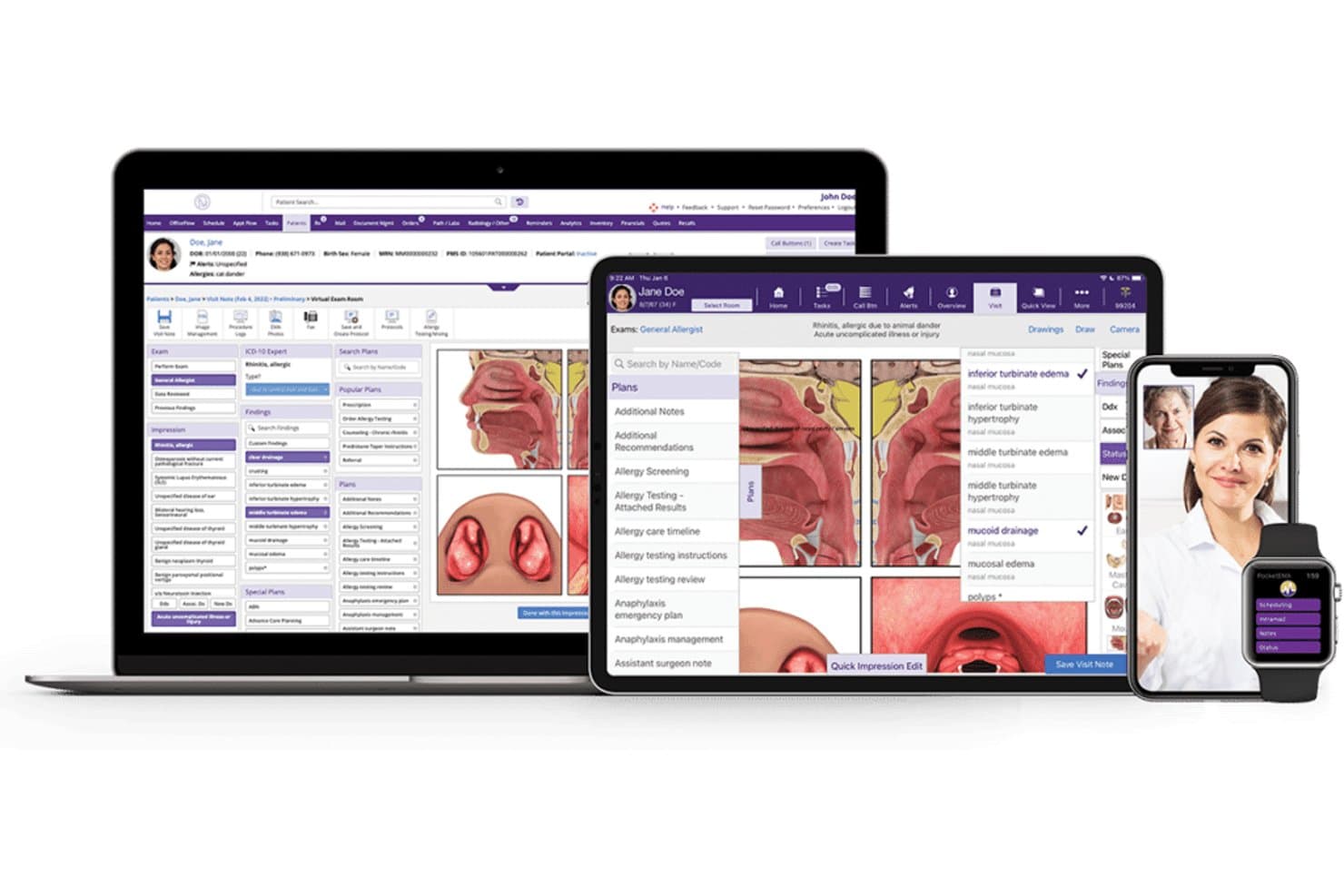
Esta es la interfaz del software EMR de ModMed en vista de escritorio y móvil. ModMed, también conocido como Modernizing Medicine, es una plataforma de atención médica integrada que combina historias clínicas electrónicas (EHR) específicas de especialidad, gestión de consultas, telesalud, compromiso del paciente y herramientas móviles.
¿Para quién es mejor ModMed?
ModMed funciona bien para consultorios médicos especializados que necesitan acceso móvil a flujos de trabajo clínicos y administrativos desde teléfonos inteligentes y tabletas.
Por qué elegí ModMed
Elegí ModMed porque sus capacidades móviles ayudan a los profesionales a acceder a la información del paciente, revisar agendas, documentar consultas y gestionar tareas clínicas estando lejos de una computadora de escritorio. Sus flujos de trabajo enfocados en especialidades también conectan el registro móvil con la gestión de consultas, telemedicina y herramientas de compromiso del paciente. Esto convierte a ModMed en una opción sólida para prácticas que desean una plataforma de atención médica integrada con funcionalidad móvil confiable.
Características clave de ModMed
- Acceso móvil a la EHR: Revisa las historias clínicas, documenta visitas, gestiona agendas y completa tareas clínicas desde dispositivos móviles compatibles.
- Flujos de trabajo específicos para especialidades: Usa plantillas y herramientas clínicas diseñadas en torno a las necesidades de diferentes especialidades médicas.
- Gestión de la consulta: Administra la programación de citas, la facturación, la información del paciente y las tareas administrativas desde una sola plataforma.
- Telesalud integrada: Realiza visitas virtuales manteniendo la documentación e información del paciente conectada con la EHR.
Integraciones de ModMed
ModMed conecta su EHR con sistemas de gestión de consultas, telemedicina, gestión del ciclo de ingresos, analítica y herramientas de participación del paciente. También admite conexiones con laboratorios, farmacias, cámaras de compensación y otros servicios de salud para optimizar el intercambio de datos clínicos y administrativos.
Pros and Cons
Pros:
- Excelente soporte móvil para acceso en movimiento
- Se integra con una variedad de herramientas y servicios médicos
- Interfaz intuitiva y fácil de usar
Cons:
- Nivel de precios más alto en comparación con algunos competidores
- Opciones de personalización limitadas
Learn more about ModMed: 2Ideal para sistemas de salud a gran escala
Epic
- Precios a consultar
Visit WebsiteCustomer Rating:4.2/5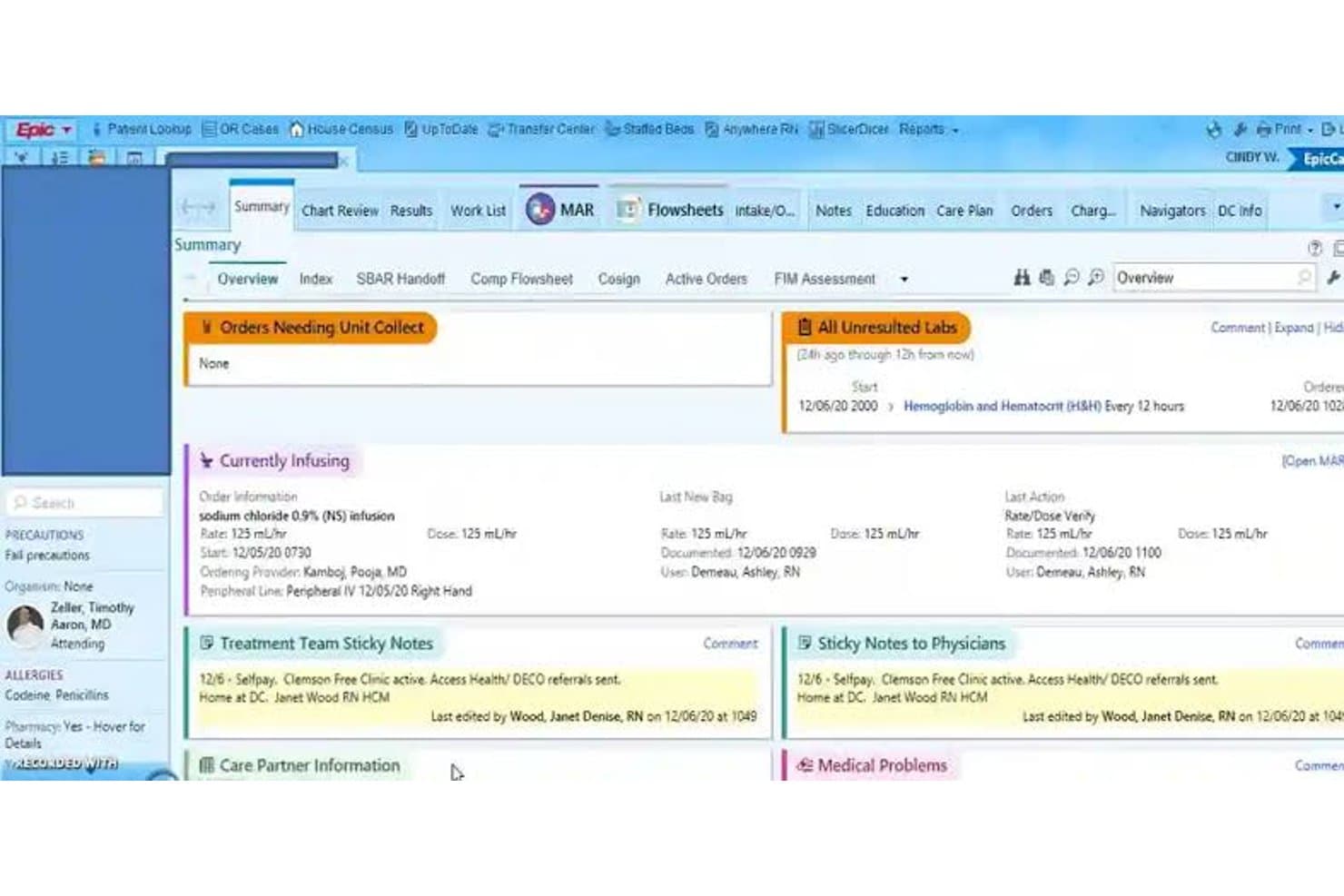
Panel de resumen de atención al paciente de Epic Epic es una plataforma integral de software para el sector sanitario que combina historias clínicas electrónicas, compromiso del paciente, telemedicina, herramientas para el ciclo de ingresos y flujos de trabajo clínicos a nivel empresarial.
¿Para Quién es Mejor Epic?
Epic funciona bien para grandes hospitales, centros médicos académicos y sistemas de salud con múltiples sedes que necesitan una plataforma escalable para gestionar flujos de trabajo clínicos, operativos y de atención al paciente complejos.
Por Qué Elegí Epic
Elegí Epic porque está diseñado para respaldar organizaciones sanitarias grandes y muy complejas. Su amplia gama de funcionalidades conecta la documentación clínica, la programación, la facturación, la comunicación con el paciente, los análisis y la coordinación de la atención entre departamentos e instalaciones. La escalabilidad e interoperabilidad de Epic también lo convierten en una opción sólida para sistemas de salud que necesitan una plataforma unificada capaz de apoyar redes de proveedores extensas y grandes poblaciones de pacientes.
Características Clave de Epic
- Historia clínica electrónica empresarial: Gestiona la documentación clínica, órdenes, medicamentos, historiales de pacientes y planes de atención en múltiples departamentos.
- Compromiso del paciente: Ofrece a los pacientes acceso a citas, resultados de pruebas, mensajes, facturas y servicios de telemedicina a través de herramientas digitales.
- Gestión de la práctica y del ciclo de ingresos: Apoya la programación, reclamaciones, facturación, pagos y flujos de trabajo administrativos en toda la organización.
- Capacidades de telemedicina: Permite visitas virtuales y atención remota manteniendo la documentación conectada al expediente del paciente.
Integraciones de Epic
Epic admite la interoperabilidad con laboratorios, farmacias, sistemas de imágenes, intercambios de información de salud, dispositivos médicos y aplicaciones sanitarias de terceros. Sus herramientas de integración ayudan a los grandes sistemas de salud a intercambiar datos clínicos y administrativos entre departamentos internos y redes de atención externas.
Pros and Cons
Pros:
- Altamente escalable para grandes sistemas de salud
- Amplia suite de funciones
- Gran interoperabilidad e integraciones
Cons:
- Los precios y los términos del contrato pueden ser complejos debido a la personalización
- Implementar el sistema en una organización grande puede ser un desafío
Learn more about Epic: Ideal por sus capacidades de análisis de datos
- Demostración gratuita disponible
- $449/usuario/mes
Visit WebsiteCustomer Rating:3.4/5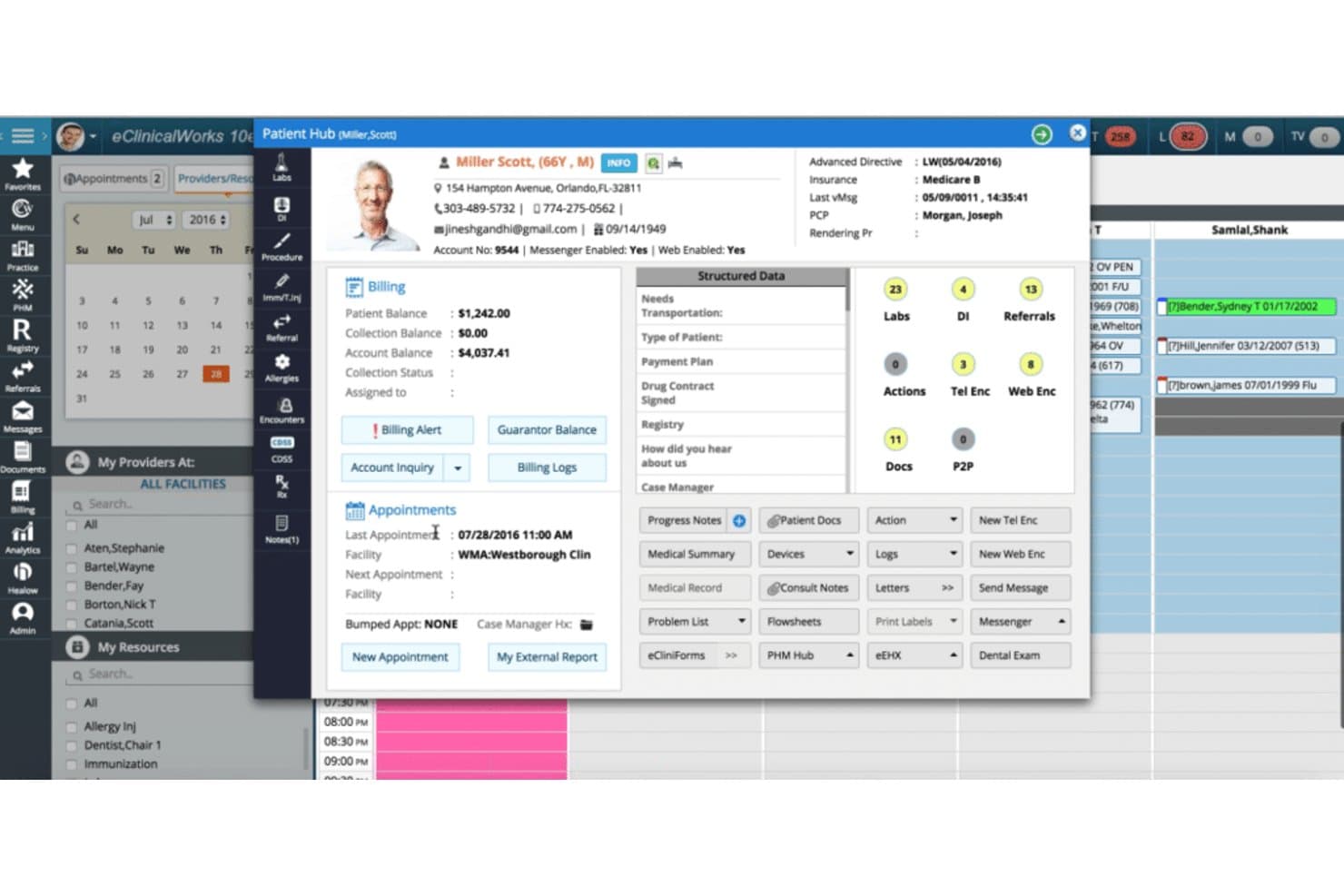
El centro del paciente de eClinicalWorks proporciona toda la información necesaria para ofrecer una excelente atención al paciente. eClinicalWorks es una plataforma de tecnología de la información en salud que combina registros electrónicos de salud, gestión de consultorios, facturación médica, participación del paciente y herramientas de análisis de datos.
¿Para quién es mejor eClinicalWorks?
eClinicalWorks es ideal para organizaciones de salud que desean utilizar datos clínicos, operativos y financieros para mejorar el rendimiento del consultorio y la atención al paciente.
Por qué elegí eClinicalWorks
Elegí eClinicalWorks porque sus capacidades analíticas ayudan a los consultorios a supervisar el rendimiento en los flujos de trabajo clínicos y administrativos. Las organizaciones de salud pueden utilizar paneles y herramientas de informes para evaluar los resultados de los pacientes, identificar cuellos de botella operativos, seguir el desempeño del ciclo de ingresos y respaldar decisiones más informadas. Su combinación de análisis, interoperabilidad, EHR y herramientas de facturación lo convierte en una opción sólida para consultorios que desean una plataforma de salud basada en datos.
Características clave de eClinicalWorks
- Paneles de análisis de datos: Supervise el desempeño clínico, financiero y operativo a través de informes centralizados y paneles visuales.
- Registros electrónicos de salud: Gestione historiales de pacientes, documentación clínica, órdenes, recetas y planes de atención.
- Gestión de consultorios: Administre la agenda, facturación, reclamaciones, registro de pacientes y otros procesos administrativos.
- Herramientas de interoperabilidad: Intercambie información de pacientes con organizaciones de salud conectadas y sistemas externos.
Integraciones de eClinicalWorks
eClinicalWorks permite la conexión con laboratorios, farmacias, sistemas de facturación, servicios de imagenología, centros de compensación y otras plataformas de TI en salud. Estas integraciones ayudan a los consultorios a intercambiar datos clínicos y financieros mientras mantienen historiales de pacientes más completos.
Pros and Cons
Pros:
- Capacidades avanzadas de análisis de datos
- Fuerte interoperabilidad con otros sistemas
- Conjunto completo de herramientas de TI en salud
Cons:
- Curva de aprendizaje pronunciada para nuevos usuarios
- Algunos usuarios reportan que el servicio al cliente podría mejorar
Learn more about eClinicalWorks: Ideal para la gestión integral de flujos de trabajo
- Demostración gratuita disponible
- Precios bajo solicitud
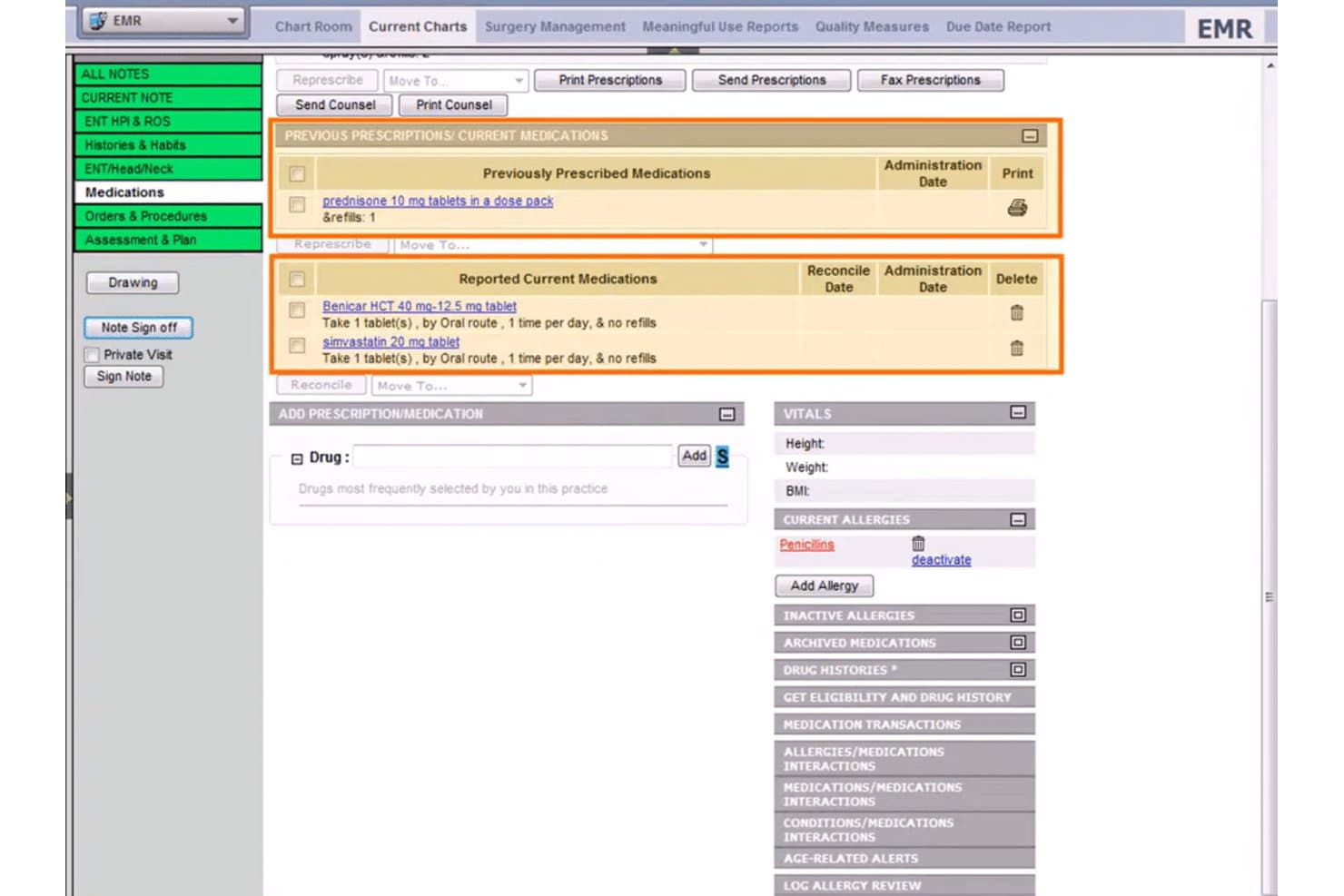
Bienvenido a la pestaña de medicamentos del paciente en WRS Health. WRS Health es una plataforma de historia clínica electrónica y gestión de consultas de gastroenterología basada en la nube que combina documentación clínica específica para gastroenterología, informes de procedimientos, programación y facturación integrada.
¿Para quién es más adecuado WRS Health?
WRS Health es adecuado para consultas de gastroenterología que desean gestionar la documentación clínica, la programación y la facturación dentro de una única plataforma, desde médicos independientes hasta grupos con varias ubicaciones.
Por qué elegí WRS Health
WRS Health ocupa un lugar en mi lista de opciones principales porque integra la documentación clínica, la programación y la facturación en un flujo de trabajo conectado desarrollado específicamente para gastroenterología. Me gusta que la hoja de cargos de gastroenterología complete automáticamente los cargos a medida que se documentan los procedimientos, lo que reduce el retraso entre la documentación y el envío de reclamaciones. La cola de procedimientos integrada guía a los equipos durante las colonoscopias y endoscopias, desde el preoperatorio hasta el posoperatorio, mientras gestiona los formularios de consentimiento y el seguimiento del período global.
Características principales de WRS Health
- Asistente de documentación con IA: Captura los historiales de los pacientes de gastroenterología, incluidos el dolor abdominal, la ERGE y los seguimientos de colonoscopias, y completa automáticamente las plantillas.
- Informes de calidad MIPS: Realiza un seguimiento de medidas específicas de gastroenterología, como la detección del cáncer colorrectal, el control de la EII y la gestión de la hepatitis C, para los informes de cumplimiento.
- Gestión digital del consentimiento: Almacena directamente en la historia clínica del paciente los formularios de consentimiento firmados electrónicamente para colonoscopias, endoscopias y biopsias hepáticas.
- Formularios de admisión de pacientes en línea: Los cuestionarios específicos de gastroenterología, incluidos los formularios de preselección para colonoscopias y los rastreadores de síntomas del SII/EII, se incorporan directamente al expediente del paciente.
Integraciones de WRS Health
WRS Health admite integraciones con Surescripts, Medicity, OptumInsight, EMR Direct phiMail y MDToolBox, además de interfaces bidireccionales de laboratorio. También ofrece conectividad FHIR y EDI para el intercambio de datos personalizado.
Pros and Cons
Pros:
- Las colas de procedimientos de gastroenterología conectan las notas con los cargos
- Las plantillas de gastroenterología prediseñadas agilizan la documentación de procedimientos
- El enrutamiento de faxes entrantes reduce el trabajo de gestión de resultados
Cons:
- Los flujos de trabajo de los centros de cirugía ambulatoria y la anestesia siguen sin estar documentados
- El registro de pacientes puede crear cuentas duplicadas
Learn more about WRS Health: La mejor opción para la facturación y la automatización de la vigilancia en gastroenterología
- Demostración gratuita disponible
- Desde $229/usuario/mes
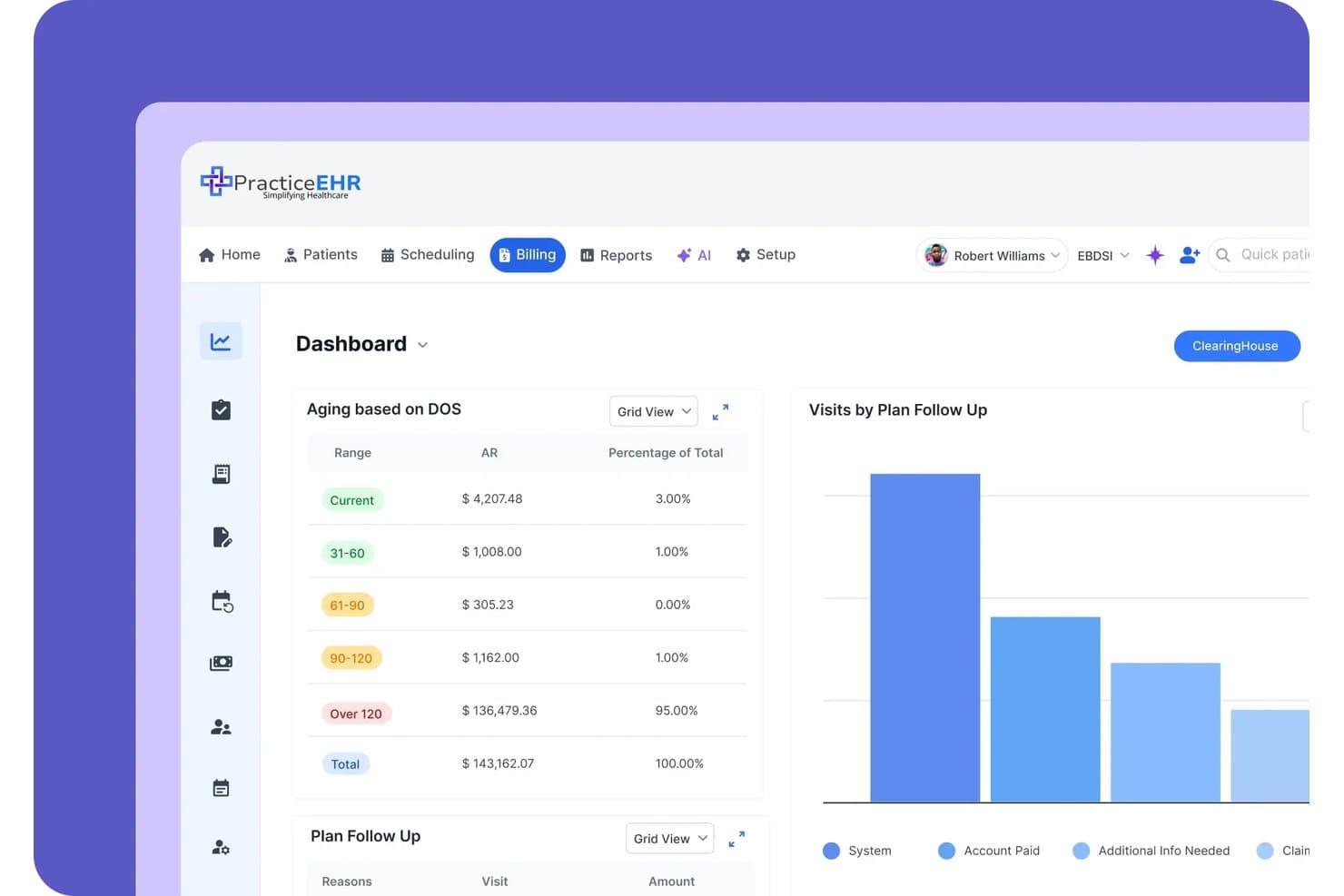
Practice EHR realiza un seguimiento de las cuentas por cobrar vencidas y de los datos de seguimiento del plan en un único panel de facturación. Practice EHR es una plataforma de historias clínicas electrónicas, gestión de consultorios y gestión del ciclo de ingresos basada en la nube, creada para consultorios independientes, con flujos de trabajo específicos de gastroenterología que abarcan la documentación clínica, los recordatorios de vigilancia vinculados a la patología, la facturación de ASC y la codificación y edición de reclamaciones asistidas por IA.
¿Para quién es más adecuada Practice EHR?
Practice EHR es adecuada para consultorios independientes de gastroenterología que desean automatización de facturación y flujos de trabajo de recordatorios de vigilancia sin administrar sistemas separados de RCM o PM.
Por qué elegí Practice EHR
Practice EHR ocupa un lugar en mi lista de opciones principales porque su automatización de facturación está realmente diseñada en torno a los flujos de trabajo de gastroenterología, en lugar de adaptarse a partir de una plantilla genérica. Me gusta que el editor de reclamaciones con IA revise las reclamaciones línea por línea y señale el riesgo de denegación antes del envío, algo importante al facturar casos complejos de ASC con componentes de centro y profesionales. Los resultados de patología se vinculan directamente a los casos de endoscopia y activan automáticamente recordatorios de vigilancia a los 3, 5 o 10 años, lo que reduce el trabajo de seguimiento manual que sobrecarga a los consultorios independientes de gastroenterología.
Características principales de Practice EHR
- Escriba de IA: Transcribe las consultas de los pacientes en más de 20 idiomas y redacta automáticamente notas SOAP con códigos ICD/CPT sugeridos para que el proveedor los revise.
- Informes para el registro GIQuIC: Envía automáticamente datos de calidad, incluida la tasa de detección de adenomas, al registro de calidad de gastroenterología para el cumplimiento de MIPS.
- Seguimiento de autorizaciones previas de biológicos: Supervisa el estado de las autorizaciones previas y los límites de visitas para biológicos contra la EII como Humira, Stelara y Entyvio.
- Predicción de inasistencias mediante IA: Asigna una puntuación a cada cita según el riesgo de cancelación para que el personal de recepción pueda priorizar el contacto antes de que se desaproveche un espacio para una endoscopia.
Integraciones de Practice EHR
Practice EHR se integra con LabCorp, Quest, Kno2, Carequality, TEFCA, Surescripts y redactores de informes de endoscopia no especificados. Ofrece una API FHIR R4 para integraciones personalizadas y admite conexiones HL7 con centros de diagnóstico por imágenes.
Pros and Cons
Pros:
- Automatiza los recordatorios de vigilancia basados en la patología
- Admite facturación dual de ASC y profesional
- La edición de reclamaciones mediante IA señala los riesgos de denegación
Cons:
- La documentación estructurada de procedimientos sigue estando poco desarrollada
- La configuración de plantillas requiere información detallada del personal
Learn more about Practice EHR: Ideal para consultas multiespecialidad
- Demostración gratuita disponible
- Precios bajo solicitud
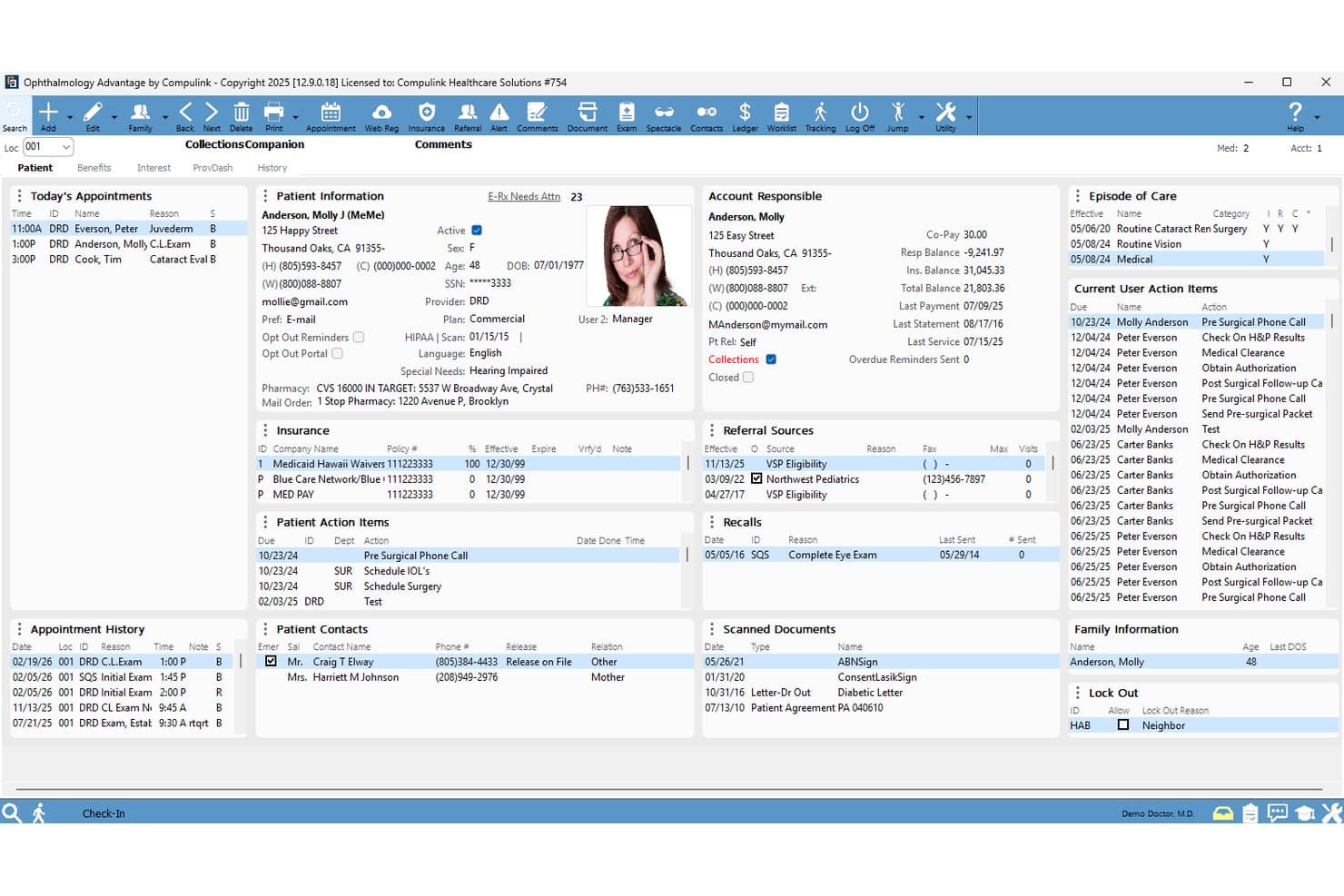
Esta es una captura de pantalla del portal del paciente dentro de Compulink Healthcare Solutions. Los registros de los pacientes, como el diagnóstico y el historial médico, se almacenan aquí de forma segura para proporcionar no solo soluciones de atención de gastroenterología. Compulink Healthcare Solutions es una plataforma de HCE centrada en especialidades que combina documentación clínica específica de gastroenterología, generación de informes de procedimientos, programación y herramientas integradas de gestión del ciclo de ingresos en una sola base de datos.
¿Para quién es más adecuada Compulink Healthcare Solutions?
Compulink es una opción excelente para las consultas de gastroenterología que también gestionan un centro quirúrgico ambulatorio y necesitan un único sistema para administrar la programación de la consulta, la documentación de procedimientos y la facturación en ambos entornos.
Por qué elegí Compulink Healthcare Solutions
Elegí Compulink Healthcare Solutions porque es una de las pocas plataformas de HCE para gastroenterología que realmente gestiona tanto una consulta como un centro quirúrgico ambulatorio desde una sola base de datos. Me gusta especialmente cómo su programación combinada de la consulta y el centro quirúrgico ambulatorio coordina las salas de procedimientos, la disponibilidad de anestesia y la capacidad de recuperación en una sola vista, para que nada se pase por alto durante una jornada intensa de endoscopias. El Motor de estándar de atención también señala la subcodificación vinculada directamente a los hallazgos documentados, algo que considero valioso para las consultas de gastroenterología, donde la selección de códigos CPT y modificadores puede determinar el éxito o el fracaso del reembolso.
Características principales de Compulink Healthcare Solutions
- Escriba ambiental de IA: Quantum AI escucha las consultas de los pacientes y asigna la documentación a más de 350 campos discretos de HCE en 18 idiomas y en tiempo real.
- Motor de estándar de atención: Señala la subcodificación y los servicios no facturados al vincular las reglas de atención con los motivos de las citas y los hallazgos documentados antes y después de la consulta.
- Facturación externalizada de AdvantageRCM: Servicio opcional que pone en contacto a su consulta con un gestor de facturación dedicado con sede en EE. UU., quien gestiona denegaciones, apelaciones e informes bajo demanda.
- Informes MIPS/MACRA certificados por la ONC: El seguimiento integrado de las medidas de calidad específicas de gastroenterología incluye ADR, el seguimiento de las pruebas de detección del cáncer colorrectal y los flujos de trabajo de informes del centro quirúrgico ambulatorio.
Integraciones de Compulink Healthcare Solutions
Entre las integraciones documentadas se incluyen Surescripts para la prescripción electrónica y Quantum AI para la transcripción ambiental. Compulink también ofrece una API FHIR que utiliza el estándar US Core 6.1.0 y conectividad con cámaras de compensación para los flujos de trabajo de facturación.
Pros and Cons
Pros:
- Programación combinada de la consulta y el centro quirúrgico ambulatorio
- Diseños personalizables de registro clínico en una sola pantalla
- Codificación y captura de cargos vinculadas a los hallazgos
Cons:
- Los comentarios específicos de usuarios de gastroenterología siguen siendo escasos
- Las actualizaciones pueden interrumpir los flujos de trabajo del programador
Learn more about Compulink Healthcare Solutions: La mejor opción para la documentación de endoscopias basada en IA
- Demostración gratuita disponible
- Precios bajo solicitud
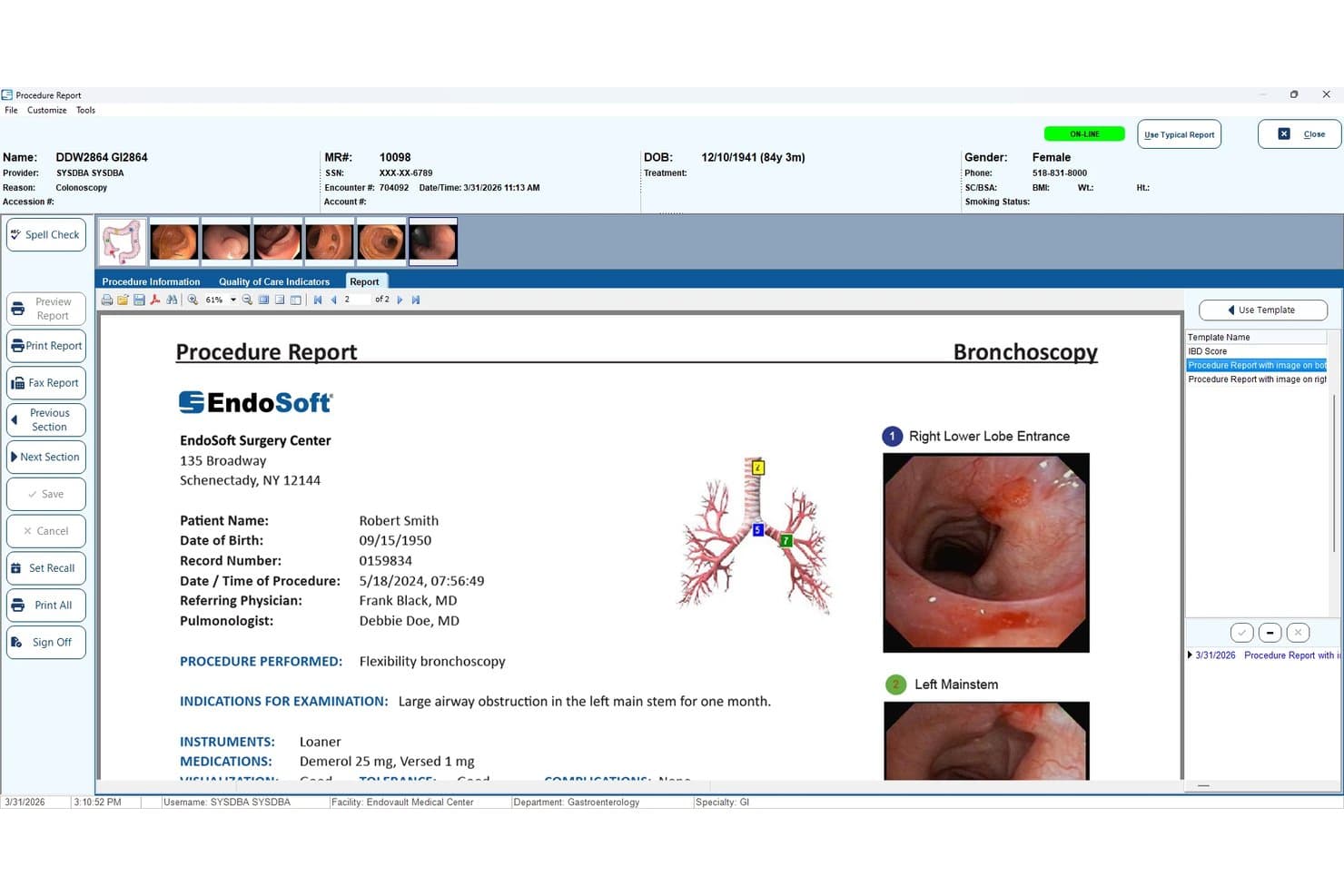
EndoSoft genera informes de procedimientos de broncoscopia con imágenes integradas. EndoVault® de EndoSoft es un EHR nativo para gastroenterología que combina documentación de voz asistida por IA, informes estructurados de procedimientos de endoscopia, captura de imágenes y vídeo, e informes para registros de calidad destinados a consultas de gastroenterología y centros quirúrgicos ambulatorios (ASC).
¿Para quién es más adecuado EndoSoft?
EndoSoft es adecuado para médicos especialistas en gastroenterología y administradores de consultas en centros enfocados en endoscopia o ASC que necesitan documentación de procedimientos asistida por IA e informes para registros de calidad integrados en su EHR.
Por qué elegí EndoSoft
He incluido EndoSoft entre mis principales opciones porque su documentación de voz con Argus AI está realmente diseñada para la sala de endoscopia, en lugar de añadirse como una ocurrencia posterior. Durante una colonoscopia, el procesamiento del lenguaje natural de Argus captura lo que dice el médico y lo clasifica directamente en los campos correctos del informe, rellenando automáticamente métricas de calidad como la tasa de detección de adenomas (ADR), el tiempo de retirada y las puntuaciones de preparación intestinal, sin necesidad de introducir los datos manualmente. También me gusta que las etiquetas de los recipientes de muestras se impriman en tiempo real mediante un comando de voz, eliminando un paso que normalmente ralentiza la elaboración de la historia clínica posterior al procedimiento.
Características principales de EndoSoft
- Informes para registros de calidad certificados por GIQuIC: Extrae automáticamente los datos de los procedimientos para las presentaciones a GIQuIC, MIPS/MACRA y CDC sin introducir los datos manualmente.
- Captura de imágenes y vídeo HD de múltiples fuentes: Graba hasta cuatro fuentes de vídeo simultáneas durante procedimientos complejos, con PACS integrado y un visor DICOM para la gestión de imágenes.
- Interfaz de patología HL7 con cálculo automatizado de ADR: Incorpora los resultados de patología directamente en EndoVault y calcula automáticamente las tasas de detección de adenomas y de adenomas serrados sésiles.
- Migración de datos de sistemas heredados: Transfiere historias clínicas, imágenes, informes, métricas de calidad y datos de facturación de EndoWorks, EndoPRO y Endobase sin pérdida de datos.
Integraciones de EndoSoft
EndoSoft se integra con Epic, Oracle Cerner, VA CPRS y VistA, además de con los equipos de endoscopia de Olympus, Pentax y Fuji. Es compatible con HL7, FHIR, DICOM, IHE y una API para conexiones personalizadas.
Pros and Cons
Pros:
- La captura de voz mediante IA estructura los informes de procedimientos
- Las métricas de calidad automatizadas facilitan los informes de gastroenterología
- Los enlaces de imágenes independientes del equipo se conectan directamente con los informes
Cons:
- La configuración puede resultar difícil para organizaciones pequeñas
- Los usuarios informan de errores e interfaces obsoletas
Learn more about EndoSoft: La mejor opción para la codificación de GI y los recordatorios vinculados a patología
- Demostración gratuita disponible
- Desde 200 $ por profesional con capacidad de prescribir al mes
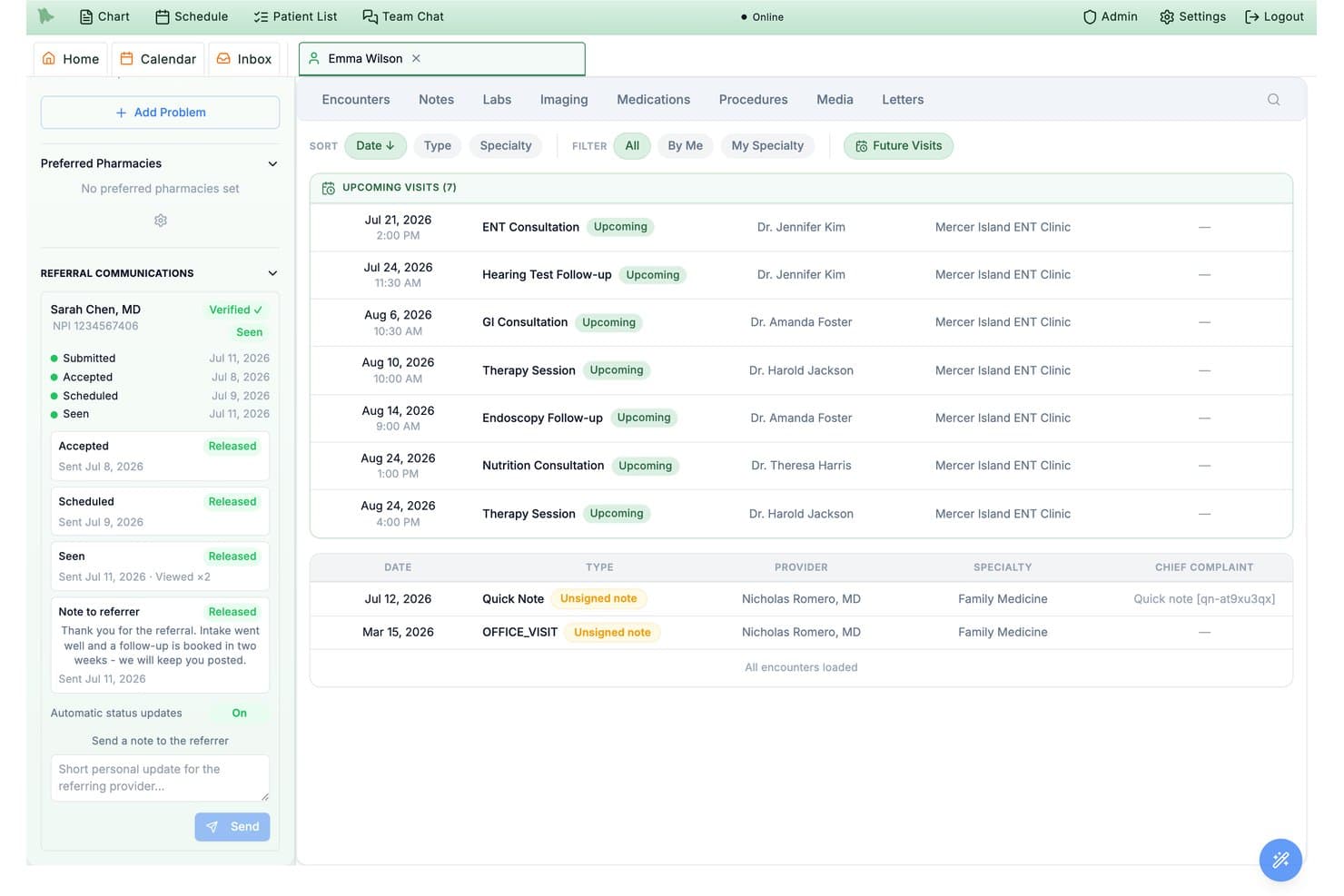
Hero EMR realiza un seguimiento del estado de las comunicaciones de derivación y de las próximas consultas con especialistas. Hero EMR es una plataforma EMR centrada en gastroenterología que combina documentación clínica específica de GI, informes estructurados de endoscopias, recordatorios de vigilancia vinculados a patología y soporte de codificación especializada.
¿Para quién es más adecuado Hero EMR?
Hero EMR es una opción sólida para consultorios independientes de GI donde el personal de facturación necesita soporte de codificación preciso y los médicos quieren una vigilancia vinculada a patología integrada directamente en su flujo de trabajo.
Por qué elegí Hero EMR
He incluido Hero EMR entre mis opciones principales porque su lógica de codificación para GI va más allá que la de la mayoría de las plataformas que he visto. La Inteligencia de codificación inteligente cambia automáticamente una colonoscopia de cribado a un código terapéutico cuando el procedimiento se convierte, y después aplica el modificador PT o 33 correcto sin necesidad de realizar búsquedas manuales. También me gusta que los resultados de patología se relacionen directamente con los hallazgos de la colonoscopia, con intervalos de vigilancia calculados según las directrices del Grupo de Trabajo de Múltiples Sociedades de EE. UU. y alertas de recordatorio enviadas a todo el consultorio.
Características principales de Hero EMR
- Escriba de IA con puntuación de enfermedades: Redacta notas estructuradas de consultas de GI y calcula automáticamente puntuaciones de actividad de la enfermedad, como Mayo y Harvey-Bradshaw, para los seguimientos de IBD y hepatología.
- Panel de calidad en tiempo real: Realiza un seguimiento de la tasa de detección de adenomas (ADR), la tasa de detección de lesiones serradas, el tiempo de retirada y la adecuación de la preparación, comparándolos con los parámetros de referencia del registro GIQuIC y los objetivos de ASGE-ACG.
- Frases rápidas de GI: Los atajos escritos como
.colonoscopy,.ibdscoremayoy.liverpanelinsertan plantillas estructuradas y calculadoras directamente en el editor de notas. - Seguimiento de frascos de muestras: Asigna cada pólipo a un frasco de muestra y lo rastrea desde el procedimiento hasta el informe de patología correspondiente.
Integraciones de Hero EMR
Hero EMR documenta integraciones con Quest, Epic FHIR, Rayus, Surescripts, Zoom, Office Ally, Availity, Stedi, Optum y UHC.
Pros and Cons
Pros:
- La codificación de GI gestiona la conversión de cribado a terapéutica
- Los hallazgos de patología activan recordatorios de vigilancia
- Los informes estructurados capturan detalles a nivel de pólipo
Cons:
- Las capacidades de GI carecen de validación independiente por parte de usuarios
- La captura del alcance y la facturación de ASC no están documentadas
Learn more about Hero EMR: La mejor para soluciones flexibles y escalables
- Demo gratis disponible
- $299/usuario/mes
Visit WebsiteCustomer Rating:5/5
La página principal de NextGen proporciona fácil acceso a enlaces importantes, información de perfil y las noticias más recientes. NextGen es una plataforma integral de tecnología para el sector salud que ofrece soluciones como registros electrónicos de salud (EHR), gestión de consultas y servicios de telemedicina. Su flexibilidad y escalabilidad la convierten en una opción ideal para consultorios en crecimiento que necesitan un sistema capaz de evolucionar junto con sus necesidades cambiantes.
Por qué elegí NextGen: Elegí NextGen por su excepcional adaptabilidad y escalabilidad. En un sector donde el cambio es la única constante, disponer de una herramienta flexible que crezca junto a tu consultorio es fundamental. NextGen se distingue por su capacidad para adaptarse a distintos tamaños y tipos de prácticas médicas, convirtiéndose en la mejor opción para quienes buscan una solución flexible y escalable.
Funciones e integraciones destacadas:
Entre las numerosas características de NextGen, se destacan su sólido EHR, la gestión integral del consultorio y servicios de telemedicina flexibles. La plataforma se integra eficazmente con muchos otros sistemas y herramientas médicas, simplificando los flujos de trabajo y mejorando la atención al paciente.
Pros and Cons
Pros:
- Muy flexible y escalable, se adapta al tamaño del consultorio
- Conjunto de funciones completo, incluyendo EHR, gestión de consultas y telemedicina
- Buena integración con otros sistemas y herramientas
Cons:
- Algunos usuarios reportan una curva de aprendizaje pronunciada
- La configuración inicial puede ser compleja
- La interfaz de usuario podría ser más intuitiva
Learn more about NextGEN:
Cómo evalúo el software EMR de gastroenterología
Divido mi evaluación en tres partes y doy mayor peso a la funcionalidad principal: documentar las consultas gastroenterológicas, registrar los hallazgos de endoscopia y vincular los procedimientos con la facturación. Después, busco características destacadas, como la correspondencia con los resultados de patología y la vinculación de las biopsias con los procedimientos. Por último, considero la asistencia, la incorporación, los precios y la adaptación a varias ubicaciones.
Funcionalidad principal (elementos básicos de esta lista)
Al seleccionar herramientas para mi lista, califico cada una en una escala de 0 (no ofrece la funcionalidad) a 5 (sobresale en esta área) para cada funcionalidad principal que se indica a continuación. Luego convierto el total en un porcentaje para ayudar a evaluar la adaptación general de cada herramienta, con un peso adicional para cualquier funcionalidad que haya considerado esencial.
- Documentación gastroenterológica (esencial): Busco plantillas estructuradas que abarquen afecciones gastroenterológicas, tipos de consulta, terminología y necesidades de documentación recurrentes.
- Informes de endoscopia (esencial): Evalúo informes estructurados para procedimientos, hallazgos, imágenes, detalles de biopsias y resultados de seguimiento vinculados.
- Historias clínicas de los pacientes: Compruebo si los equipos pueden revisar historiales longitudinales, medicamentos, alergias, derivaciones y registros de consultas en una sola historia clínica.
- Asistencia para codificación y facturación: Evalúo los flujos de trabajo de codificación de procedimientos y diagnósticos para servicios gastroenterológicos habituales, la revisión de reclamaciones y la transferencia a facturación.
- Resultados de laboratorio y patología: Busco resultados vinculados al paciente y al procedimiento correctos, con flujos de revisión claros para los profesionales clínicos.
- Programación y coordinación de la atención: Evalúo la programación vinculada a los registros de los pacientes, los procedimientos, las instrucciones de preparación y las citas de seguimiento.
Una vez que tengo una lista de herramientas que cumplen los criterios, considero qué distingue a cada plataforma.
Factores diferenciadores (qué distingue a los proveedores)
Así es como comparo y contrasto a los distintos proveedores:
Características destacadas
Compruebo si una plataforma puede relacionar automáticamente las muestras de biopsia con los resultados de patología recibidos y vincularlos de nuevo con la nota del procedimiento de origen. Sin esa conexión, los profesionales clínicos terminan verificando manualmente los informes de forma cruzada, lo que supone un riesgo real de errores en los días con un gran volumen de endoscopias. También evalúo la integración con los equipos de endoscopia, ya que incorporar directamente las imágenes endoscópicas al informe del procedimiento ahorra tiempo de documentación y mantiene los hallazgos en contexto. La facturación de los centros de cirugía ambulatoria también es importante; busco flujos de trabajo duales que separen claramente los honorarios profesionales de los honorarios del centro.
Más allá de las características
Evalúo cómo gestiona cada proveedor la conectividad con la red de derivaciones, ya que las consultas gastroenterológicas dependen de las derivaciones entrantes para las pruebas de detección de cáncer colorrectal y las consultas. Una plataforma que pueda recibir derivaciones y enviar automáticamente los informes de procedimientos al proveedor remitente ahorra mucho tiempo real de coordinación. También compruebo el costo total de propiedad: algunos proveedores cobran tarifas independientes por los módulos de informes de endoscopia o por las conexiones de laboratorio mediante interfaz, lo que aumenta rápidamente a medida que crece la organización. Por último, es importante la asistencia para los informes de calidad de MIPS/MACRA; busco un seguimiento integrado de las medidas para que el equipo no tenga que recopilar datos manualmente cuando se acerquen las fechas límite de los informes.
Cómo elegir un programa EMR de gastroenterología
Es fácil perderse entre largas listas de funciones y estructuras de precios complejas. Para ayudarte a mantener la atención mientras avanzas en tu proceso particular de selección de software, aquí tienes una lista de factores que debes tener en cuenta:
| Factor | Qué debes considerar |
|---|---|
| FactorEscalabilidad | Qué debes considerar¿Crecerá este software junto con tu consulta? Considera el volumen futuro de pacientes y si la herramienta puede gestionar un aumento sin problemas de rendimiento. |
| FactorIntegraciones | Qué debes considerar¿Se conecta con tus sistemas actuales? Comprueba la compatibilidad con los sistemas de laboratorio, el software de facturación y otras herramientas que utilizas a diario. |
| FactorPersonalización | Qué debes considerar¿Puedes adaptarlo para que se ajuste a tus flujos de trabajo? Busca opciones para personalizar las plantillas y las interfaces de usuario según las necesidades de tu consulta. |
| FactorFacilidad de uso | Qué debes considerar¿La interfaz es intuitiva para tu equipo? Asegúrate de que reduzca el tiempo de formación y permita al personal realizar las tareas de manera eficiente y sin frustraciones. |
| FactorImplementación e incorporación | Qué debes considerar¿Qué tan fluida es la transición? Evalúa el soporte ofrecido durante la configuración, incluidos los materiales de formación y la asistencia para la migración. |
| FactorCoste | Qué debes considerar¿Se ajusta a tu presupuesto? Compara los niveles de precios y considera tanto los costes iniciales como los gastos a largo plazo, como el mantenimiento y las actualizaciones. |
| FactorMedidas de seguridad | Qué debes considerar¿Están protegidos los datos de los pacientes? Verifica el cumplimiento de la HIPAA y otras normativas, y asegúrate de que existan mecanismos de cifrado y controles de acceso. |
| FactorRequisitos de cumplimiento | Qué debes considerar¿Cumple las normas del sector? Comprueba el cumplimiento de las normativas sanitarias pertinentes para evitar problemas legales y garantizar la seguridad de los pacientes. |
¿Qué es el software EMR de gastroenterología?
El software EMR de gastroenterología está diseñado para especialistas en gastroenterología. Incluye plantillas para endoscopias, informes de colonoscopias y seguimiento de la salud digestiva. Esta herramienta simplifica la elaboración de informes y mejora la documentación basada en procedimientos.
Funciones
Al seleccionar software EMR de gastroenterología, presta atención a las siguientes características clave:
- Gestión de historiales de pacientes: Organiza y almacena la información de los pacientes de forma segura, facilitando su acceso a los profesionales sanitarios.
- Programación de citas: Agiliza el proceso de reserva, ayudando a reducir las ausencias y a gestionar el flujo de pacientes de forma eficiente.
- Gestión del cumplimiento normativo: Garantiza el cumplimiento de las normativas sanitarias, protege los datos de los pacientes y evita problemas legales.
- Plantillas personalizables: Permite a las consultas adaptar la documentación a sus necesidades específicas, mejorando la precisión y el flujo de trabajo.
- Análisis de datos: Proporciona información sobre el rendimiento de la consulta y los resultados de los pacientes, ayudando en la toma de decisiones y la estrategia.
- Funciones de telemedicina: Facilita las consultas a distancia, aumentando el acceso a la atención y la comodidad de los pacientes.
- Acceso al portal del paciente: Permite a los pacientes consultar sus historiales médicos y comunicarse con los profesionales sanitarios, mejorando su participación.
- Integración con sistemas de laboratorio: Se conecta con los servicios de laboratorio para intercambiar datos sin interrupciones, mejorando la precisión diagnóstica.
- Cifrado seguro de datos: Protege la información confidencial frente al acceso no autorizado, garantizando la privacidad de los pacientes.
- Herramientas de formación interactivas: Ofrece recursos como vídeos y tutoriales para facilitar el proceso de incorporación de nuevos usuarios.
Ventajas
La implementación de software EMR de gastroenterología proporciona varias ventajas para tu equipo y tu negocio. Estas son algunas de las que puedes esperar:
- Mejora de la atención al paciente: El acceso a historiales y registros de pacientes organizados permite realizar diagnósticos y planes de tratamiento más precisos.
- Eficiencia operativa: Funciones como la programación de citas y el análisis de datos ayudan a agilizar los flujos de trabajo y a gestionar los recursos de forma eficaz.
- Cumplimiento normativo: Las herramientas de gestión del cumplimiento garantizan el cumplimiento de las normativas sanitarias, reduciendo el riesgo de sanciones.
- Mayor participación de los pacientes: Los portales del paciente permiten una mejor comunicación y acceso a la información sanitaria, fomentando relaciones más sólidas entre pacientes y profesionales sanitarios.
- Mayor accesibilidad: Las funciones de telemedicina permiten realizar consultas a distancia, ampliando las opciones de atención para los pacientes.
- Seguridad de los datos: El cifrado seguro de datos protege la información de los pacientes, garantizando la privacidad y la confianza.
- Ahorro de costes: La gestión eficiente de las operaciones de la consulta y la reducción del uso de papel contribuyen a disminuir los costes generales.
Costes y precios
La selección de software EMR de gastroenterología requiere comprender los distintos modelos de precios y planes disponibles. Los costes varían en función de las características, el tamaño del equipo, los complementos y otros factores. La siguiente tabla resume los planes habituales, sus precios medios y las funciones que suelen incluir las soluciones de software EMR de gastroenterología:
Tabla comparativa de planes de software EMR de gastroenterología
| Tipo de plan | Precio medio | Funciones habituales |
|---|---|---|
| Tipo de planPlan gratuito | Precio medio$0 | Funciones habitualesGestión básica de historiales de pacientes, programación de citas y asistencia limitada. |
| Tipo de planPlan personal | Precio medio$20-$50/usuario/mes | Funciones habitualesGestión de historiales de pacientes, programación de citas y gestión del cumplimiento normativo. |
| Tipo de planPlan empresarial | Precio medio$50-$100/usuario/mes | Funciones habitualesPlantillas personalizables, análisis de datos y acceso al portal del paciente. |
| Tipo de planPlan para empresas | Precio medio$100+/usuario/mes | Funciones habitualesSeguridad avanzada de datos, funciones de telemedicina e integración con sistemas de laboratorio. |
Preguntas frecuentes sobre el software EMR de gastroenterología
Estas son algunas respuestas a preguntas frecuentes sobre el software EMR de gastroenterología:
¿Cómo mejora la atención al paciente el software EMR de gastroenterología?
El software EMR de gastroenterología mejora la atención al paciente al garantizar un acceso preciso y puntual a los historiales médicos y los resultados de las pruebas. Permite a su equipo revisar rápidamente los historiales de los pacientes, gestionar los medicamentos y realizar un seguimiento de los resultados del tratamiento. Esto conduce a una toma de decisiones más informada y mejora la calidad general de la atención prestada.
¿Cómo ayudan los sistemas EMR con la facturación y la programación?
Los sistemas EMR agilizan la facturación y la programación al automatizar estos procesos y reducir los errores manuales. Se integran con el software de facturación para garantizar el envío preciso de reclamaciones y proporcionan herramientas para programar citas de forma eficiente. Esto ayuda a su consulta a ahorrar tiempo y a mejorar la gestión del flujo de caja.
¿Puede el software EMR integrarse con otros sistemas sanitarios?
Sí, muchas soluciones EMR de gastroenterología ofrecen funciones de interoperabilidad que permiten la integración con otros sistemas sanitarios. Esto incluye sistemas de laboratorio, centros de diagnóstico por imagen y otras plataformas EHR. La integración garantiza un intercambio de datos fluido, lo que mejora la coordinación y la comunicación entre los distintos proveedores de atención sanitaria.
¿Cuáles son las medidas de seguridad del software EMR de gastroenterología?
El software EMR de gastroenterología suele incluir medidas de seguridad como el cifrado de datos, controles de acceso y auditorías periódicas para proteger la información de los pacientes. Asegúrese de que el software cumpla normativas sanitarias como la HIPAA para proteger los datos confidenciales y mantener la privacidad de los pacientes.
¿Cómo evalúo el coste del software EMR?
Para evaluar el coste del software EMR, tenga en cuenta factores como el modelo de precios, las cuotas de suscripción y cualquier coste adicional por funciones o asistencia. Compare estos costes con los beneficios que proporciona el software para determinar su valor para su consulta. Busque estructuras de precios transparentes para evitar cargos ocultos.