
ChartLogic Testbericht: Vorteile, Nachteile, Funktionen und Preisgestaltung
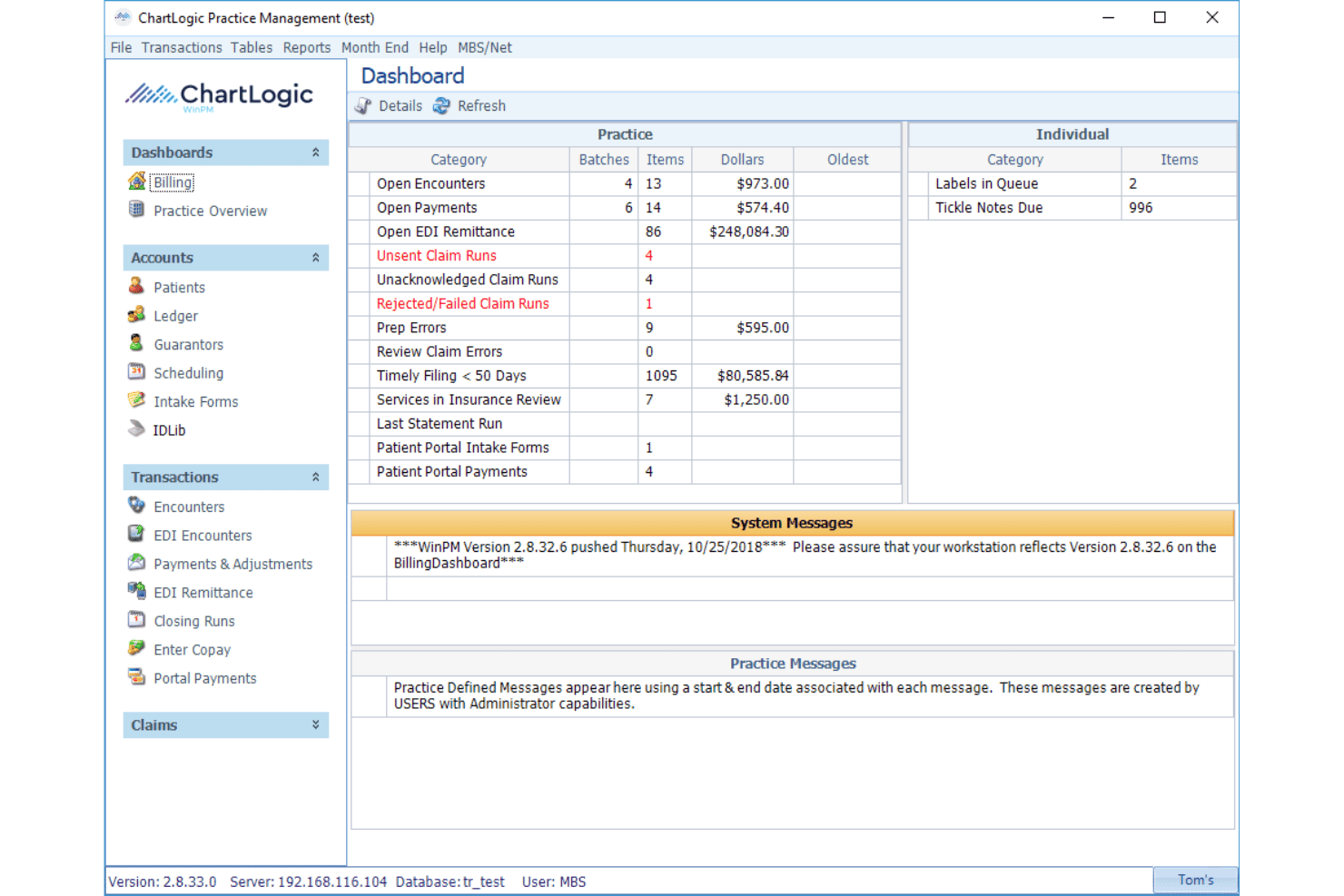
ChartLogic vereint das Praxismanagement in einer Plattform – von Terminplanung und Dokumentation bis hin zu Abrechnung, Umsatzzyklusmanagement und klinischen Workflow-Tools.

Wir bewerten Tools unabhängig und Provisionen helfen, unsere Tests zu finanzieren. Siehe unsere Transparenz richtlinie, unsere Methodik oder schlagen Sie ein Tool vor.
ChartLogic is a medical practice management software built for independent and specialty practices that need integrated scheduling, clinical documentation, and billing in one place. I'd consider it if you run a small-to-mid-sized practice that finds a platform like athenahealth overly complex for your patient volume and operational needs. ChartLogic gives you the core clinical and revenue cycle tools without the enterprise-scale configuration and cost that comes with larger systems.
ChartLogic Evaluation Summary
3.9/5
- Pricing upon request
- Free demo available
Warum Sie unseren Software-Empfehlungen vertrauen können
6,700+
Reviews
20
Industry experts
16+
Evaluation factors
14
Years
Unser Team testet und bewertet Software seit 2012. Als Führungskräfte in der medizinischen Praxis wissen wir selbst, wie schwierig – und wichtig – es ist, die richtige Software auszuwählen.
Für diesen Leitfaden haben wir Tools mithilfe von praktischen Tests und unabhängiger Recherche bewertet und dabei unsere Bewertungskriterien angewendet.
Unsere Bewertungen spiegeln unser menschliches redaktionelles Urteilsvermögen wider, keine Verkaufsstrategie.
ChartLogic Overview
ChartLogic stands out for its specialty-focused templates, intuitive scheduling, and responsive support, making it a strong pick for practices that want tailored workflows without a steep learning curve. Its pricing is competitive for the feature set, though integrations and reporting options can feel limited if you need deep customization.
I’d suggest ChartLogic for small to midsize clinics that value quick onboarding and straightforward billing tools over complex, enterprise-level analytics. If you’re judging by ease of use and practical features, ChartLogic is going to meet most day-to-day needs for busy medical teams.
Pros
- Billing and claims tools reduce rejected claims.
- Specialty-specific templates fit surgical and non-surgical practices.
- Voice dictation speeds up clinical documentation.
Cons
- No transparent pricing listed on the website.
- Some users report slow response to support tickets.
- Reporting features lack advanced customization options.
Is ChartLogic Right For Your Needs?
Who Would be a Good Fit for ChartLogic?
ChartLogic is a strong choice for clinics and departments that need specialty-focused workflows, integrated billing, and fast clinical documentation. Its voice dictation, customizable templates, and claims management tools make it especially useful for practices that want to reduce administrative burden and improve documentation speed.
- Independent PhysiciansVoice dictation and e-prescribing save time for solo providers.
- Billing DepartmentsAutomated claims scrubbing and denial management reduce billing errors.
- Specialty ClinicsCustomizable templates for neurology, ENT, and podiatry streamline specialty care.
- Small Group PracticesIntegrated billing and scheduling help small teams manage daily operations.
- Ambulatory Surgery CentersSurgical scheduling and perioperative workflow tools fit outpatient surgery needs.
- Orthopedic PracticesChartLogic’s orthopedic templates and charting tools support detailed musculoskeletal documentation.
Who Would be a Bad Fit for ChartLogic?
ChartLogic isn’t ideal for large enterprises or organizations that need advanced analytics, deep integrations, or highly customized reporting. If your team relies on complex workflows, multi-location management, or robust interoperability with other systems, you’ll likely find ChartLogic’s feature set limiting.
- Behavioral Health ClinicsLimited behavioral health templates and mental health workflows.
- Data AnalystsReporting tools don’t support advanced or custom analytics.
- Health IT DepartmentsFew options for custom integrations or API access.
- Academic Medical CentersNo advanced research or teaching tools for academic settings.
- Multi-Specialty GroupsLimited cross-specialty workflow support for complex organizations.
- Large Hospital SystemsChartLogic lacks enterprise-level analytics and multi-location management.
Wie wir Tools testen & bewerten
Wir haben jahrelang daran gearbeitet, unser System zur Softwarebewertung und -prüfung zu entwickeln, zu verfeinern und zu verbessern. Das Bewertungsschema wurde entwickelt, um die Feinheiten der Softwareauswahl und das, was ein Tool besonders effektiv macht, zu erfassen, wobei der Fokus auf den wichtigsten Aspekten des Entscheidungsprozesses liegt. Nachfolgend sehen Sie genau, wie unser Test- und Bewertungssystem anhand von sieben Kriterien funktioniert. So können wir eine objektive Bewertung der Software auf Basis von Kernfunktionen, besonderen Eigenschaften, Benutzerfreundlichkeit, Onboarding, Kundensupport, Integrationsmöglichkeiten, Kundenbewertungen und Preis-Leistungs-Verhältnis bieten.
Kernfunktionen (25% der Gesamtbewertung)
Der Ausgangspunkt unserer Bewertung ist immer die Kernfunktionalität des Tools. Verfügt es über die grundlegenden Funktionen und Eigenschaften, die ein Benutzer erwarten würde? Sind einige dieser Kernfunktionen nur höheren Preiskategorien vorbehalten? Im Kern erwarten wir, dass ein Tool den Basisfunktionen seiner Wettbewerber standhält.
Besondere Merkmale (25% der Gesamtbewertung)
Als nächstes bewerten wir außergewöhnliche, über die Kernfunktionalität hinausgehende Merkmale, wie sie typischerweise nicht in vergleichbaren Tools zu finden sind. Eine hohe Punktzahl spiegelt spezialisierte oder einzigartige Funktionen wider, die das Produkt schneller, effizienter oder für den Nutzer besonders nutzbringend machen. Wir bewerten außerdem, wie einfach sich das Tool mit anderen, üblicherweise im Technologiestack zu findenden Lösungen integrieren lässt, um Umfang und Nutzen der Software zu erhöhen. Tools, die zahlreiche native Integrationen, Anbindungen von Drittanbietern und API-Zugänge für individuelle Erweiterungen bieten, erzielen die beste Bewertung.
Benutzerfreundlichkeit (10% der Gesamtbewertung)
Wir prüfen, wie schnell und einfach es ist, die über die Kernfunktionen definierten Aufgaben mit dem Tool auszuführen. Hochbewertete Software ist gut durchdacht, intuitiv bedienbar, bietet mobile Apps, stellt Vorlagen bereit und vereinfacht komplexe Abläufe.
Onboarding (10% der Gesamtbewertung)
Wir wissen, wie wichtig eine schnelle Anpassung an eine neue Plattform für Teams ist. Daher bewerten wir, wie einfach sich ein Tool mit minimalem Schulungsaufwand erlernen und nutzen lässt. Wir beurteilen, wie schnell sich neue Nutzer ohne Vorkenntnisse einrichten und loslegen können. Lösungen mit wenig oder gar keinem notwendigen Support schneiden am besten ab.
Kundensupport (10% der Gesamtbewertung)
Wir überprüfen, wie schnell und unkompliziert Hilfe per Telefon, Live-Chat oder Wissensdatenbank verfügbar ist. Tools und Unternehmen, die Echtzeitsupport bieten, schneiden am besten ab, während Chatbots am schlechtesten bewertet werden.
Kundenbewertungen (10% der Gesamtbewertung)
Neben unseren eigenen Tests und Bewertungen berücksichtigen wir die Net Promoter Score von aktuellen und ehemaligen Nutzern. Wir prüfen deren Bereitschaft, sich erneut für die Software zu entscheiden, vor allem in Bezug auf die Kernfunktionen. Ein hoher Wert spiegelt eine hohe Zufriedenheit und Weiterempfehlungsrate der Nutzer wider.
Preis-Leistungs-Verhältnis (10% der Gesamtbewertung)
Zuletzt vergleichen wir unter Berücksichtigung aller anderen Bewertungskriterien den durchschnittlichen Einstiegspreis mit den Kernfunktionen und den weiteren Kriterien. Software, die mehr Leistung für weniger Geld bietet, schneidet besser ab.
Core Features
Appointment Scheduler
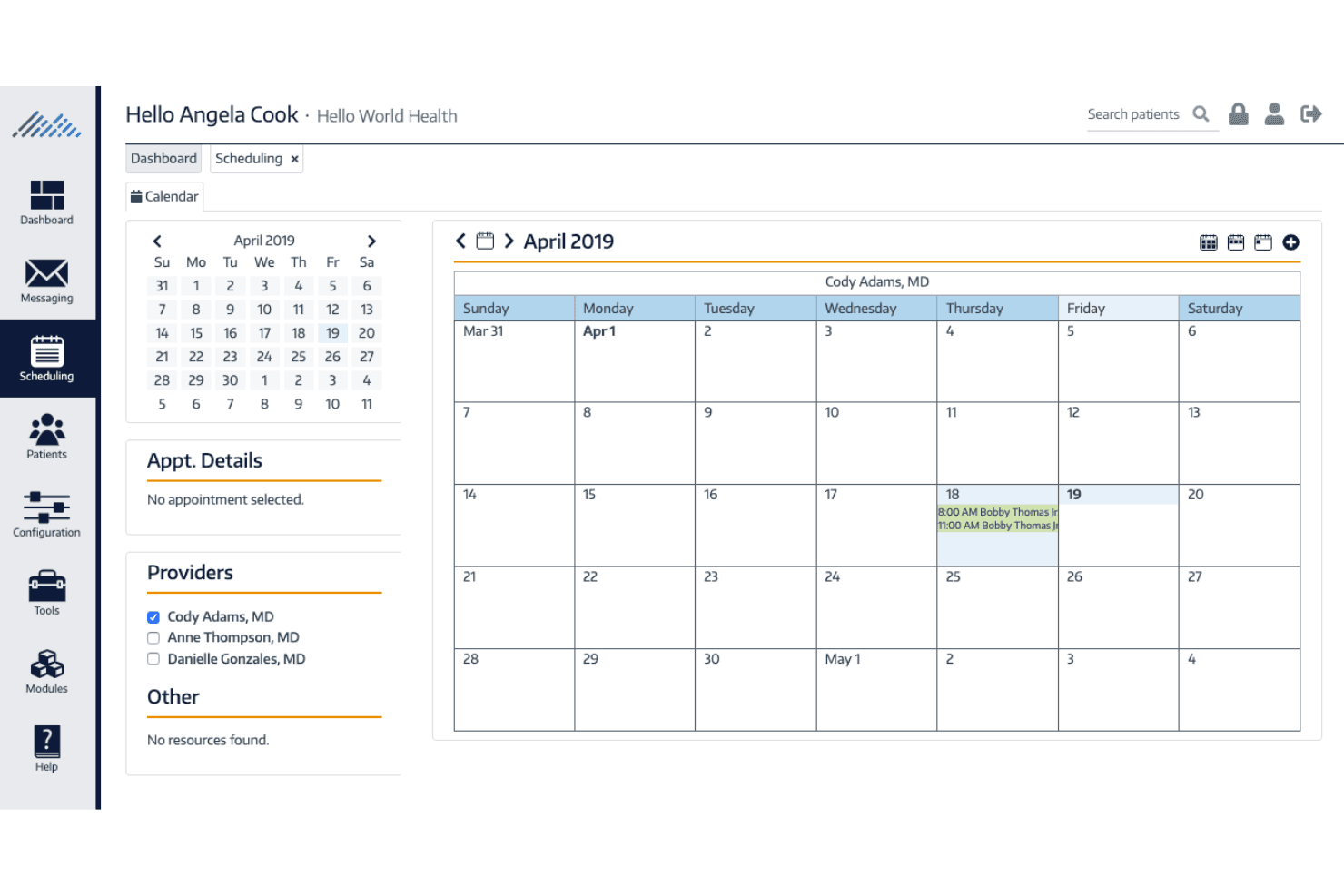
Lets you manage provider calendars, book appointments, and reduce scheduling conflicts with color-coded views.
Claims Center
Automates claims submission and scrubbing to help prevent denials and speed up reimbursements.
Voice Dictation
Enables providers to dictate notes directly into patient charts, saving time on documentation.
Note Template Builder
Offers customizable templates for different specialties, so you can tailor charting to your workflow.
Patient Portal
Gives patients secure access to their records, intake forms, and messaging with your office.
Reporting and Administration
Provides built-in reports for financials, productivity, and compliance, helping you track key metrics easily.
Ease of Use
ChartLogic is user-friendly, especially for providers who want quick access to charting and scheduling without a lot of clicks. The interface is clean and straightforward, and features like voice dictation and specialty templates help reduce time spent on documentation.
Most users say onboarding is fast and daily tasks are easy to learn, though some mention that reporting and advanced features can take extra time to master.
Integrations
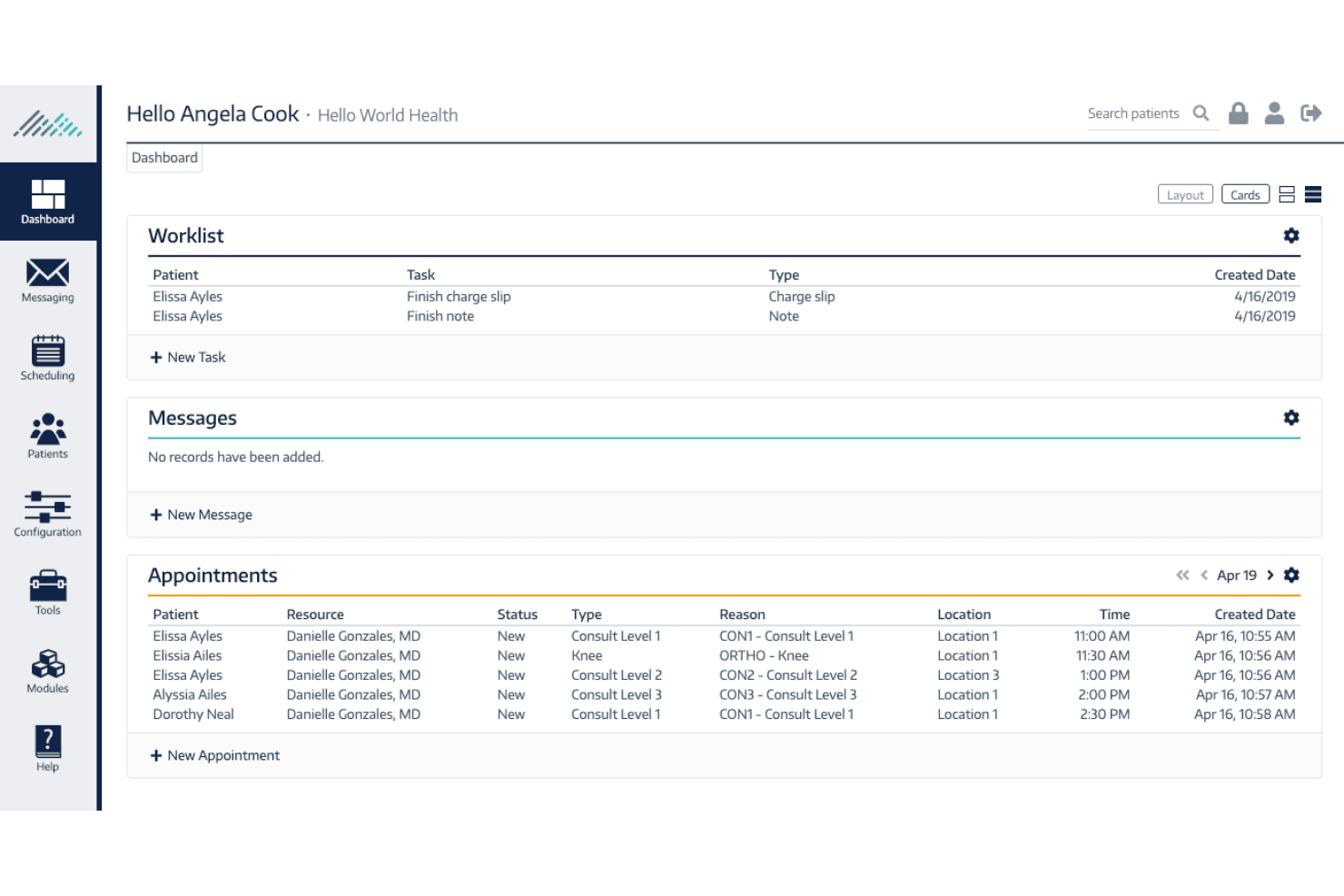
ChartLogic integrates with Change Healthcare, Emdeon, Birdeye, various national and regional labs, demographic and charge interfaces for practice management systems, ePrescribe, HL7 interfaces, patient portal systems, billing clearinghouses, and referral management tools, among others.
ChartLogic also offers API and HL7 interface options for connecting with third-party systems.
ChartLogic Specs
- API: Yes
- Appointment Scheduling: Yes
- Athlete Management: No
- Audit Management: Yes
- Calendar Management: Yes
- Compliance Tracking: Yes
- Customer Management: Yes
- Dashboard: Yes
- Data Export: Yes
- Data Import: Yes
- Data Visualization: Yes
- Electronic Prescribing: Yes
- External Integrations: Yes
- File Sharing: Yes
- File Transfer: Yes
- Health Management: Yes
- HIPAA Compliance: Yes
- Inventory Tracking: No
- Multi-User: Yes
- Notifications: Yes
- Organization Management: Yes
- Patient Management: Yes
- Project Management: No
- Regulatory Alerts: Yes
- Risk Assessment: Yes
- Scheduling: Yes
- Supplier Management: No


