

O software EMR para cuidados paliativos é uma tecnologia especializada de registos clínicos eletrónicos, concebida para gerir as necessidades clínicas, operacionais e de conformidade dos cuidados paliativos.
Se procura o melhor software EMR para cuidados paliativos, está a gerir documentação complexa, requisitos do Medicare e comunicação da equipa em tempo real — tudo isto enquanto presta cuidados sensíveis aos doentes. Manter a eficiência e a conformidade é essencial, sobretudo à medida que os regulamentos mudam e a sua equipa se adapta.
Este guia ajuda-o a comparar rapidamente as principais funcionalidades e vantagens práticas dos principais fornecedores, para que possa decidir qual o sistema EMR que melhor se adapta ao fluxo de trabalho e às normas específicas da sua organização de cuidados paliativos.
Why Trust Our Software Recommendations
6,700+
Reviews
20
Industry experts
16+
Evaluation factors
14
Years
Our team has been testing and reviewing software since 2012. As medical practice leaders ourselves, we know how difficult—and important—it is to choose the right software.
For this guide, we evaluated tools using hands-on testing and independent research, scoring tools using our selection criteria.
Our reviews reflect our human editorial judgment, not a sales pitch.
Tabela comparativa de software EMR para cuidados paliativos
A tabela abaixo compara os detalhes de preços das minhas principais seleções de software EMR para cuidados paliativos.
| Tool | Best For | Trial Info | Price | ||
|---|---|---|---|---|---|
| 1 | Best with custom electronic document workflows | Free demo available | Pricing upon request | Website | |
| 2 | Best for bereavement and volunteer tracking | Free demo available | Pricing upon request | Website | |
| 3 | Best for detailed hospice-specific documentation | Free demo available | Pricing upon request | Website | |
| 4 | Best for integrated referral and intake processes | Free demo available | Pricing upon request | Website | |
| 5 | Best for real-time IDG collaboration features | Free demo available | Pricing upon request | Website | |
| 6 | Best for customizable workflow automation | Free demo available | Pricing upon request | Website | |
| 7 | Best for integrated medication management | Not available | Pricing upon request | Website | |
| 8 | Best for managing interdisciplinary meetings | Free demo available | Pricing upon request | Website | |
| 9 | Best for offline charting in remote care settings | 14-day free trial + free demo available | From $85/user/month | Website | |
| 10 | Best for streamlined plan of care updates | Free demo available | From $250/month | Website |


Análises do melhor software EMR para cuidados paliativos
Apresentamos abaixo os meus resumos detalhados do melhor software EMR para cuidados paliativos que integrou a minha seleção. As minhas análises oferecem uma visão detalhada das funcionalidades, dos melhores casos de utilização e das integrações de cada software, para o ajudar a encontrar a melhor opção para si.
 Best with custom electronic document workflows
- Free demo available
- Pricing upon request
Visit WebsiteCustomer Rating:4.5/5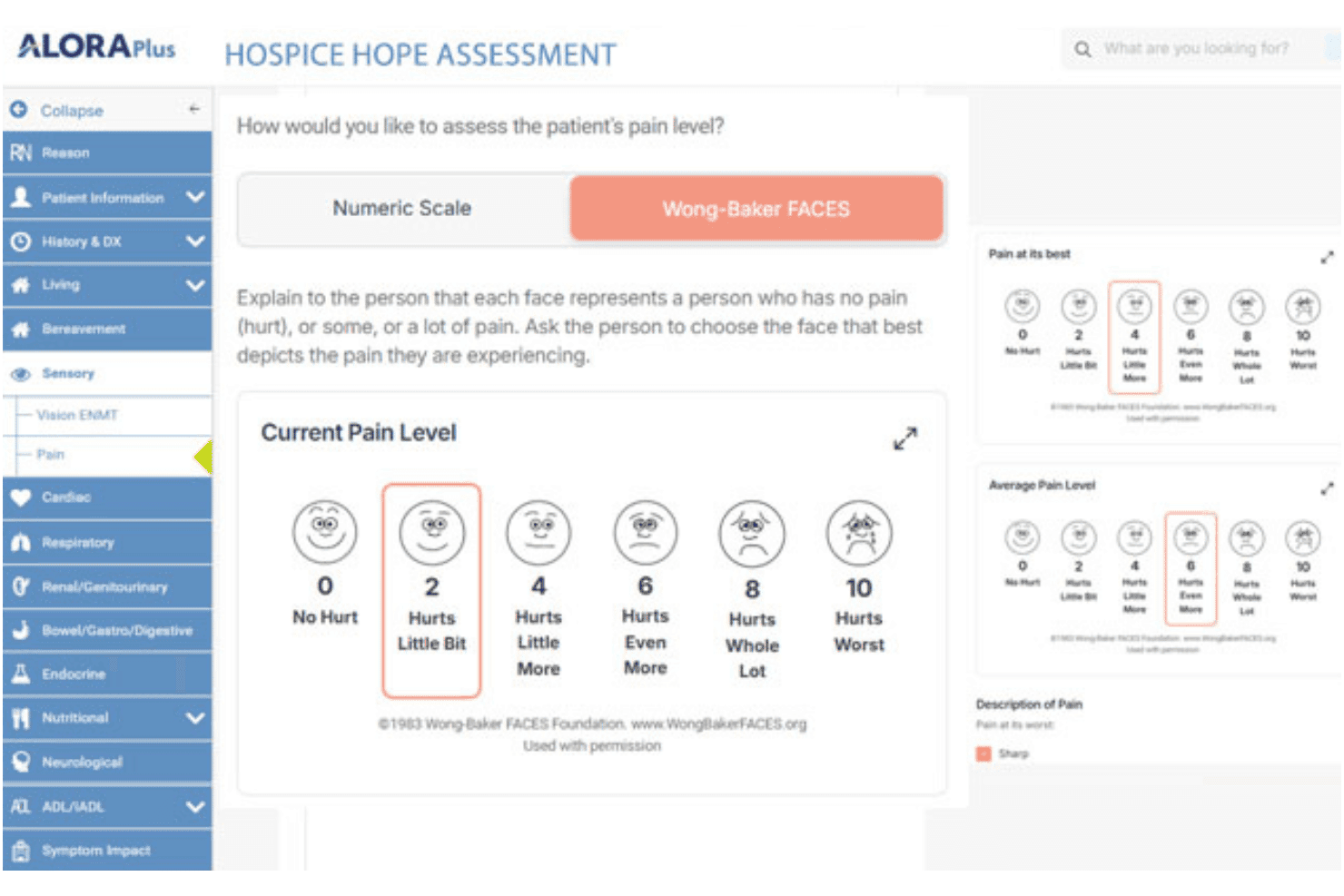
Alora Hospice Software manages charting, IDG meetings, billing, and care plans. Alora Hospice Software is a cloud-based hospice EMR that covers clinical documentation, IDG meeting management, hospice billing, care plan tracking, and compliance tools across nursing, aide, social work, and chaplain disciplines.
Who Is Alora Hospice Software Best For?
It's a strong fit for hospice agencies that manage multiple disciplines or run combined hospice and home health operations under a single platform.
Why I Picked Alora Hospice Software
Alora Hospice Software earns its spot on my shortlist because of how it handles agency-specific documentation. I love that teams can upload proprietary consent forms, election statements, and intake documents directly into the system and route them for electronic signature without leaving the platform. What I find particularly useful is the symptom follow-up workflow, which auto-triggers from the HOPE assessment when pain or dyspnea is flagged, keeping clinicians accountable without manual follow-up.
Alora Hospice Software Key Features
- Local coverage determinations integration: Automatically validates LCDs for terminal diagnosis within the nurse assessment workflow.
- Bereavement plan management: Centralizes bereavement assessments, custom plans, and follow-up tracking for families.
- Medical director portal: Gives hospice physicians a dedicated interface to review and sign orders, CTIs, and care plans remotely.
- Multi-office user management: Supports multiple agency branches or lines of service from a single login, with no additional cost.
Alora Hospice Software Integrations
Alora Hospice Software offers native integrations with clearinghouses for claims submission, SANDATA for EVV transmission, and direct Medicare DDE access. An API is available for custom integrations.
Pros and Cons
Pros:
- Full interdisciplinary care team charting support
- Built-in bereavement plan management and tracking
- Custom electronic signature workflows for agency documents
Cons:
- Volunteer management features are limited
- Mobile offline documentation support unclear
Learn more about Alora Hospice Software: Best for bereavement and volunteer tracking
- Free demo available
- Pricing upon request
Visit WebsiteCustomer Rating:4.1/5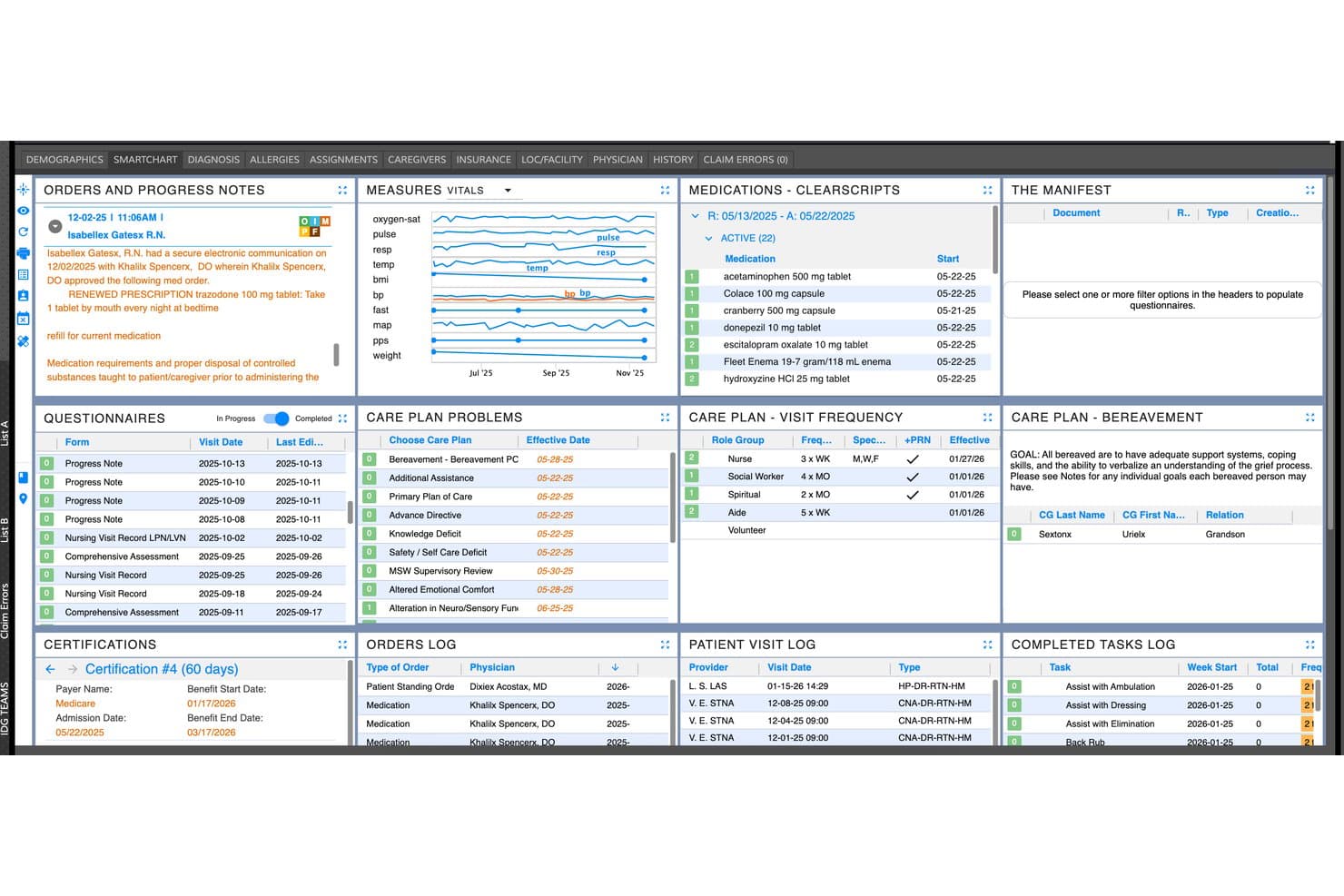
mumms Software offers a comprehensive hospice EMR dashboard featuring orders, medications, care plans, vitals, questionnaires, and patient visit logs in a single view. mumms Software is a hospice-only EMR platform that covers clinical charting, IDG management, hospice billing, bereavement tracking, and volunteer coordination across hospice and palliative care settings.
Who Is mumms Software Best For?
mumms Software is a strong fit for hospice agency administrators and clinical directors who need a dedicated, hospice-only platform rather than a general-purpose EMR adapted for end-of-life care.
Why I Picked mumms Software
I picked mumms Software as one of the best because no other hospice EMR I've seen builds bereavement management this deeply into the clinical workflow. I can configure up to 9 risk levels for caregivers and set automated schedules for letters, visits, and phone calls across a full 13-month follow-up period. The volunteer tracking module logs individual hours, expenses, and productivity, with licensure renewal reminders included alongside staff records.
mumms Software Key Features
- SmartChart clinical documentation: Dynamically surfaces required fields for hospice charting, including symptom management and end-of-life care notes.
- IDG Ultimate workflow: Provides an automated meeting structure, real-time care plan updates, and document generation for hospice interdisciplinary team meetings.
- ClearPay hospice billing: Aligns billing steps with clinical documentation and catches errors before claims submission.
- HOPE compliance support: Integrates HOPE data collection and reporting within the normal clinical workflow to support hospice regulatory requirements.
mumms Software Integrations
mumms Software offers native integrations with Sfax, Google Maps, Microsoft Excel, Acclivity, Wise, Qualis, Procare, and PlayMaker Health. An API is available for custom integrations.
Pros and Cons
Pros:
- Hospice-specific billing reduces Medicare claim denials
- Built-in automation for interdisciplinary meetings
- Industry-leading bereavement workflow and tracking
Cons:
- Limited documentation for advanced reporting features
- No explicit offline charting option
Learn more about mumms Software: Best for detailed hospice-specific documentation
- Free demo available
- Pricing upon request
Visit WebsiteCustomer Rating:4.1/5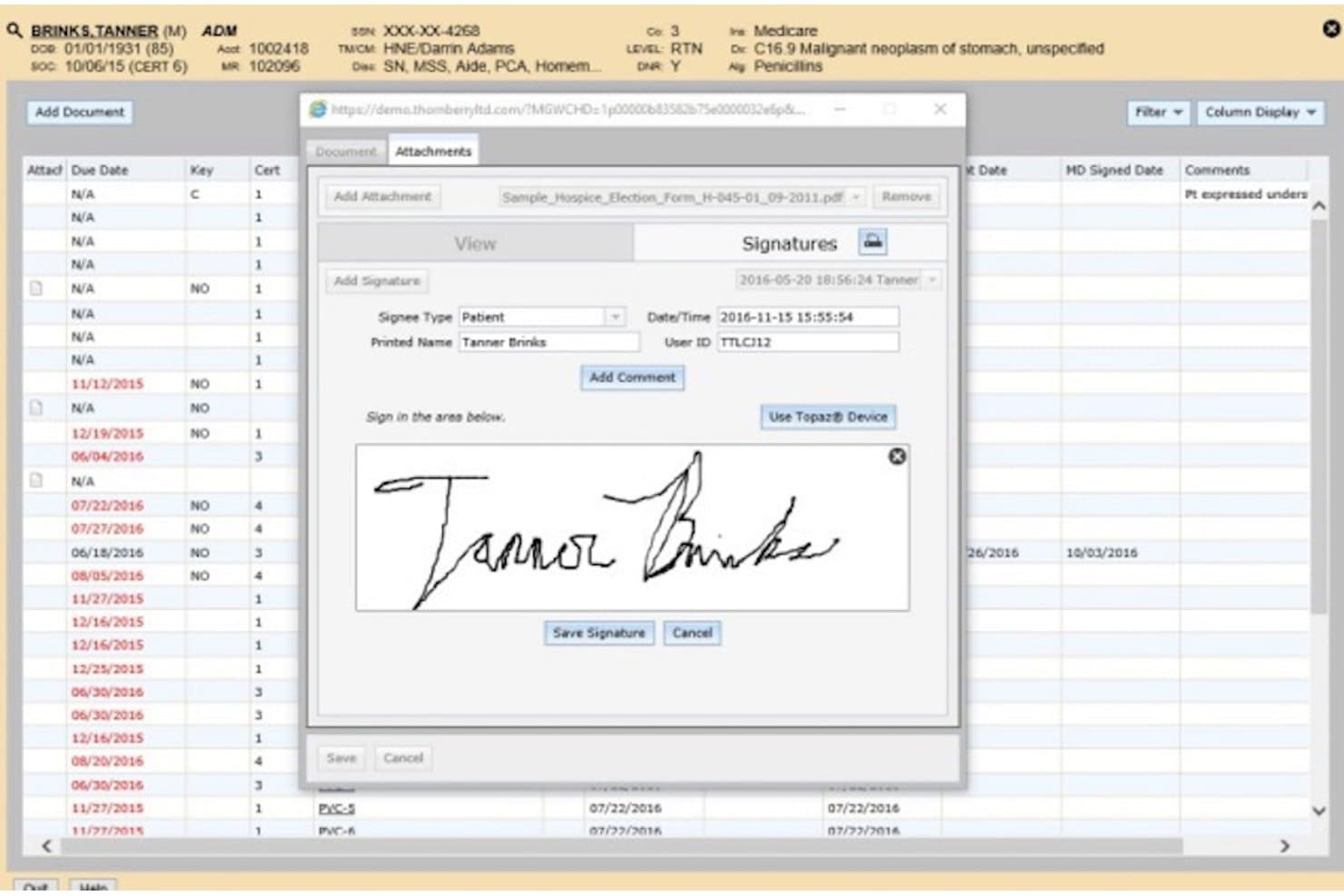
Thornberry NDoc offers a digital signature capture interface within its hospice EMR document management system. Thornberry NDoc is a hospice and home health EMR built for Medicare-certified agencies, covering clinical charting, IDG meeting documentation, HIS compliance, per-diem billing, and care coordination across interdisciplinary teams.
Who Is Thornberry NDoc Best For?
NDoc is a strong fit for Medicare-certified hospice agencies whose clinical and compliance teams need a purpose-built system rather than a general-purpose EMR adapted for hospice use.
Why I Picked Thornberry NDoc
NDoc earns its spot on my shortlist because its hospice-specific charting is built around end-of-life workflows, not retrofitted from a general EMR. I particularly like how the embedded ESAS captures symptom progression visit-by-visit, building a documented decline trajectory that IDT teams can pull directly into recertification discussions. The Pronouncement visit structures the documentation clinicians need at time of death, covering MD notification, medication disposal, and transition to bereavement as a guided, step-by-step workflow.
Thornberry NDoc Key Features
- Automated Medicare per-diem billing: Calculates and generates billing compliant with all four hospice levels of care, including NOE/NOTR submissions.
- Volunteer activity tracking: Monitors hours, assignments, and compliance with Medicare’s 5% volunteer requirement.
- IDT meeting workflow integration: Structures meeting documentation, attendee tracking, and care plan updates for regulatory alignment.
- Embedded clinical screening tools: Includes Karnofsky, PPS, and FAST for standardized patient assessment and ongoing eligibility tracking.
Thornberry NDoc Integrations
Thornberry NDoc offers native integrations with Enclara for hospice pharmacy management and supports interoperability through C-CDA CCD for referrals and information exchange. An API is available for custom integrations.
Pros and Cons
Pros:
- Pronouncement and bereavement workflows included
- Built-in symptom scales for eligibility documentation
- Customizable hospice charting and visit templates
Cons:
- Billing workflows can require manual intervention
- Offline mobile sync can be unreliable
Learn more about Thornberry NDoc: Best for integrated referral and intake processes
- Free demo available
- Pricing upon request
Visit WebsiteCustomer Rating:3.4/5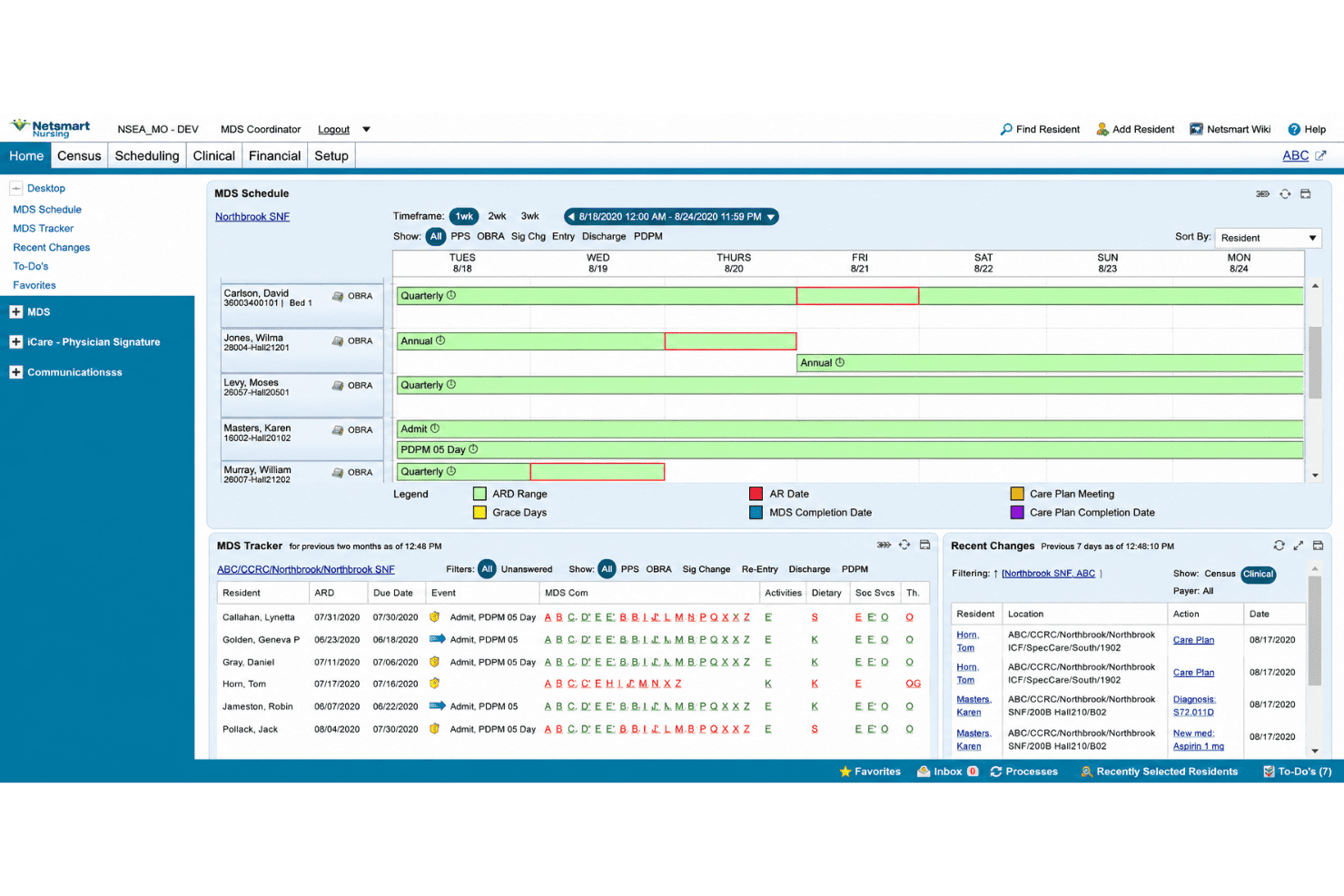
Netsmart myUnity Hospice displays an MDS Schedule and MDS Tracker dashboard with resident scheduling, care plan dates, and recent changes panels. Netsmart myUnity Hospice is a cloud-based hospice EHR that unifies clinical documentation, IDG workflows, CMS compliance tools, billing, and referral management into a single patient record across the care continuum.
Who Is Netsmart myUnity Hospice Best For?
It's a strong fit for hospice agencies that manage care across multiple settings and need a single platform connecting clinical, billing, and compliance teams.
Why I Picked Netsmart myUnity Hospice
I picked Netsmart myUnity Hospice as one of the best because its Referral Manager™ consolidates multiple referral networks into a single platform, reducing referral response times. When a referral comes in, my team can accept it electronically and move directly into intake documentation using the same patient record. The AI-assisted intake tools further reduce manual entry, so admissions move from referral acceptance to care plan creation without the usual bottleneck.
Netsmart myUnity Hospice Key Features
- IDG meeting workflows: Automates interdisciplinary meeting scheduling, agenda preparation, and care plan updates in one place.
- CMS compliance reporting: Supports HIS, HOPE, CAHPS surveys, and CMS condition of participation audit-ready documentation.
- Point-of-care mobile documentation: Clinicians can chart, capture signatures, and update care records from patient homes using mobile devices.
- Bereavement service tracking: Provides dedicated tools to document risk assessments and follow-up contacts for families after a patient’s death.
Netsmart myUnity Hospice Integrations
Netsmart myUnity Hospice offers native integrations with EHRs like Allscripts, Cerner, and Epic, and connects to health information exchanges, referral sources, and local hospitals. An API is available for custom integrations.
Pros and Cons
Pros:
- Offline-capable point-of-care charting for clinicians
- Automates interdisciplinary meeting documentation
- Real-time referral-to-intake tracking with audit history
Cons:
- Occasional system slowdowns during high census
- Reporting customization options are limited
Learn more about Netsmart myUnity Hospice: Best for real-time IDG collaboration features
- Free demo available
- Pricing upon request
Visit WebsiteCustomer Rating:4.3/5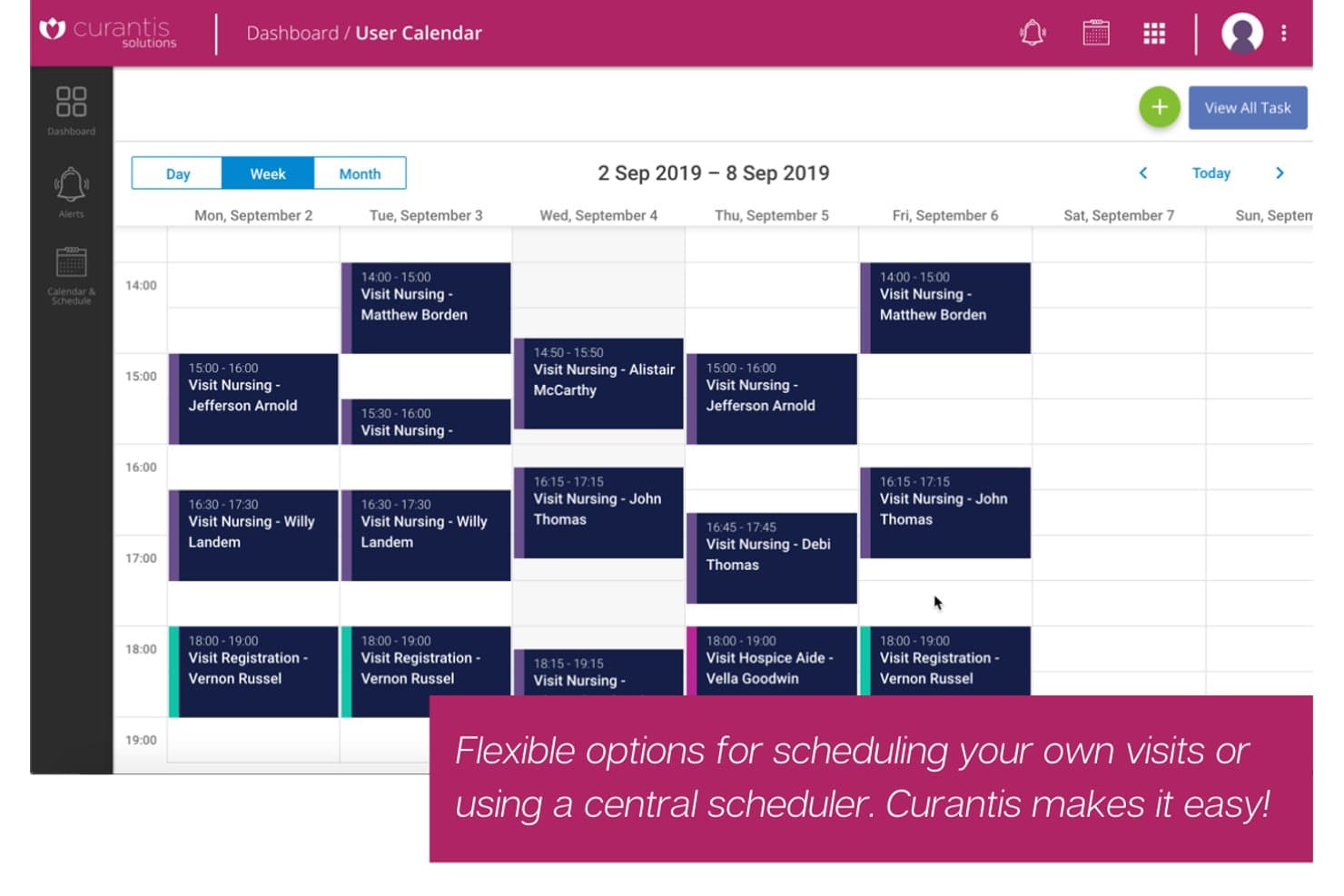
Curantis Solutions lets users schedule and manage hospice visits weekly. Curantis CareHub is a hospice EMR platform that centralizes clinical documentation, IDG coordination, billing, compliance tracking, and operational analytics in a single system.
Who Is Curantis CareHub Best For?
CareHub is a strong fit for hospice organizations where IDG coordinators and clinical teams need to update and act on patient charts together in real time during meetings.
Why I Picked Curantis CareHub
I've included Curantis CareHub in my top picks because its real-time IDG collaboration features are genuinely hard to replicate. During a live IDG meeting, clinicians can pull up the full patient chart, apply actions like recertification or visit-frequency changes directly to the record, and collect electronic signatures before the meeting closes. The closed meeting then auto-generates a report attached to each patient's chart, so nothing gets lost in translation between the meeting room and the documentation system.
Curantis CareHub Key Features
- ChartBoost AI voice-to-text: Transcribes clinician speech directly into narrative documentation fields, with support for Spanish voice input.
- Automated NOE and HIS file generation: Generates and submits Notice of Election and Hospice Item Set files automatically to support Medicare compliance workflows.
- Configurable payer profiles and billing rules: Lets billing teams set up custom payer rules and catch errors or warnings before claims are submitted.
- CMS quality measure tracking: Provides built-in tracking for CMS quality measures, including face-to-face visits, hospice aide supervision, and HOPE compliance.
Curantis CareHub Integrations
CareHub lists integrations with Waystar, ScriptSure, ChartMeds, BetterRx, PDC Rx, and Qualis. It supports RESTful APIs and file-based integrations for custom connectivity.
Pros and Cons
Pros:
- Hospice nurse praised hospice-relevant charting
- Reviewers valued completing IDG within Curantis
- IDG actions update charts during meetings
Cons:
- Offline sync timing and safeguards remain unclear
- Physician must close IDG meetings
Learn more about Curantis Solutions: Best for customizable workflow automation
- Free demo available
- Pricing upon request
Visit WebsiteCustomer Rating:4/5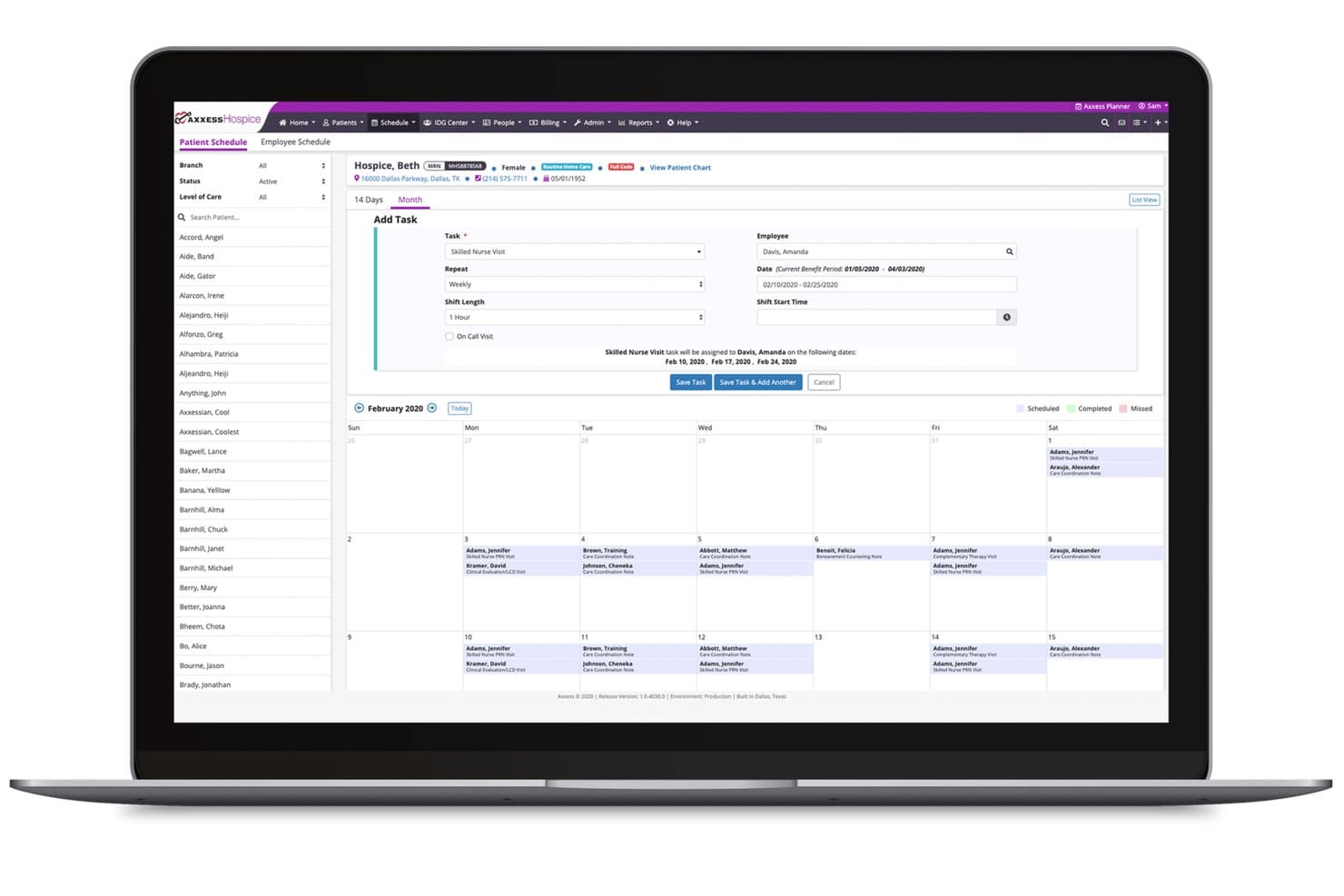
Axxess Hospice offers a patient scheduling interface with an Add Task modal for assigning skilled nurse visits on a monthly calendar view. Axxess Hospice is a cloud-based hospice EMR built specifically for end-of-life care, covering clinical documentation, IDG management, medication management, scheduling, billing, and CMS compliance in one platform.
Who Is Axxess Hospice Best For?
It's a strong fit for hospice agencies whose interdisciplinary teams — nurses, aides, chaplains, social workers, and billing staff — all need to work from a single, connected system.
Why I Picked Axxess Hospice
I picked Axxess Hospice as one of the best because its automation is built around how hospice workflows actually move. When a clinician completes a visit narrative, that information flows automatically into physician orders and the plan of care. The IDG Collaboration Center goes further, auto-generating IDG summaries and syncing them to the care plan. I also like that NOE and NOTR submissions trigger automatically from clinical events rather than requiring a separate administrative step.
Axxess Hospice Key Features
- Bereavement management module: Tracks post-death bereavement assessments, services, and family contacts for compliance.
- Volunteer hours tracking: Manages volunteer assignments, hours, and required documentation for the Medicare 5% requirement.
- Medicare eligibility verification: Connects with CMS/HETS to check hospice eligibility and benefit periods in real time.
- Service intensity add-on (SIA) support: Logs and documents SIA visits during the final days of life for proper billing and compliance.
Axxess Hospice Integrations
Axxess Hospice offers native integrations with pharmacy benefit managers, DME providers, CMS/HETS for Medicare eligibility, and the Kno2 clinical information exchange platform. An API is available for custom integrations.
Pros and Cons
Pros:
- Built-in volunteer and bereavement tracking
- HOPE and CAHPS compliance tools included
- Automated IDG documentation and care plan sync
Cons:
- Reporting customization options are limited
- Mobile app lacks robust offline mode
Learn more about Axxess Hospice: Best for integrated medication management
- Not available
- Pricing upon request
Visit WebsiteCustomer Rating:2.5/5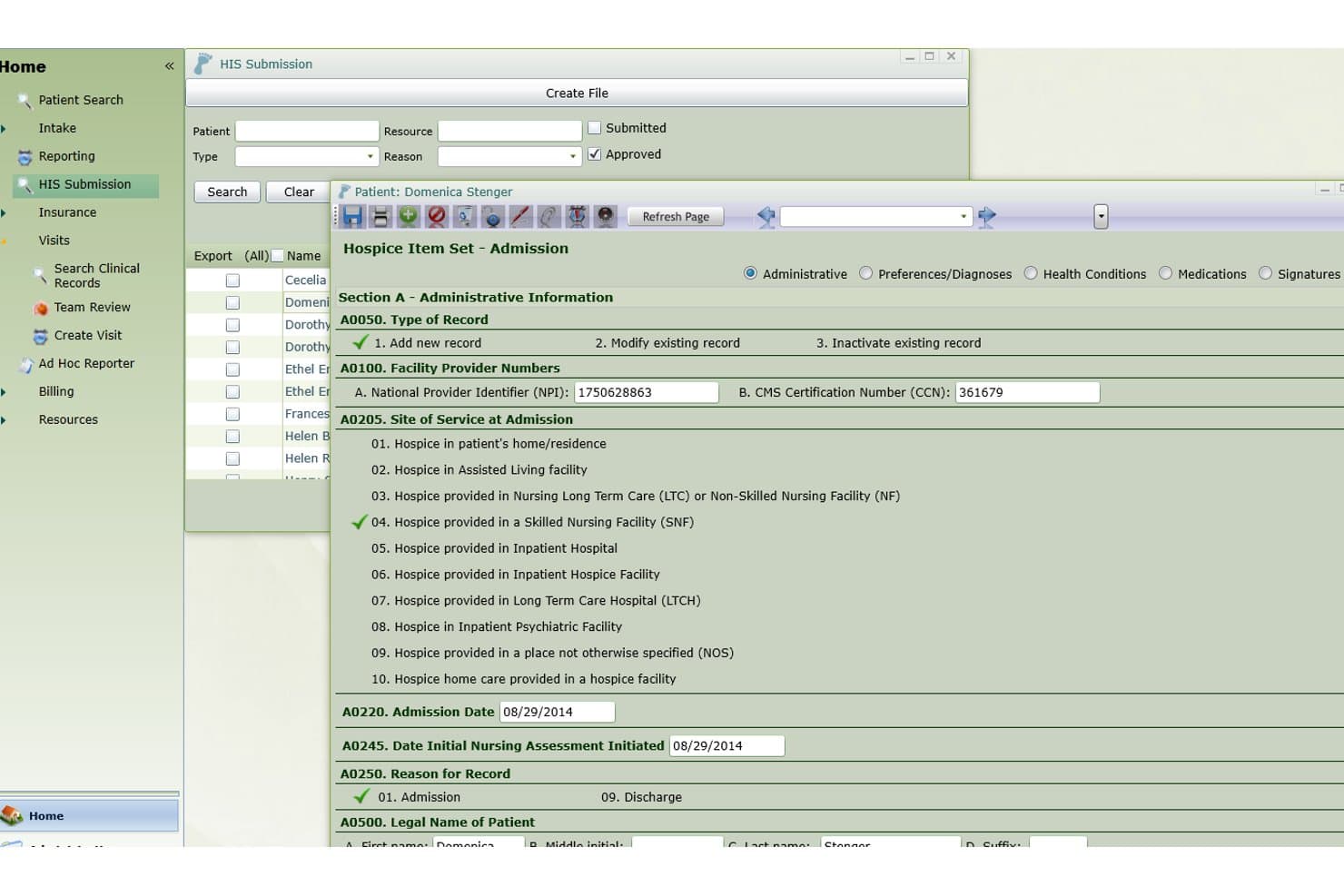
Footprints EMR streamlines hospice admission records via HIS submission forms. Footprints EMR is a hospice-focused clinical documentation platform built by Black Bean Software that covers visit charting, AI-generated notes, billing, scheduling, compliance monitoring, and volunteer management for hospice, palliative, and home care agencies.
Who Is Footprints EMR Best For?
Footprints EMR is a good fit for small to mid-sized hospice and palliative care agencies that want AI-assisted clinical documentation built around hospice-specific workflows.
Why I Picked Footprints EMR
I've included Footprints EMR in my top picks because its medication history tracking and pharmacy integrations keep clinical and dispensing records connected in one place, which matters when you're managing comfort-focused care for patients around the clock. I like that its AI chart audit flags gaps in medication documentation alongside missing signatures and overdue recertifications, so a clinician can catch a documentation error before it becomes a compliance issue. The QAPI engine also monitors symptom severity and meal intake in real time, giving your team a clear picture of how a patient's medication regimen is actually working at the bedside.
Footprints EMR Key Features
- Offline mobile charting: Clinicians can document visits in the field without an internet connection, with data syncing automatically when connectivity is restored.
- CAP status monitoring: The platform tracks Cumulative Aggregate Payment status in real time and alerts your team before the agency approaches its aggregate limit.
- Volunteer hour tracking: A dedicated module logs volunteer hours and activities to help agencies meet the Medicare-required share of patient-care hours.
- Customizable dashboards: Dashboards can be tailored to your agency's workflows, surfacing documentation quality, open tasks, and compliance risks at a glance.
Footprints EMR Integrations
Native integrations are not clearly documented. Footprints EMR lists connections for pharmacies, DME suppliers, and accounting software, but it does not name specific vendors or document API availability.
Pros and Cons
Pros:
- Reviewers valued customizable forms and reports
- AI notes support CoP and LCD workflows
- Reviewers praised hospice-focused assessments across disciplines
Cons:
- Reviews cite repetitive notes and inconsistent records
- One reviewer reported prolonged billing-code errors
Learn more about Footprints EMR: Best for managing interdisciplinary meetings
- Free demo available
- Pricing upon request
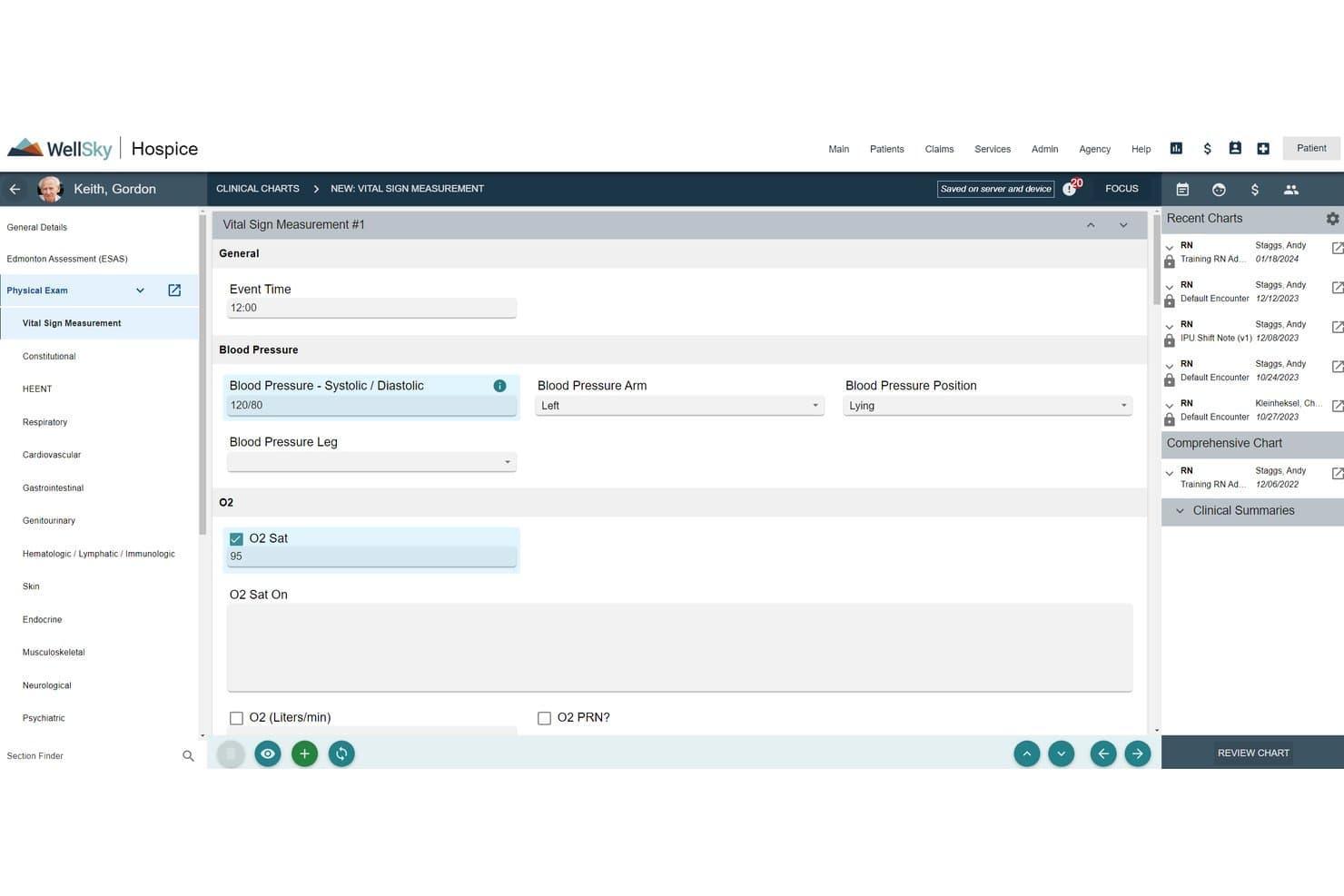
WellSky Hospice & Palliative offers a detailed Vital Sign Measurement form within its clinical charting module, capturing blood pressure, O2 saturation, and positioning data. WellSky Hospice & Palliative is a web-based hospice EMR that covers clinical documentation, IDG/IDT coordination, HOPE-compliant reporting, hospice billing, and point-of-care charting with offline mobile access.
Who Is WellSky Hospice & Palliative Best For?
It's a strong fit for hospice and palliative care agencies that need a single platform to coordinate care across clinical, administrative, and billing teams.
Why I Picked WellSky Hospice & Palliative
WellSky Hospice & Palliative earns its spot on my shortlist because of how well it handles IDG/IDT meeting coordination. I like that my team can view all disciplines on a single unified calendar, so scheduling nurses, chaplains, social workers, and aides around a care plan review doesn't require juggling separate systems. HOPE-compliant documentation and custom SMART goal tracking connect directly to those meetings, keeping care plans current without additional steps after each session.
WellSky Hospice & Palliative Key Features
- Bereavement management module: Track bereavement risk assessments and document services for families over a 13-month period.
- Medicare eligibility verification: Check hospice benefit periods and election status directly with CMS/HETS.
- Volunteer tracking tools: Log volunteer hours and assignments to meet Medicare's 5% benchmark.
- Level of care documentation: Record all four levels of hospice care and manage location-based workflows for home, SNF, ALF, or inpatient units.
WellSky Hospice & Palliative Integrations
Native integrations include Forcura for document management, CMS/HETS for eligibility verification, and WellSky CareInsights analytics. An API is available for custom integrations.
Pros and Cons
Pros:
- Includes robust bereavement management module
- Unified calendar for all IDG disciplines
- HOPE-compliant clinical documentation tools
Cons:
- Offline chart syncing can be unreliable
- Needs manual data re-entry between some workflows
Learn more about WellSky Hospice & Palliative: Best for offline charting in remote care settings
- 14-day free trial + free demo available
- From $85/user/month
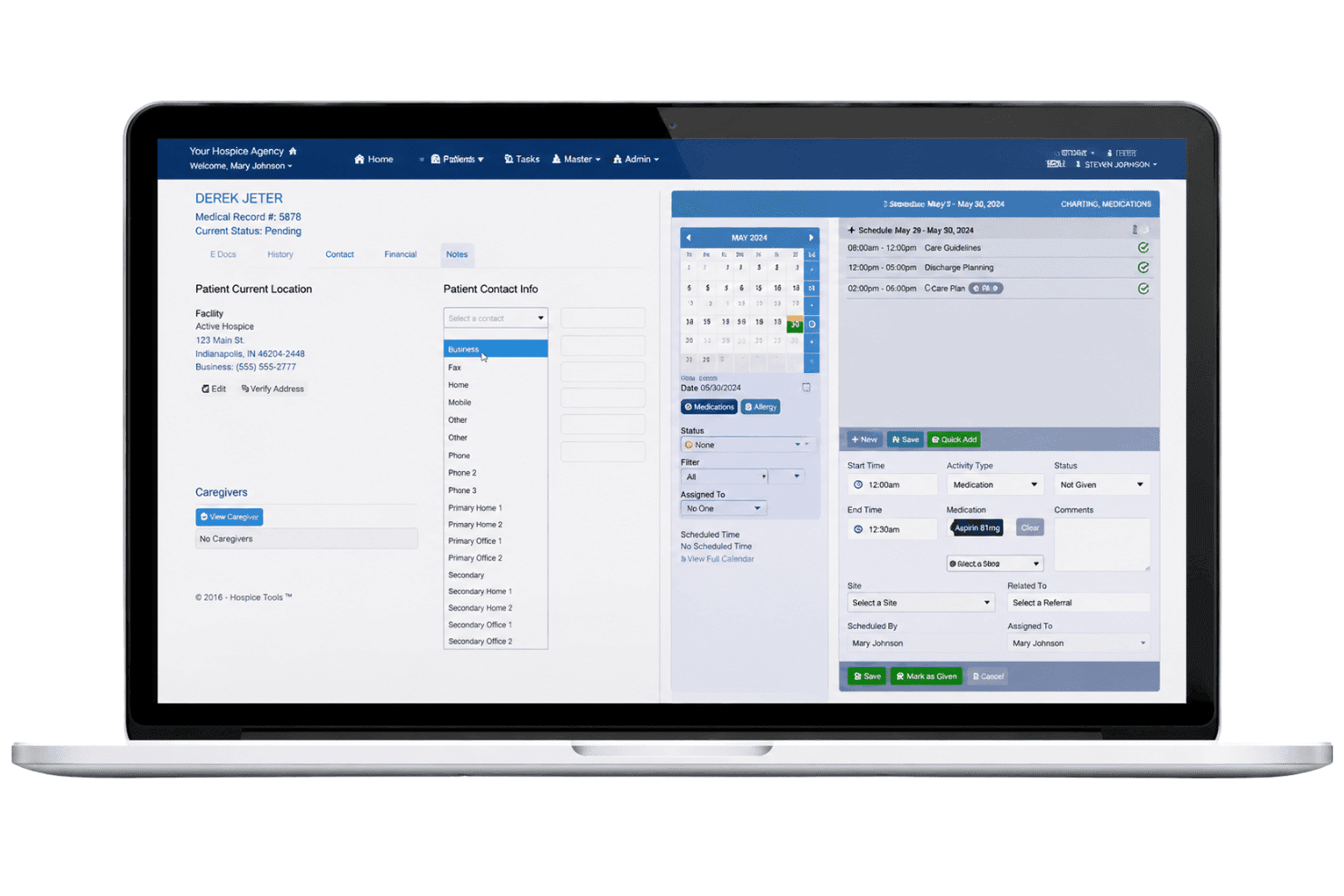
Hospice Tools EMR unites charting, care planning, timekeeping, and billing. Hospice Tools EMR is a hospice-specific electronic medical records platform built exclusively for independent hospice agencies, combining clinical documentation, IDG care planning, timekeeping, and billing into a single suite.
Who Is Hospice Tools EMR Best For?
It's a strong fit for small to midsize independent hospice agencies that need a purpose-built clinical and billing platform without census-based pricing.
Why I Picked Hospice Tools EMR
Hospice Tools EMR earns its spot on my shortlist because of its native iOS and Android apps for field-based hospice documentation. I like how Mentor Mode flags compliance gaps in real time as clinicians chart at the bedside or in patient homes. Auto-Build also pulls visit times and locations directly from eDocs into timesheets, cutting duplicate entry for clinicians moving between patient locations.
Hospice Tools EMR Key Features
- IDG/IDT dashboard: Tracks interdisciplinary group meetings, care plan changes, and required participation.
- Volunteer management module: Lets agencies manage volunteer hours, assignments, and documentation for compliance.
- Automatic HIS submission: Supports hospice item set reporting with built-in CMS requirements.
- Bereavement tracking: Organizes 13-month bereavement services, interactions, and family contacts.
Hospice Tools EMR Integrations
Hospice Tools EMR offers a native integration with Ability Network for eBilling and Medicare claim status. Native integrations with hospice pharmacy vendors are not available. An API is available for custom integrations.
Pros and Cons
Pros:
- Audit mode for compliance and survey readiness
- Integrated volunteer and bereavement management tools
- Flat per-user pricing structure
Cons:
- Limited direct pharmacy and DME integrations
- Lacks true offline charting capability
Learn more about Hospice Tools EMR: Best for streamlined plan of care updates
- Free demo available
- From $250/month

Hospice Engine centralizes billing data in a visual dashboard. Hospice Engine is a hospice EMR platform by RoundBox LLC that covers discipline-specific clinical documentation, electronic orders, IDG meeting management, and dedicated billing services for Medicare hospice claims.
Who Is Hospice Engine Best For?
Hospice Engine is a strong fit for clinicians and billing managers at small to mid-sized hospice agencies who want discipline-specific charting and dedicated billing support in one place.
Why I Picked Hospice Engine
Hospice Engine earns its spot on my shortlist because of how it handles plan-of-care updates within the electronic orders workflow. When a clinician submits an order, it automatically updates both the medication profile and the plan of care without any duplicate entry. I also like that the IDG module surfaces recent plan-of-care changes and open incidents for each patient, so your team goes into every meeting with current information rather than chasing down updates across disciplines.
Hospice Engine Key Features
- Discipline-specific clinical forms: Structured charting forms cover nursing, social work, chaplaincy, aides, therapy disciplines, bereavement, and volunteer visits.
- HOPE-ready documentation: Clinical forms are updated to meet CMS HOPE assessment requirements effective October 2025.
- Configurable clinical alerts: Alerts flag missing face-to-face visits, unsigned certifications, and zero benefit periods, with each alert type toggled on or off by your organization.
- Pre-billing claim checks: The system scans claims for missing items, data mismatches, and authorization issues before submission.
Hospice Engine Integrations
Hospice Engine works with existing EMRs including HospiceMD, Data Soft Logic, Kinnser, Consolo, WellSky, MatrixCare, Netsmart, and KanTime, primarily for billing workflows. It also offers an API for custom integrations, but native integration details aren’t documented.
Pros and Cons
Pros:
- HOPE-ready forms cover multiple hospice disciplines
- IDG meetings surface plan changes and incidents
- Orders update medication profiles and care plans
Cons:
- No visit-frequency tracking for IDG coordination
- Mobile offline charting capabilities remain undocumented
Learn more about Hospice Engine:
How I Evaluate Hospice EMR Software
I split my evaluation into three parts, giving the most weight to tools that document hospice visits and care plans and track Medicare claims, benefit periods, and recertifications. Next, I look for differentiators such as bereavement tracking. Finally, I consider discipline-specific onboarding, responsive support, and pricing as census changes.
Core Functionality (Table Stakes For This List)
When I'm selecting tools for my list, I score each one on a scale from 0 (does not offer the functionality) to 5 (excels in this area) for each core functionality listed below. I then convert the total into a percentage to help assess each tool's overall fit, with extra weight on any functionalities I’ve deemed essential.
- Hospice Documentation (Essential): I look for structured visit notes, discipline-specific charting, and care plans that IDG members can review and update across a patient’s care.
- Medicare Billing (Essential): I assess whether claims account for levels of care and benefit periods, and whether the system supports NOE/NOTR and sequential billing.
- IDG Coordination: I check for shared scheduling across nursing, social work, chaplaincy, and aides, including visit tracking against care plans.
- Certification Tracking: I look for certification and recertification dates, face-to-face encounter requirements, and alerts that help teams prepare documentation on time.
- Mobile Charting: For home and facility visits, I evaluate whether clinicians can document on mobile devices, including offline access and later syncing.
- Compliance Reporting: I consider whether reports and historical documentation trails support audits, surveys, and quality reporting such as HIS/HOPE.
Once I have a list of tools that meet the criteria, I consider what sets each platform apart.
Differentiating Factors (What Sets Vendors Apart)
Here's how I compare and contrast different vendors:
Standout Features
I look for built-in bereavement tracking that logs family outreach contacts and timelines, since Medicare Conditions of Participation require documented follow-up after a patient's death. Volunteer management is another area I evaluate closely—I check whether the platform tracks hours, assignments, and training records to meet CMS volunteer requirements. I also consider family portal access, which lets caregivers view care updates between visits instead of relying on phone calls. These features separate hospice-first platforms from repurposed home health EMRs.
Beyond Features
I evaluate whether onboarding includes discipline-specific training for nurses, chaplains, and social workers, since generic rollouts slow adoption. Vendor-led regulatory update briefings also matter—teams that missed early guidance on the HOPE assessment transition learned that lesson the hard way. I check pricing models closely because per-census billing hits differently when your patient count swings between seasons. Contract flexibility and termination terms deserve equal attention if you're migrating off a legacy home health system.
Como escolher software EMR para cuidados paliativos
É fácil perder-se em listas extensas de funcionalidades e estruturas de preços complexas. Para o ajudar a manter-se focado enquanto analisa o seu processo específico de seleção de software, apresentamos uma lista de verificação com os fatores a ter em conta:
| Fator | O que deve considerar |
|---|---|
| FatorEscalabilidade | O que deve considerarA plataforma conseguirá acompanhar as alterações no número de doentes e suportar novas instalações ou equipas à medida que a sua agência cresce? Considere a expansão futura, incluindo novas localizações ou especialidades. |
| FatorIntegrações | O que deve considerarO EMR liga-se aos seus fornecedores de farmácia, fornecedores de equipamentos médicos duradouros, fontes de referenciação e sistemas laboratoriais? Faça uma lista das integrações atuais das quais não pode prescindir. |
| FatorPersonalização | O que deve considerarPode adaptar modelos, fluxos de trabalho e relatórios para corresponder aos requisitos de documentação e regulamentares da sua equipa? |
| FatorFacilidade de utilização | O que deve considerarCom que rapidez os profissionais clínicos e os funcionários conseguem aprender a utilizar o sistema? Consulte os ecrãs de documentação e agendamento para avaliar as necessidades de formação dos funcionários e os obstáculos à adoção. |
| FatorImplementação e integração | O que deve considerarQue nível de apoio à migração e formação dos utilizadores fornece o fornecedor? Informe-se sobre equipas de integração dedicadas, prazos e sobre a forma como tratam a importação de dados. |
| FatorCusto | O que deve considerarAs taxas são cobradas por utilizador, por doente ou por agência? Analise de que forma os preços variam com o número de doentes e esteja atento a custos ocultos relacionados com o apoio, suplementos ou atualizações. |
| FatorMedidas de segurança | O que deve considerarO sistema abrange a conformidade com a HIPAA, a encriptação de dados, os registos de auditoria e os controlos de acesso baseados em funções para proteger informações sensíveis dos doentes? |
| FatorRequisitos de conformidade | O que deve considerarA plataforma suportará as regras atuais e novas do CMS/Medicare? Verifique se existem atualizações atempadas quando os regulamentos ou as diretrizes de reembolso mudam. |
O que é o software EMR para cuidados paliativos?
O software EMR para cuidados paliativos é um sistema digital concebido especificamente para gerir a documentação clínica, a conformidade regulamentar, a faturação e a coordenação das equipas dos prestadores de cuidados paliativos.
Estas plataformas simplificam o registo clínico, as atualizações dos planos de cuidados, as reuniões de grupos interdisciplinares e os fluxos de trabalho de elaboração de relatórios, de modo a responder às necessidades específicas dos cuidados paliativos, incluindo os requisitos do CMS e do Medicare.
Funcionalidades do software EMR para cuidados paliativos
Ao selecionar software EMR para cuidados paliativos, tenha em atenção as seguintes funcionalidades principais:
- Registo clínico específico para cuidados paliativos: Os modelos de documentação clínica respondem aos fluxos de trabalho dos cuidados paliativos, incluindo a certificação de doença terminal, o controlo da dor e as avaliações de fim de vida.
- Gestão das reuniões do IDG: Agendamento integrado, registo de presenças e documentação digital para as reuniões do grupo interdisciplinar exigidas pela regulamentação dos cuidados paliativos.
- Gestão do plano de cuidados: Permite às equipas criar, partilhar e atualizar planos de cuidados paliativos individualizados, garantindo que o plano de cuidados evolui de acordo com as necessidades do doente e os contributos da equipa.
- Relatórios de conformidade com o CMS: Suporta submissões obrigatórias como HIS, HOPE e CAHPS, ajudando a garantir que as agências cumprem as normas do Medicare e os requisitos regulamentares.
- Acesso móvel no local de prestação de cuidados: Permite aos profissionais de saúde registar notas, recolher assinaturas e atualizar registos a partir da casa dos doentes, mesmo quando a ligação à Internet é pouco fiável.
- Faturação e pedidos de reembolso dos cuidados paliativos: Automatiza a faturação diária, os processos NOE/NOTR e os pedidos de reembolso ao Medicare/Medicaid, reduzindo o esforço administrativo e os erros.
- Acompanhamento dos serviços de apoio no luto: Documenta programas de apoio no luto com a duração de 13 meses, avaliações de risco e acompanhamentos das famílias, contribuindo para a conformidade regulamentar contínua.
- Gestão de voluntários: Regista as horas dos voluntários, as atribuições e a conformidade com os requisitos de participação de voluntários em cuidados paliativos do Medicare.
- Personalização das funções dos utilizadores: Atribui permissões específicas e acesso clínico com base nas funções dos colaboradores, ajudando a proteger os dados e a simplificar o fluxo de trabalho de enfermeiros, auxiliares e pessoal de apoio.
Funcionalidades comuns de inteligência artificial no software EMR para cuidados paliativos
Além das funcionalidades padrão do software EMR para cuidados paliativos acima mencionadas, muitas destas soluções estão a incorporar inteligência artificial com funcionalidades como:
- Alertas preditivos de sintomas: A inteligência artificial analisa os dados dos doentes para assinalar sinais precoces de dor, agitação ou declínio, ajudando os profissionais de saúde a intervir antes de os sintomas se agravarem.
- Sugestões automatizadas de documentação: A inteligência artificial recomenda formulações e conteúdos para as notas clínicas com base nos detalhes da visita, reduzindo a introdução manual de dados e melhorando a consistência.
- Atualizações inteligentes dos planos de cuidados: A inteligência artificial analisa a evolução do doente e sugere ajustes ao plano de cuidados, garantindo que as intervenções continuam alinhadas com as necessidades em mudança.
- Avaliação do risco de rejeição de pedidos de reembolso: A inteligência artificial avalia os dados de faturação para prever quais os pedidos de reembolso que provavelmente serão rejeitados, orientando o pessoal na resolução dos problemas antes da submissão.
- Processamento de linguagem natural para conformidade: A inteligência artificial analisa notas de texto livre para identificar elementos regulamentares em falta, incentivando os profissionais de saúde a concluir a documentação necessária.
Benefícios do software EMR para cuidados paliativos
A implementação de software EMR para cuidados paliativos proporciona vários benefícios à sua equipa e à sua organização. Eis alguns dos benefícios que pode esperar:
- Maior precisão da documentação: Os modelos de registo clínico específicos para cuidados paliativos ajudam os profissionais de saúde a registar detalhes essenciais para os cuidados e a conformidade em cada nota do doente.
- Gestão simplificada da conformidade: Os relatórios integrados do CMS e as verificações regulamentares automatizadas reduzem o risco de prazos não cumpridos ou de dados incompletos.
- Cuidados interdisciplinares coordenados: A gestão dos planos de cuidados e as ferramentas para as reuniões do IDG mantêm enfermeiros, auxiliares, capelães e assistentes sociais alinhados quanto às necessidades dos doentes.
- Faturação mais rápida e precisa: Os módulos de faturação de cuidados paliativos automatizam a faturação diária, os processos NOE/NOTR e a submissão de pedidos de reembolso, minimizando as rejeições e a carga administrativa.
- Acesso em tempo real no local de prestação de cuidados: A documentação móvel, com capacidade de funcionamento offline, permite ao pessoal trabalhar de forma eficiente a partir da casa dos doentes, de instalações ou de unidades de internamento.
- Acompanhamento do luto simplificado: O acompanhamento dedicado do luto garante que as famílias recebem apoio contínuo após a morte do doente, cumprindo as normas clínicas e do Medicare.
- Gestão centralizada de voluntários: Os módulos de acompanhamento de voluntários ajudam as agências a cumprir os requisitos de participação e a envolver voluntários da comunidade com menos acompanhamento manual.
Custos e preços do software EMR para cuidados paliativos
A seleção de software EMR para cuidados paliativos exige uma compreensão dos vários modelos de preços e planos disponíveis. Os custos variam consoante as funcionalidades, a dimensão da equipa, os complementos, entre outros fatores. A tabela abaixo resume os planos comuns, os respetivos preços médios e as funcionalidades normalmente incluídas nas soluções de software EMR para cuidados paliativos:
Tabela de comparação de planos de software EMR para cuidados paliativos
| Tipo de plano | Preço médio | Funcionalidades comuns |
|---|---|---|
| Tipo de planoPlano gratuito | Preço médio$0 | Funcionalidades comunsGráficos básicos, registos de doentes limitados, suporte mínimo e apenas documentação essencial de conformidade. |
| Tipo de planoPlano pessoal | Preço médio$50-$150/utilizador/mês | Funcionalidades comunsRegistos clínicos essenciais, acesso móvel, agendamento individual, algumas ferramentas de conformidade e funcionalidades básicas de faturação. |
| Tipo de planoPlano para empresas | Preço médio$200-$400/utilizador/mês | Funcionalidades comunsRecenseamento completo de doentes, ferramentas para equipas interdisciplinares, faturação avançada, relatórios CMS e gestão de voluntários. |
| Tipo de planoPlano empresarial | Preço médio$500+/utilizador/mês | Funcionalidades comunsTodas as funcionalidades, integrações personalizadas, migração de dados, suporte prioritário, permissões baseadas em funções e formação alargada. |
Perguntas frequentes sobre software EMR para cuidados paliativos
Eis algumas respostas a perguntas frequentes sobre software EMR para cuidados paliativos:
Como é que o software EMR para cuidados paliativos ajuda a cumprir os requisitos do Medicare?
O software EMR para cuidados paliativos monitoriza prazos, automatiza os relatórios HIS e HOPE e garante que a documentação cumpre as Condições de Participação do CMS. Isto facilita a preparação da sua equipa para auditorias e ajuda a evitar penalizações devido a registos em falta ou incompletos.
O software EMR para cuidados paliativos consegue gerir operações em vários locais?
Sim, a maioria das plataformas EMR para cuidados paliativos suporta agências com operações em vários locais e estados. Procure ferramentas que ofereçam acesso baseado na nuvem, permissões configuráveis e relatórios unificados, para que as equipas em diferentes locais possam trabalhar com um único sistema.
Que tipos de formação estão incluídos no software EMR para cuidados paliativos?
A formação inclui frequentemente sessões de integração baseadas em funções para enfermeiros, auxiliares, capelães e administradores. Muitos fornecedores disponibilizam recursos de suporte contínuo, seminários online em direto e acesso a consultores clínicos durante a fase de configuração.
Existem integrações com farmácias locais e fornecedores de equipamento médico duradouro?
Sim, muitas soluções EMR para cuidados paliativos oferecem integrações com gestores de benefícios farmacêuticos e fornecedores de equipamento médico duradouro. Estas integrações simplificam a encomenda de medicamentos e a gestão de equipamentos, reduzindo o trabalho administrativo manual entre os diferentes contextos de prestação de cuidados.
O software EMR para cuidados paliativos permite a utilização offline por profissionais clínicos no terreno?
Sim, as principais soluções incluem registos clínicos móveis offline, permitindo que os profissionais clínicos introduzam notas de visitas e recolham assinaturas nas casas dos doentes, mesmo quando o acesso à Internet é pouco fiável. Os dados são depois sincronizados automaticamente assim que a ligação é restabelecida.