

O software hospitalar EMR permite-lhe captar, armazenar e gerir digitalmente as informações de saúde dos doentes em todos os departamentos do hospital. Se está a tentar encontrar o melhor software hospitalar EMR, sabe como é importante fazer a escolha certa — a segurança dos doentes, a continuidade dos cuidados e o bom funcionamento das operações diárias dependem disso.
Com opções que vão desde plataformas empresariais consolidadas a soluções flexíveis baseadas na Web, não é fácil perceber qual o sistema que irá realmente responder às suas necessidades clínicas e administrativas. Este guia proporciona-lhe uma visão clara e lado a lado das principais opções, para que possa avaliar as funcionalidades e os pontos fortes e encontrar a solução certa para a sua equipa.
Why Trust Our Software Recommendations
6,700+
Reviews
20
Industry experts
16+
Evaluation factors
14
Years
Our team has been testing and reviewing software since 2012. As medical practice leaders ourselves, we know how difficult—and important—it is to choose the right software.
For this guide, we evaluated tools using hands-on testing and independent research, scoring tools using our selection criteria.
Our reviews reflect our human editorial judgment, not a sales pitch.
Tabela de comparação de software hospitalar EMR
Esta tabela de comparação apresenta os preços das minhas principais opções de software hospitalar EMR:
| Tool | Best For | Trial Info | Price | ||
|---|---|---|---|---|---|
| 1 | Best for clinical and financial hospital data | Free demo available | Pricing upon request | Website | |
| 2 | Best for focused clinical management workflows | Free demo available | Pricing upon request | Website | |
| 3 | Best for cloud-based patient engagement workflows | Free demo available | Pricing upon request | Website | |
| 4 | Best for connecting clinical data with analytics | Free demo available | Pricing upon request | Website | |
| 5 | Best for web-based EHR workflows | Not available | Pricing upon request | Website | |
| 6 | Best for enterprise-wide clinical workflows | Not available | Pricing upon request | Website | |
| 7 | Best for customizable EMR workflows | Free demo available | Pricing upon request | Website | |
| 8 | Best for hospital EHR and emergency department | Free demo available | Pricing upon request | Website | |
| 9 | Best for integrated hospital management | Not available | Pricing upon request | Website | |
| 10 | Best for flexible electronic patient records | Not available | Pricing upon request | Website |


Avaliações do melhor software hospitalar EMR
Seguem-se os meus resumos detalhados do melhor software hospitalar EMR que integrou a minha seleção. As minhas avaliações apresentam uma análise detalhada das funcionalidades, dos melhores casos de utilização e das integrações de cada software, para o ajudar a encontrar a melhor opção para si.
 Best for clinical and financial hospital data
- Free demo available
- Pricing upon request
Visit WebsiteCustomer Rating:4/5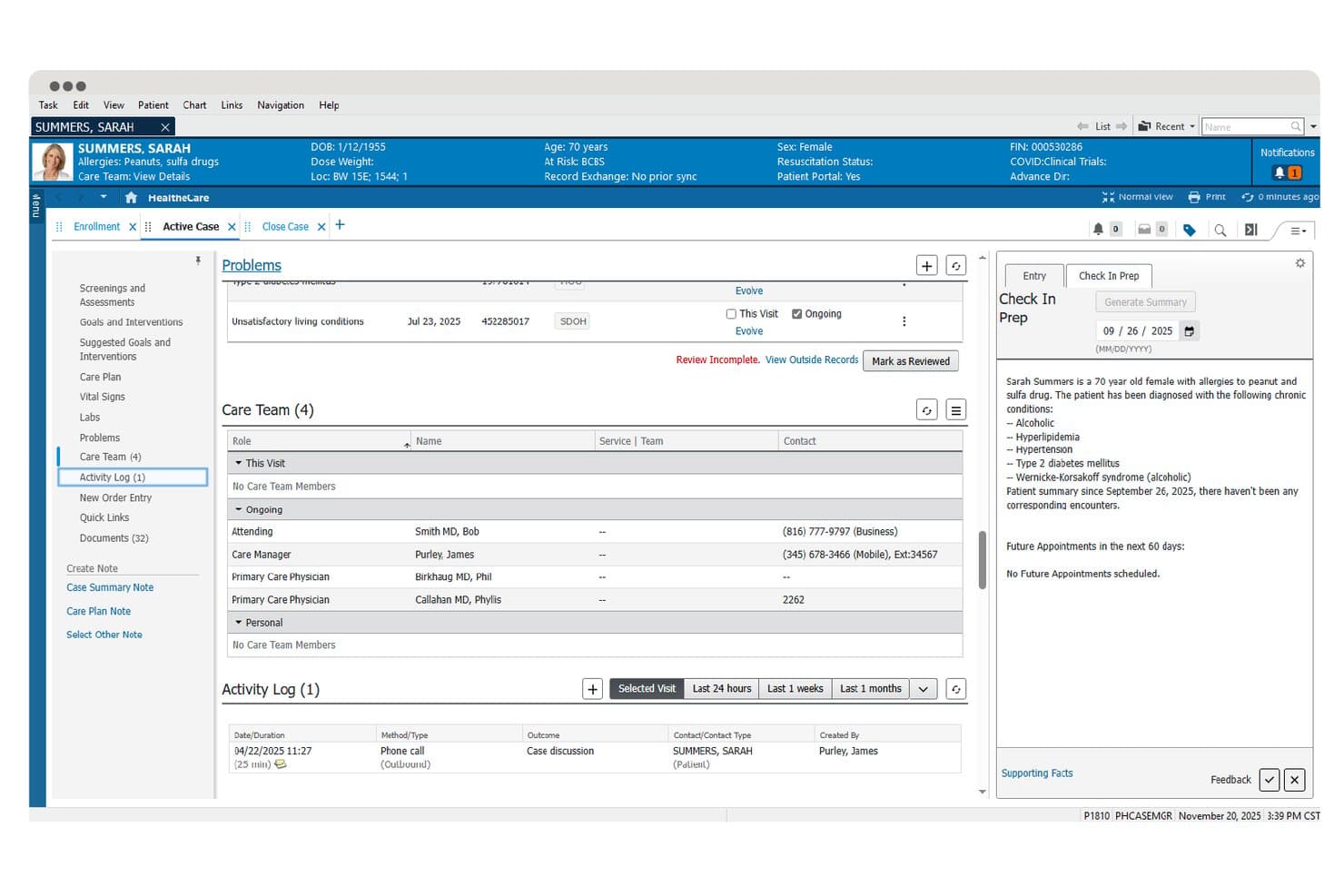
Oracle Health offers a care coordination dashboard displaying patient problems, care team assignments, activity logs, and an AI-generated check-in prep summary for clinical staff. Oracle Health is an enterprise hospital EHR platform built on Oracle Cloud that combines inpatient clinical documentation, CPOE, revenue cycle management, and AI-powered charting tools across acute-care and health system environments.
Who Is Oracle Health Best For?
Oracle Health is a strong fit for large hospitals and multi-facility health systems that need a unified platform spanning inpatient clinical workflows, institutional billing, and enterprise financial operations.
Why I Picked Oracle Health
Oracle Health earns its spot on my shortlist because it's one of the few hospital EHR platforms where clinical documentation and institutional billing data live in the same system. I like how the Revenue Cycle suite handles DRG grouping, charge capture, and claims management alongside inpatient charting, with no manual reconciliation between what clinicians document and what gets billed. The Clinical AI Agent uses voice-enabled documentation to keep clinical records accurate at the point of care.
Oracle Health Key Features
- Bed and census management: Track bed status, patient flow, and real-time census across hospital units.
- Laboratory device integration: Connect lab instruments directly to the EHR for seamless order processing and results reporting.
- Public health reporting: Automate case reporting, immunization registry uploads, and syndromic surveillance for regulatory compliance.
- Health information exchange (HIE) connectivity: Enable data exchange with external organizations and regional HIEs using HL7, FHIR, and CCDA standards.
Oracle Health Integrations
Oracle Health offers native integrations with Oracle Cloud Infrastructure, Oracle ERP, NetSuite, and supports device integration for lab instruments, infusion pumps, and bedside monitors. It also provides FHIR-based APIs and HL7/CCDA connectivity for custom integrations with HIEs, pharmacy systems, and external healthcare platforms.
Pros and Cons
Pros:
- Broad inpatient specialty workflow coverage
- Cloud-based architecture for large enterprise scale
- Advanced revenue cycle management tools
Cons:
- User interface feels outdated to many clinicians
- Support response times reported as slow
Learn more about Oracle Health: Best for focused clinical management workflows
- Free demo available
- Pricing upon request
Visit WebsiteCustomer Rating:3.7/5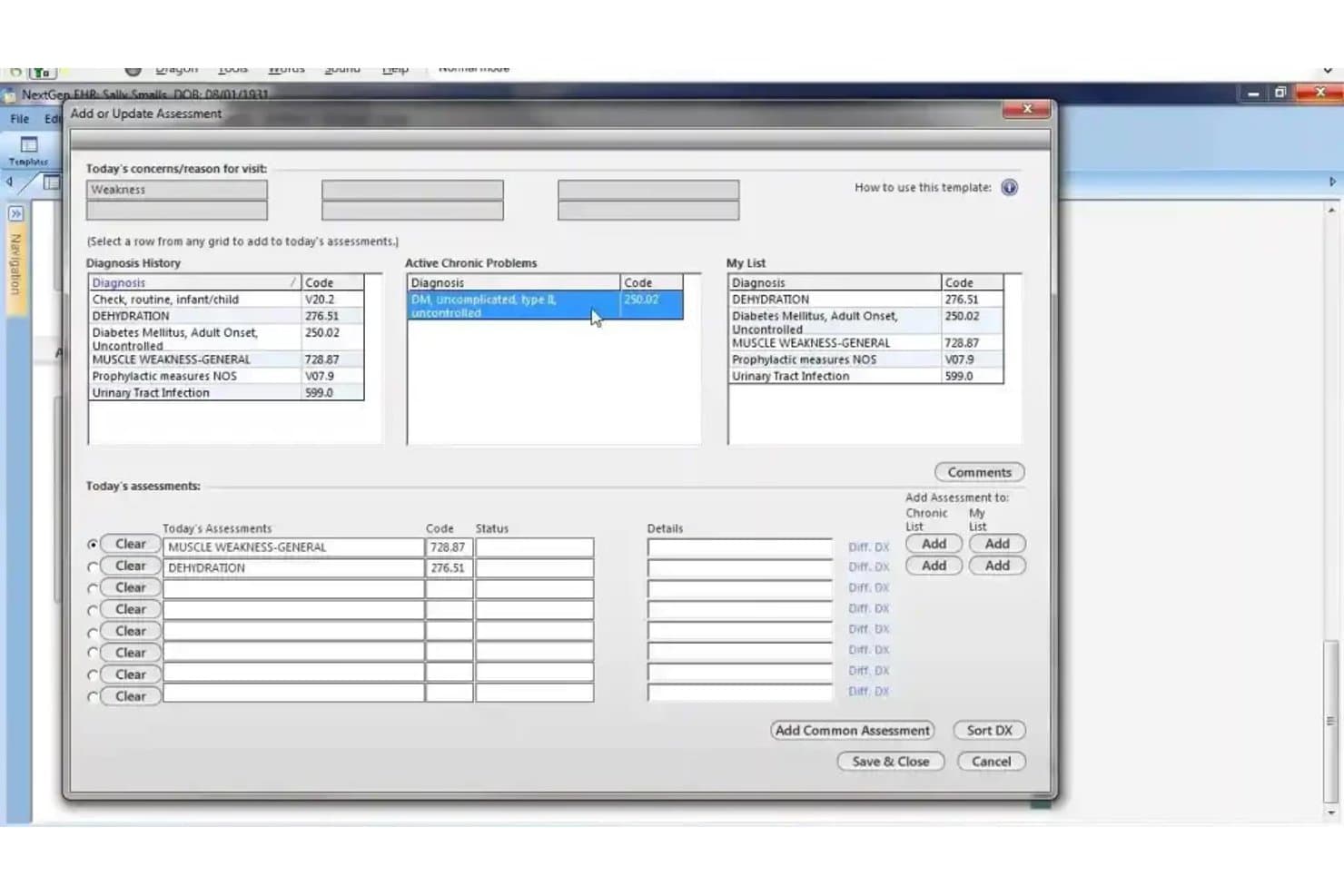
NextGen Healthcare offers an 'Add or Update Assessment' dialog that allows clinicians to manage diagnoses, chronic problems, and today's assessments with ICD codes. NextGen Healthcare is an ambulatory-focused EHR platform that combines clinical documentation, practice management, revenue cycle management, and care coordination tools across 40+ medical specialties.
Who Is NextGen Healthcare Best For?
NextGen Healthcare fits multi-specialty ambulatory practices and physician groups that need a unified EHR and practice management system across clinical and administrative teams.
Why I Picked NextGen Healthcare
I picked NextGen Healthcare as one of the best because of how tightly it structures specialty-specific clinical workflows. The 2,000+ built-in clinical templates across 40+ specialties mean my team documents within pre-built, specialty-appropriate frameworks rather than adapting generic forms. I also like the ambient AI, which converts patient conversations directly into structured SOAP notes, cutting after-hours documentation by up to 57%.
NextGen Healthcare Key Features
- Integrated practice management: Schedule appointments, track patient flow, and manage billing in a unified dashboard.
- FHIR and HL7 interoperability: Exchange clinical data with labs, imaging centers, and HIEs using standard APIs.
- Patient portal: Allow patients to message providers, request refills, view lab results, and manage appointments online.
- Population health analytics: Monitor quality measures and identify gaps in care with real-time reporting across multiple specialties.
NextGen Healthcare Integrations
NextGen Healthcare offers native integrations with Doctible, Solutionreach, Clearwave, InstaMed, and the Mirth Connect Integration Engine for health data exchange. An API is available for custom integrations.
Pros and Cons
Pros:
- Strong interoperability with labs and HIEs
- Ambient AI documentation for encounters
- Specialty-specific ambulatory clinical templates included
Cons:
- Lacks institutional hospital billing workflows
- No inpatient charting or bed management
Learn more about NextGen Healthcare: Best for cloud-based patient engagement workflows
- Free demo available
- Pricing upon request
Visit WebsiteCustomer Rating:3.4/5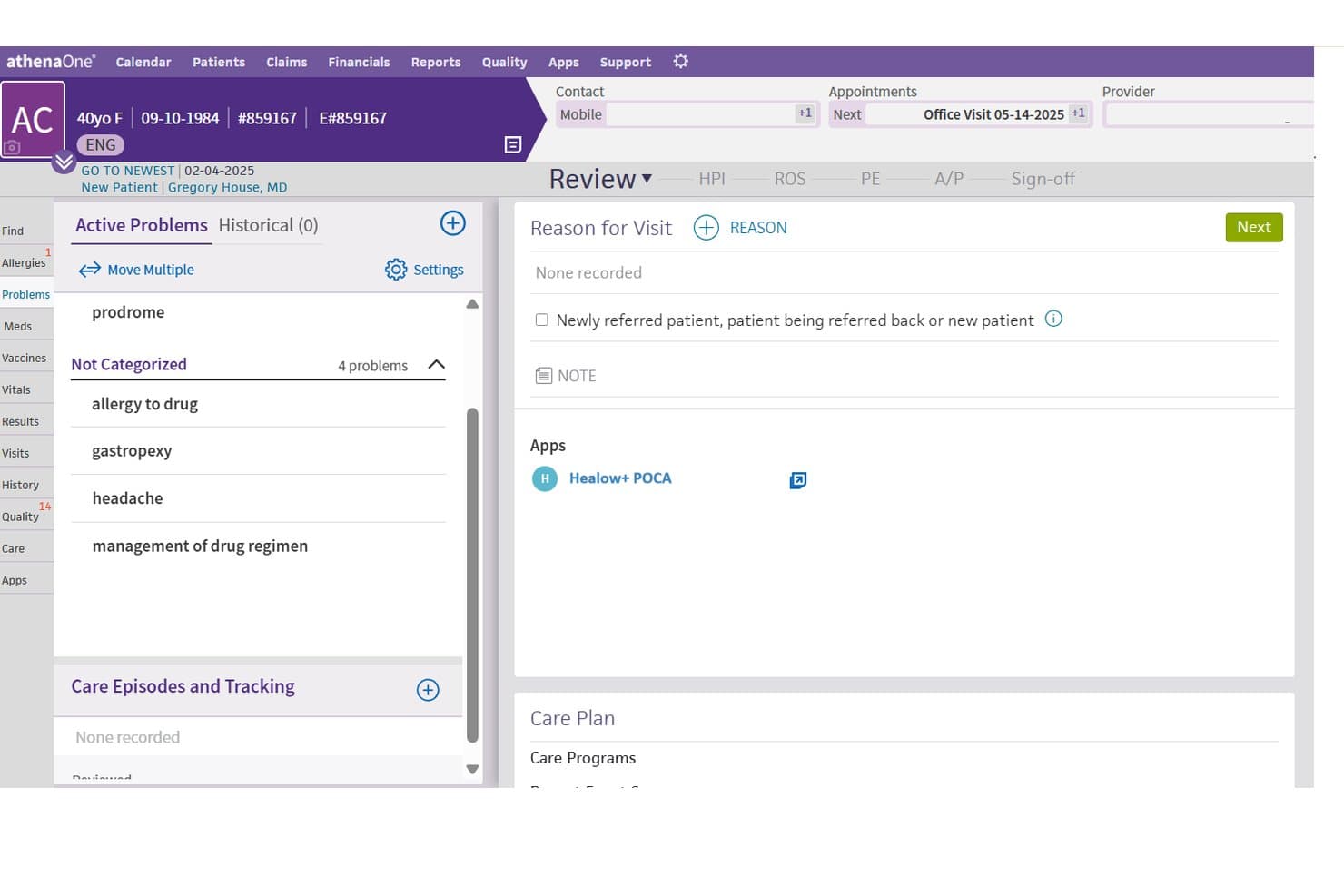
athenahealth offers an integrated patient chart view with active problems, reason for visit, and the Healow+ POCA app embedded directly within the EHR workflow. athenahealth is a cloud-native ambulatory EHR platform that combines clinical documentation, revenue cycle management, practice management, and patient engagement tools into a single connected system.
Who Is athenahealth Best For?
athenahealth is a strong fit for physician groups and hospital-owned ambulatory practices with 1 to 75 providers.
Why I Picked athenahealth
athenahealth earns its spot on my shortlist because of how completely athenaCommunicator handles patient engagement without bolting on separate software. I particularly like that self-scheduling, digital intake, appointment reminders, and online bill pay all live in one cloud-native workflow. Because athenahealth has been cloud-native since its founding, every update rolls out automatically, so patient-facing tools stay current without any IT intervention on my end.
athenahealth Key Features
- AI-powered clinical documentation: Uses natural language processing to automate charting and highlight relevant patient data in real time.
- Integrated revenue cycle management: Supports medical billing, coding, claims denial, and remittance workflows in one platform.
- FHIR-based interoperability: Enables data exchange with EHRs, HIEs, labs, and imaging vendors using FHIR and HL7 standards.
- ONC-certified compliance tools: Delivers built-in tools for HIPAA compliance, MIPS reporting, and meaningful use attestation.
athenahealth Integrations
athenahealth offers native integrations with Dragon Medical One, BirdEye, and Epocrates, and provides access to hundreds of partner apps through the athenahealth Marketplace. FHIR and HL7 APIs are available for custom integrations with EHRs, labs, and imaging systems.
Pros and Cons
Pros:
- Detailed ambulatory clinical documentation tools
- Automatic regulatory updates for all users
- Robust cloud-based patient engagement suite
Cons:
- Medication administration lacks BCMA support
- Lacks inpatient charting and hospital billing
Learn more about athenahealth: Best for connecting clinical data with analytics
- Free demo available
- Pricing upon request
Visit WebsiteCustomer Rating:3.4/5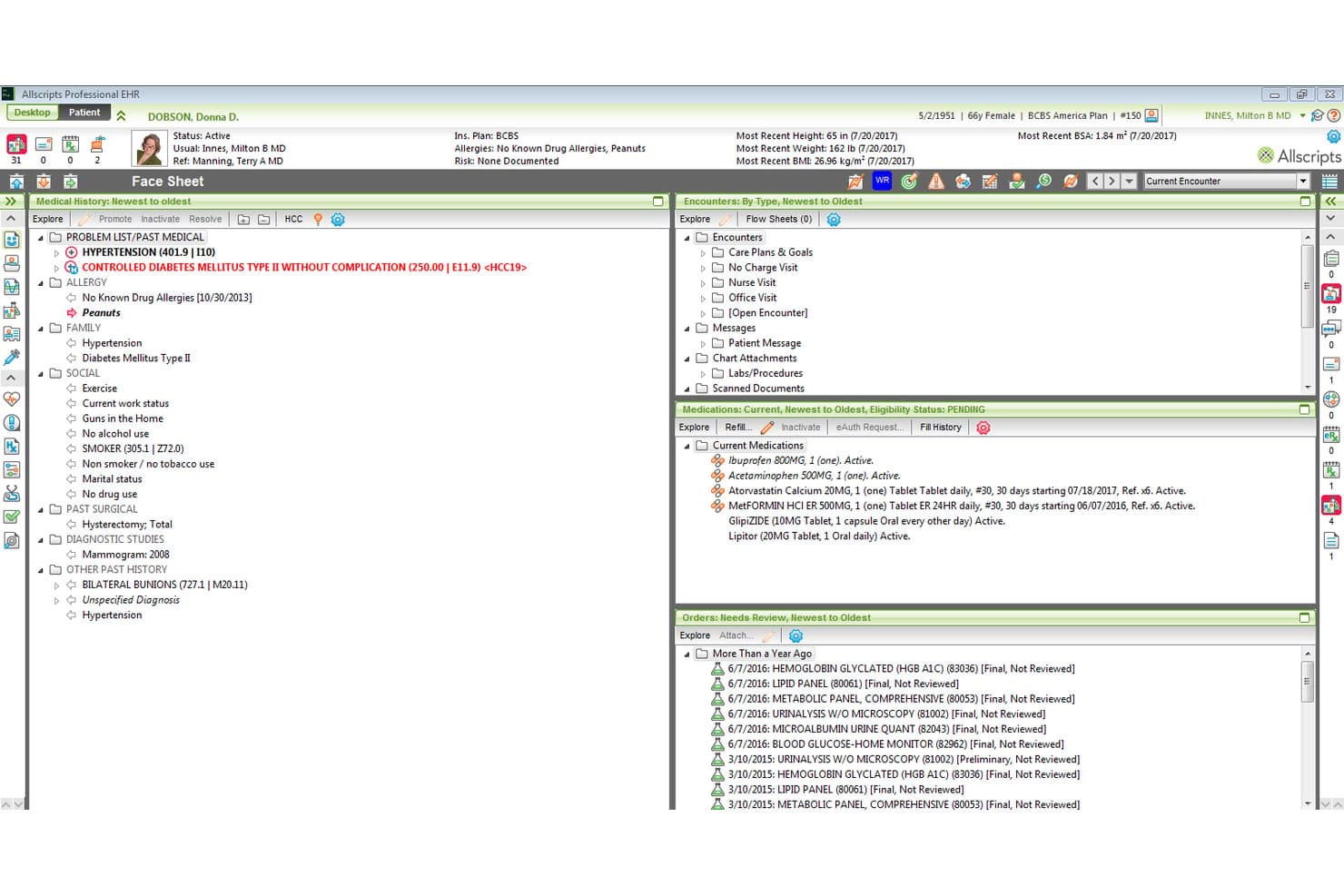
Veradigm offers a comprehensive patient face sheet view displaying medical history, medications, encounters, and lab orders within its EHR software. Veradigm is an ambulatory EHR platform that combines electronic health records, practice management, ePrescribing, and clinical decision support with a health data network that links provider records to payer and life-science analytics.
Who Is Veradigm Best For?
Veradigm fits multi-specialty ambulatory practices and independent physician groups that need an EHR connected to a broader clinical data and analytics network.
Why I Picked Veradigm
I've included Veradigm in my top picks because its HCC alerting and RAF risk scoring surface actionable clinical insights directly inside the EHR workflow. The Veradigm Network then pushes that same patient-level data out to payers and life-science registries in real time. I particularly like the gap closure alerting, which flags care gaps during encounters rather than after the fact.
Veradigm Key Features
- Veradigm Connect open API integration: Lets you link external health tech solutions and devices directly into the EHR workflow.
- Automated compliance reporting: Generates regulatory reports for programs like PQRS, PCMH, and FQHC from within the platform.
- Integrated telehealth visits: Allows clinicians to conduct video appointments and document directly in the patient chart.
- Mobile EHR access: Provides secure, HIPAA-compliant access to charts and schedules on any device.
Veradigm Integrations
Veradigm provides native integrations through its Veradigm Connect API platform, supporting certified connections with external health tech solutions, lab and radiology centers, ePrescribe, and PDMP registries. An API is available for custom integrations.
Pros and Cons
Pros:
- Real-time clinical insights for physicians
- Automated regulatory and quality reporting tools
- Robust outpatient data analytics capabilities
Cons:
- Lacks institutional billing and DRG support
- No native inpatient hospital workflows
Learn more about Veradigm:
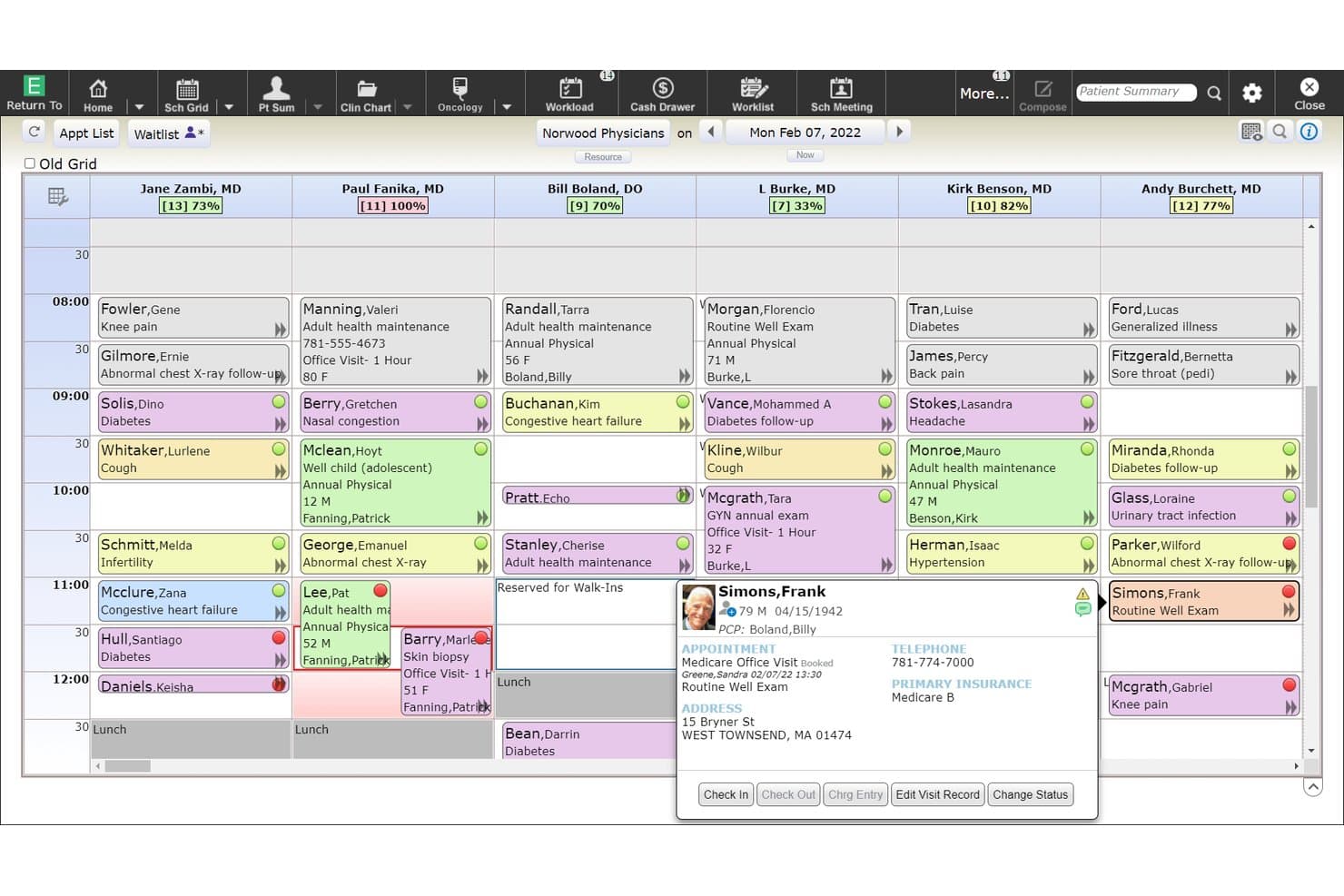
MEDITECH Expanse offers a multi-provider ambulatory scheduling grid displaying daily appointments, patient details, and status indicators across six physicians. MEDITECH Expanse is a cloud-hosted, hospital-grade EHR built for inpatient and ambulatory care, covering CPOE, nursing documentation, medication management, revenue cycle, and interoperability across departments, labs, pharmacies, and HIEs.
Who Is MEDITECH Expanse Best For?
MEDITECH Expanse is a strong fit for community, regional, and multi-site health systems looking for a cost-effective, web-based hospital EHR.
Why I Picked MEDITECH Expanse
I picked MEDITECH Expanse as one of the best because its fully web-based architecture lets clinicians access charts, enter orders, and document care from any browser without client software. I particularly like Expanse Now, the physician mobile app with voice command support, and Expanse Point of Care for bedside nursing documentation. The ambient listening feature, which auto-generates visit notes, keeps documentation moving without pulling clinicians away from patients.
MEDITECH Expanse Key Features
- Integrated revenue cycle management: Combines hospital billing, claims management, coding, and denials workflows within the EHR.
- Clinical analytics and population health: Delivers dashboards and tools for quality reporting, risk stratification, and population management.
- Bed and census management: Monitors real-time bed availability, patient flow, and unit capacity across all hospital departments.
- Interoperability via FHIR and HL7: Supports bidirectional data exchange with HIEs, labs, and imaging systems through modern APIs and legacy feeds.
MEDITECH Expanse Integrations
MEDITECH Expanse offers native integrations with DrFirst, First Databank, Forward Advantage, Intelligent Medical Objects, Interlace Health, MedPower, Micromedex, SSI Healthcare Revenue Cycle Solutions, Stedman's Online, and Zynx Health. An API and Greenfield app development environment are available for custom integrations.
Pros and Cons
Pros:
- Web-based access from any modern browser
- Strong hospital billing and revenue cycle support
- Flexible inpatient and specialty care modules
Cons:
- Reporting setup can be difficult for teams
- Interface often feels slow and outdated
Learn more about MEDITECH Expanse: Best for enterprise-wide clinical workflows
- Not available
- Pricing upon request
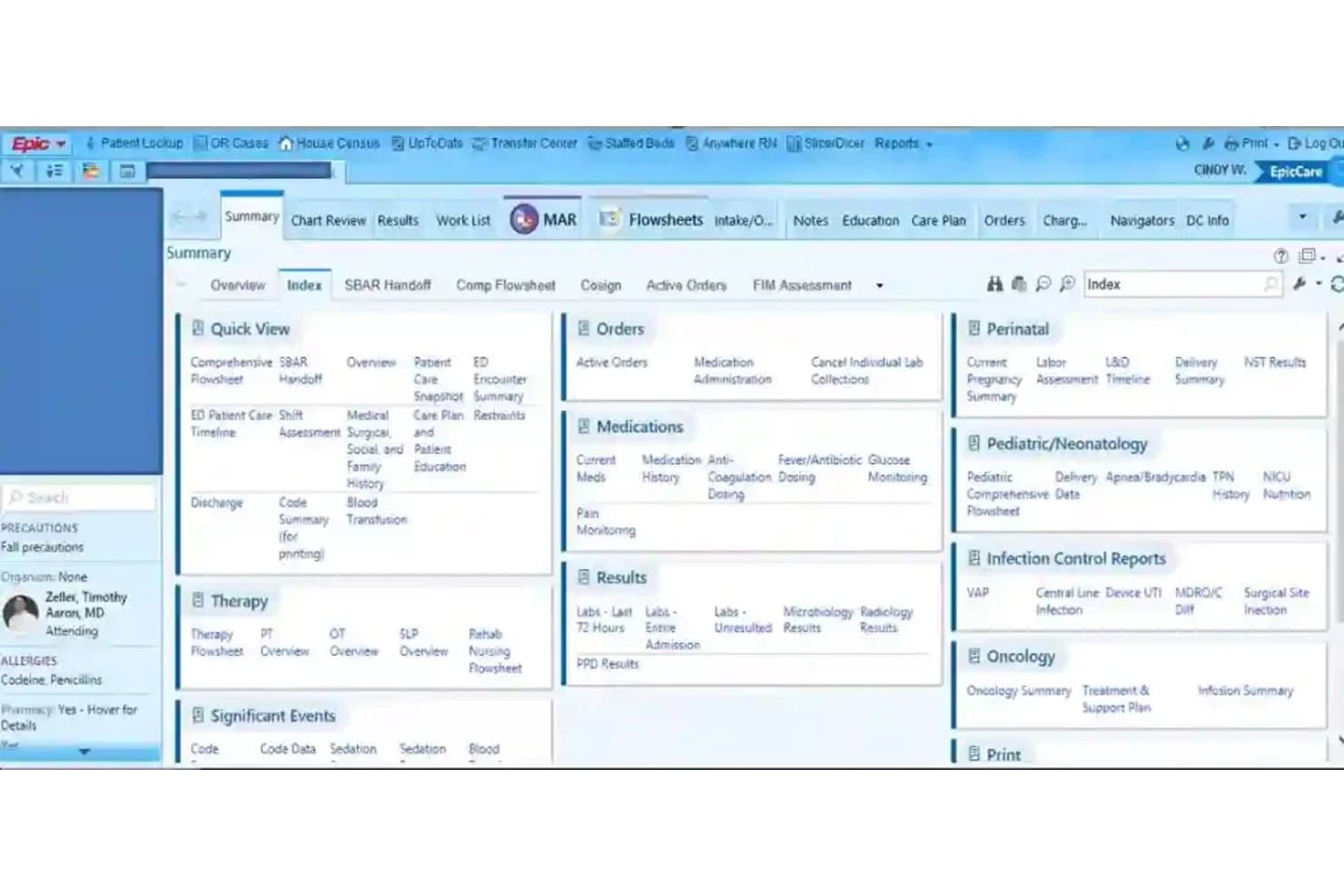
Epic Systems offers a comprehensive patient summary index view with quick access to orders, medications, results, therapy, and clinical reports within its EMR platform. Epic Systems is a hospital EMR platform built for large health systems, covering inpatient charting, CPOE, pharmacy management, revenue cycle, clinical decision support, and population health across acute and ambulatory care settings.
Who Is Epic Systems Best For?
Epic is built for large hospitals and multi-site health systems where CIOs and clinical informatics teams need a single, deeply integrated platform across every department.
Why I Picked Epic Systems
Epic Systems earns its spot on my shortlist because its "one patient, one record" architecture connects every care setting, from critical care to outpatient clinics, without data silos. I particularly like the Acute and Inpatient Care suite, which puts Willow Inpatient pharmacy, CPOE, and nursing workflows all in one place. The Art AI assistant also reduces documentation time by generating clinical notes directly within the charting workflow, which I've seen demonstrated at health systems like UNC Health and WakeMed.
Epic Systems Key Features
- Bed management dashboard: Tracks real-time bed status, patient flow, and unit census for hospitals managing high patient volumes.
- Integrated RCM tools: Provides a built-in billing engine with charge capture, claims scrubbing, coding, and denial management.
- HL7 and FHIR interface engine: Facilitates secure bidirectional data exchange with labs, imaging, and health information exchanges.
- Regulatory compliance reporting: Offers automated CMS quality measure reporting, ONC-certification support, and audit-ready compliance dashboards.
Epic Systems Integrations
Epic Systems offers native integrations with Tempus for precision oncology, Vitals Gateway for device data transfer, and numerous vendors via open.epic.com and showroom.epic.com, supporting HL7, FHIR, and CCDA standards for hospital interoperability. An API is available for custom integrations.
Pros and Cons
Pros:
- Advanced clinical decision support with AI
- Supports extensive specialty modules for departments
- Integrates inpatient and outpatient records seamlessly
Cons:
- Optimizing workflows requires significant IT resources
- Complex system configuration for new implementations
Learn more about Epic Systems:
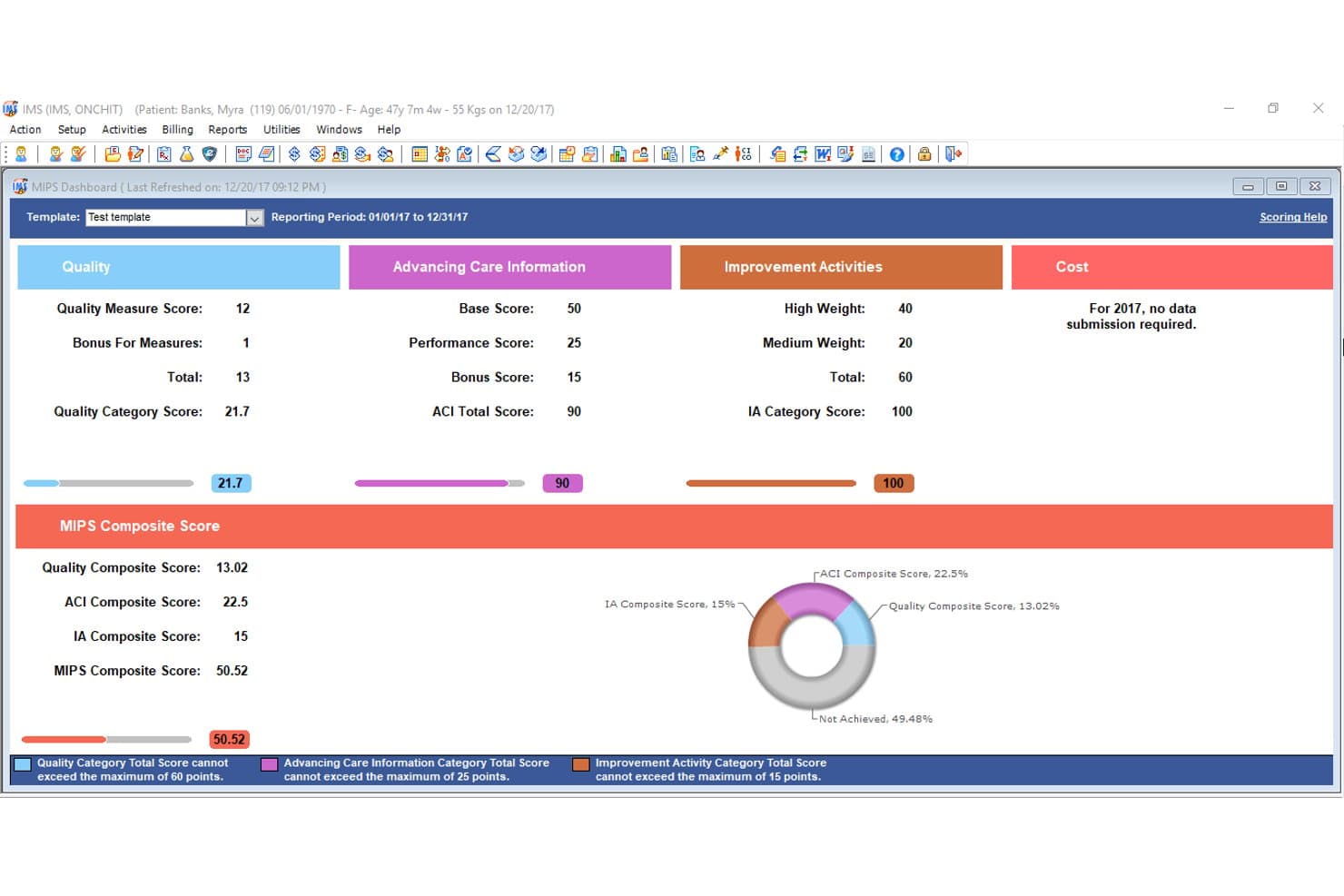
Meditab tracks MIPS composite scores across quality care categories. Meditab's Allergy EHR Software is a specialty-specific EMR solution built for allergy and immunology practices, with tools for immunotherapy documentation, skin-test tracking, reaction management, e-prescribing, and lab order workflows.
Who Is Meditab Best For?
Meditab's Allergy EHR Software is a strong fit for allergy and immunology practices that need a specialty-configured EMR with built-in immunotherapy workflows and documentation tools.
Why I Picked Meditab
I picked Meditab as one of the best because its allergy-specific workflow configuration goes deeper than most EMRs I've seen. The built-in skin test module and custom immunotherapy shot schedule templates mean an allergy practice isn't retrofitting a general-purpose EHR to fit specialty documentation needs. I also like the reaction-checking feature, which flags allergy-shot responses and surfaces built-in treatment protocols in real time, something that directly supports safer clinical decision-making during immunotherapy visits.
Meditab Key Features
- Automated immunotherapy billing: Handles billing workflows for immunotherapy treatments to reduce manual entry and billing errors.
- Missed-shot follow-up: Automatically contacts patients who miss scheduled immunotherapy appointments to support treatment continuity.
- IMS HIE connectivity: Connects to the Surescripts network to send and receive patient health information in CCDA format across clinicians.
- AI-powered visit transcription: Captures and transcribes provider-patient conversations, organizes content into a preferred note format, and uploads finalized notes to the patient record.
Meditab Integrations
Meditab has documented integrations with Morgan Scientific and ndd for spirometry and PFTs, Brevium for patient reactivation, GlobalPayments Integrated for payments, and Surescripts through IMS HIE. Its RESTful API uses OAuth 2.0 and supports JSON, XML, and HL7 CDA R2.
Pros and Cons
Pros:
- Reaction protocols support safer shot visits
- Reviewers praise adaptable tabs and workflows
- Custom shot schedules fit allergy documentation
Cons:
- No confirmed inpatient hospital workflows
- Reviewers report click-heavy post-visit documentation
Learn more about Meditab: Best for hospital EHR and emergency department
- Free demo available
- Pricing upon request
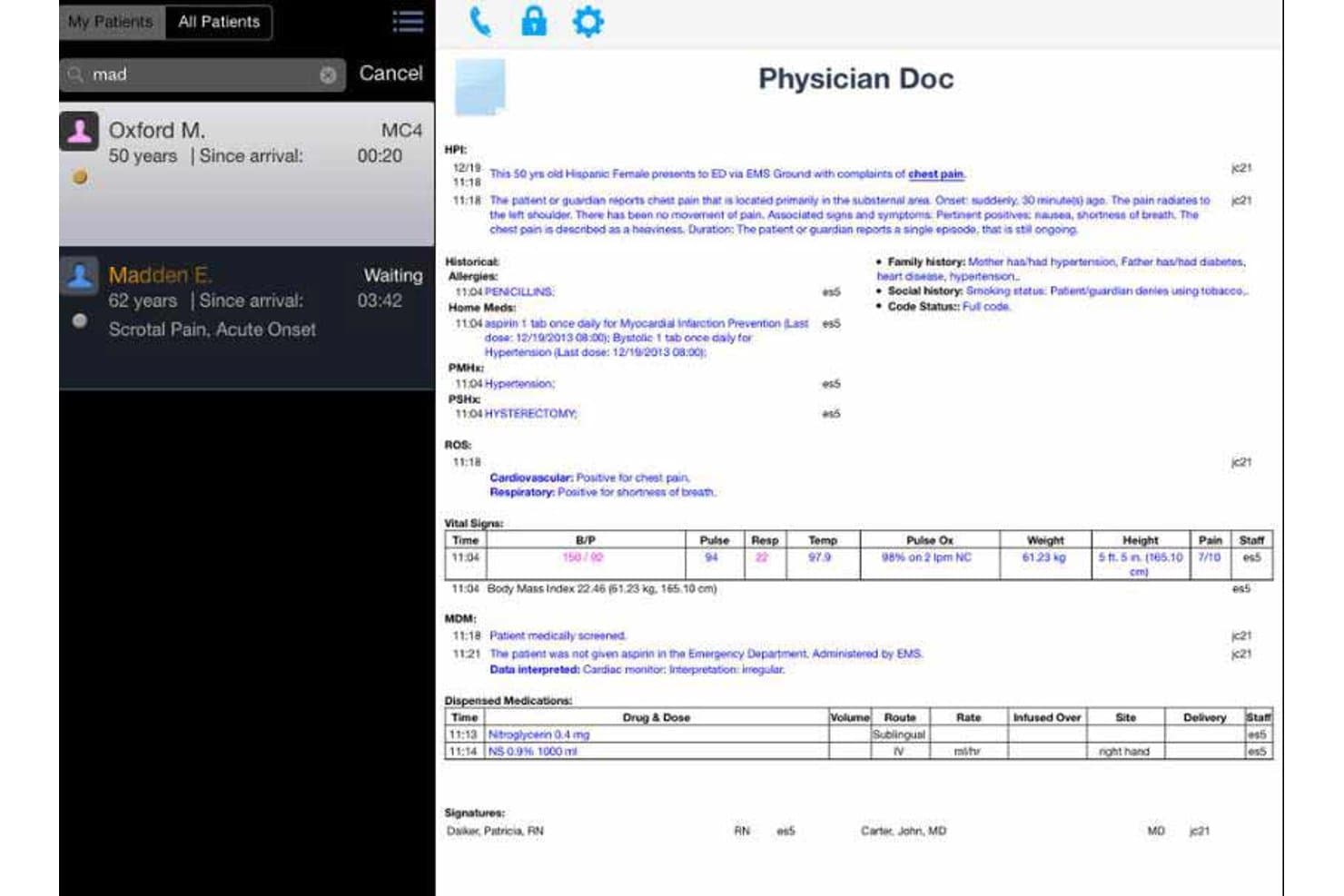
MEDHOST offers a detailed patient summary view within its Physician Doc interface, displaying HPI, vitals, medications, and MDM notes for ED patients. MEDHOST is a hospital-focused enterprise EHR that integrates inpatient clinical documentation, CPOE, emergency department workflows, revenue cycle management, and patient engagement tools across acute care settings.
Who Is MEDHOST Best For?
MEDHOST is a strong fit for community, rural, and mid-sized hospitals that need a fully integrated acute care EHR with a dedicated emergency department module.
Why I Picked MEDHOST
I've included MEDHOST in my top picks because its EDIS module is purpose-built for emergency department workflows in a way most hospital EHRs aren't. It features a graphical ED floor plan with touch-screen charting, one-touch order entry, and automatic charge capture, all designed by ED physicians and nurses. I also like the Closed Loop Medicine Administration with barcode scanning, which supports BCMA directly within the ED workflow rather than as a bolt-on.
MEDHOST Key Features
- Integrated revenue cycle management: Supports hospital billing, coding, charge capture, and claims workflows in one platform.
- ONC-certified compliance tools: Includes robust reporting for Meaningful Use, MIPS, and quality measures aligned with regulatory requirements.
- Hospital-wide interoperability: Enables data exchange via HL7, FHIR APIs, CCDA, and HIEs to connect with labs, imaging, and outpatient systems.
- Real-time bed and census management: Offers live visibility into bed status, patient flow, and department capacity across the hospital.
MEDHOST Integrations
MEDHOST offers native integrations with Health Gorilla, Surescripts, and MEDHOST HTI for interoperability, supports HL7, FHIR APIs, and CCDA, and provides an API for custom integrations.
Pros and Cons
Pros:
- Customizable reports for regulatory compliance
- Real-time bed and census management tools
- Emergency department workflows designed by clinicians
Cons:
- Fewer specialty modules than largest EHR vendors
- Limited advanced analytics or predictive features
Learn more about MEDHOST:
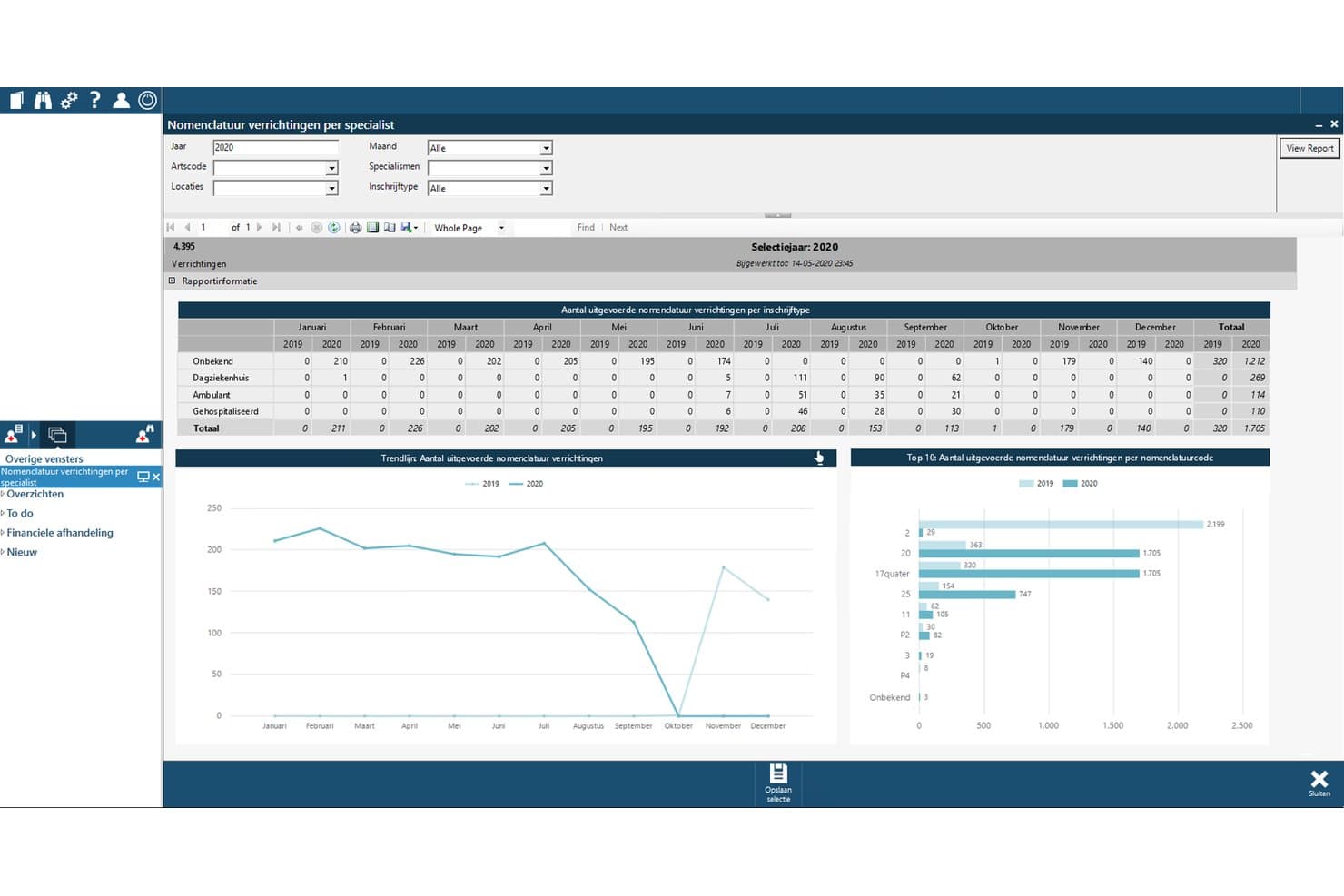
ChipSoft HiX tracks nomenclature procedures per specialist with charts. ChipSoft HiX is a hospital information and EHR system that covers clinical documentation, patient administration, medication management, CPOE, decision support, and cross-setting data exchange across more than 50 specialties.
Who Is ChipSoft HiX Best For?
HiX is a strong fit for hospitals and multi-site health systems that need a single, unified record spanning inpatient, outpatient, and long-term care settings.
Why I Picked ChipSoft HiX
I picked ChipSoft HiX as one of the best because it manages the full hospital record in a single clinical data repository, spanning inpatient, outpatient, and long-term care settings without duplicating patient data. I'm particularly impressed by its configurable specialty modules, which cover more than 50 specialties including ICU, oncology, and mental healthcare, each with role-specific templates and order sets built in. Its HiX Digital Health Services layer also handles cross-institution referrals, shared care, and real-time threshold alerts from connected patient-monitoring apps directly inside the clinician's workflow.
ChipSoft HiX Key Features
- Closed-loop medication management: HiX checks every prescription against the patient's active medication list, allergies, and lab results, flagging duplicates, contraindications, and interactions before administration.
- HiX Mobile app: Clinicians on rounds or in the operating theatre can access patient information and follow-up actions from smartphones, tablets, or smart TVs.
- Integrated patient portal: Patients can book appointments, submit readings, use eConsults, and view selected record sections directly within the HiX environment.
- Microsoft Dragon Copilot integration: Voice-controlled dictation and AI-generated clinical notes can be captured in multiple languages and formatted using smart templates inside HiX.
ChipSoft HiX Integrations
Documented integrations include Epic, Luscii, BeterDichtbij, BabyConnect, Novacair, HINQ, TWIIN, FocusCura, and cVitals. HiX also connects with external care-provider portals, PACS, and personal health environments through structured data exchange.
Pros and Cons
Pros:
- Device readings surface patient changes
- Specialty workflows cover 50-plus disciplines
- Shared patient record spans care settings
Cons:
- Medication workflows need careful staff training
- External data sharing can remain incomplete
Learn more about ChipSoft HiX: Best for flexible electronic patient records
- Not available
- Pricing upon request
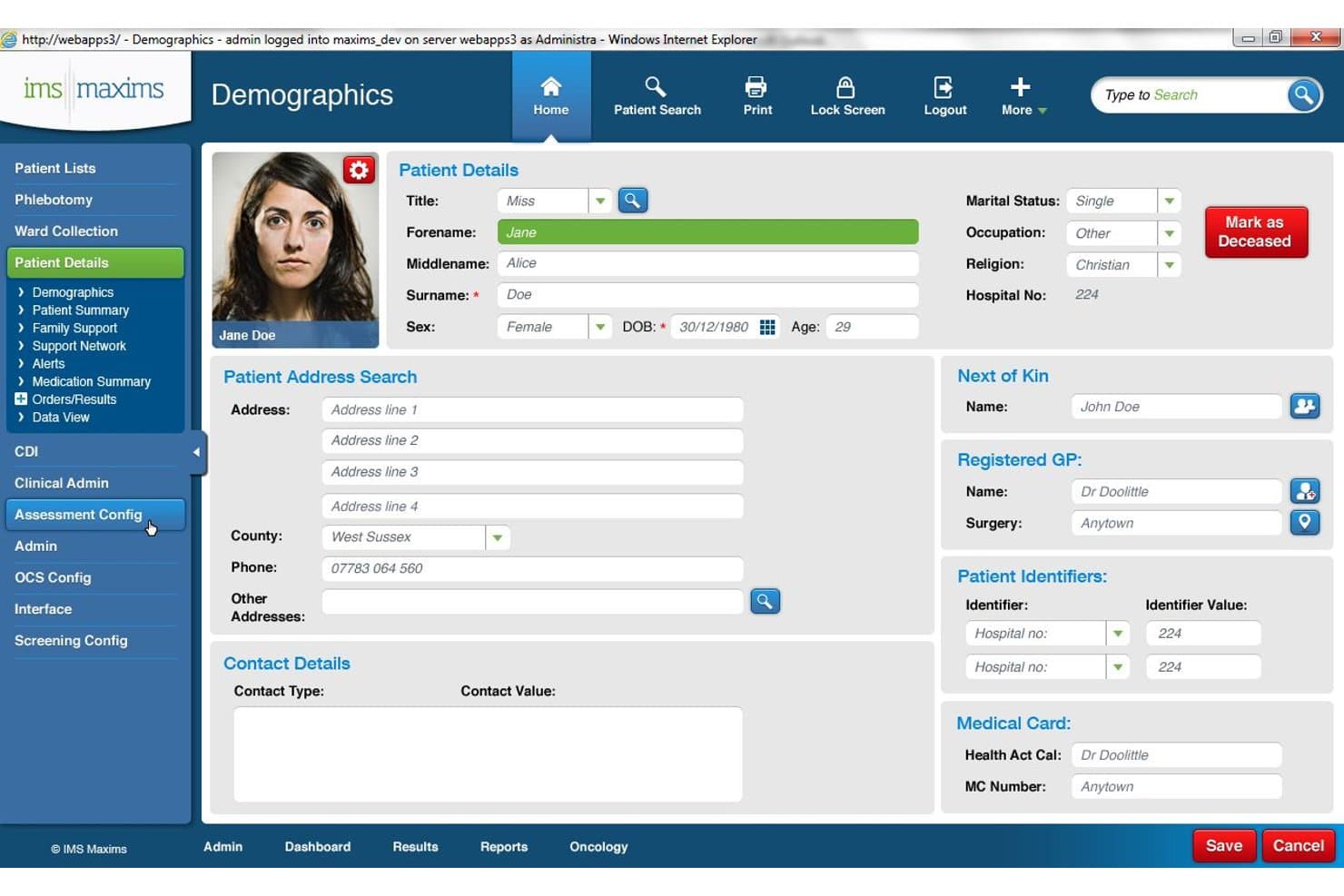
MAXIMS EPR combines clinical notes, care pathways and tasks in one record. MAXIMS EPR is a modular electronic patient record system built for hospitals that combines clinical documentation, order communications, ePrescribing, patient administration, and mobile point-of-care workflows.
Who Is IMS MAXIMS Best For?
IMS MAXIMS is a strong fit for NHS and public sector hospitals that need a highly configurable, modular EPR built to UK clinical and governance standards.
Why I Picked IMS MAXIMS
I've included IMS MAXIMS in my top picks because its modular EPR is built around genuine configurability, which matters when no two hospital departments document care the same way. I particularly like how its Smart Forms let clinical teams build specialty-specific assessments with scoring, validation rules, and pre-populated patient data baked in. Its OCRR module handles ordering across Pathology, Imaging, Cardiology, and Endoscopy from a single interface, with results flagged, annotated, and tracked through a full audit trail.
IMS MAXIMS Key Features
- eOBS early-warning monitoring: Records and graphs patient observations at the bedside, with automatic escalation pathways triggered by NEWS2, PEWS, and MEOWS scores.
- ePrescribing workflow: Supports the full medicines cycle from pre-admission history through discharge, with separate views for prescribers, pharmacists, and nursing staff.
- eWhiteboards: Provides electronic ward whiteboards for board rounds, capturing real-time patient location, care team, discharge planning, and falls risk in one view.
- Role-based access controls: Lets administrators configure permission sets by role so staff only access the patient data relevant to their clinical or administrative function.
IMS MAXIMS Integrations
IMS MAXIMS integrates with the Patient Demographic Service and NHS e-Referral Service. It also supports bidirectional HL7 messaging, FHIR APIs, and custom connections through open APIs.
Pros and Cons
Pros:
- NEWS2 escalation supports bedside deterioration monitoring
- End-to-end ordering and medicines workflows
- Configurable specialty forms validate clinical documentation
Cons:
- Predictive AI decision support remains exploratory
- Clinician reports describe interface as clunky
Learn more about IMS MAXIMS:
How I Evaluate Hospital EMR Software
I split my evaluation into three parts, weighting core functions most: creating structured patient records, protecting them, and supporting clinical notes and orders. Then I look for differentiators such as mobile charting or a unified patient timeline. Finally, I consider support, onboarding, data migration, and long-term pricing beyond the feature set.
Core Functionality (Table Stakes For This List)
When I'm selecting tools for my list, I score each one on a scale from 0 (does not offer the functionality) to 5 (excels in this area) for each core functionality listed below. I then convert the total into a percentage to help assess each tool's overall fit, with extra weight on any functionalities I’ve deemed essential.
- Patient Records (Essential): I look for structured, longitudinal charts that authorized clinicians can retrieve across visits, departments, and care transitions.
- Privacy And Security (Essential): I assess role-based access, encryption, and audit trails for protecting patient information and reviewing who accessed records.
- Clinical Documentation: I check for configurable templates and structured fields for documenting visits, diagnoses, and care plans across specialties.
- Orders And Prescribing: I evaluate electronic medication, lab, and imaging orders, including how teams track results and order status.
- Data Exchange: I look for standards-based exchange with labs, pharmacies, and other care systems to support referrals and transitions.
- Clinical Decision Support: I assess alerts for issues such as drug interactions and preventive care, and whether clinicians can act on them during care.
Once I have a list of tools that meet the criteria, I consider what sets each platform apart.
Differentiating Factors (What Sets Vendors Apart)
Here's how I compare and contrast different vendors:
Standout Features
I look for a unified patient timeline that pulls notes, orders, labs, and imaging into one longitudinal view across departments. Without it, physicians waste time toggling between screens during rounds. Voice-enabled documentation is another factor I evaluate, since ambient dictation can cut charting time and reduce after-hours documentation. I also check whether the platform includes embedded telehealth and a patient portal, which let care teams extend follow-ups beyond inpatient walls without stitching in a separate tool.
Beyond Features
I evaluate each vendor's uptime guarantees and failover protocols because even brief outages during a code or overnight admit can delay orders. Total cost of ownership matters just as much—I check whether pricing is per-bed, per-provider, or enterprise-wide, and look for hidden interface or storage fees that surface after signing. I also consider how well a platform scales across care settings, since a system that works for one facility but can't extend to new sites or outpatient clinics creates costly migration problems down the road.
Como escolher software hospitalar EMR
É fácil perder-se em listas extensas de funcionalidades e estruturas de preços complexas. Para o ajudar a manter o foco enquanto percorre o seu processo específico de seleção de software, apresentamos uma lista de verificação dos fatores a ter em conta:
| Fator | O que considerar |
| Escalabilidade | O software acompanhará o crescimento das suas instalações — com a adição de camas, unidades especializadas ou novos locais clínicos ao longo do tempo? Avalie os limites relativos aos utilizadores e aos fluxos de trabalho. |
| Integrações | Estabelece ligação aos sistemas atuais de laboratório, imagiologia, farmácia e faturação? Informe-se sobre o suporte de HL7/FHIR e os desafios de interoperabilidade com sistemas de terceiros. |
| Personalização | É fácil adaptar percursos clínicos, conjuntos de prescrições e relatórios? Considere se irá precisar de serviços do fornecedor para alterar os fluxos de trabalho. |
| Facilidade de utilização | Os médicos, enfermeiros e funcionários administrativos conseguirão navegar rapidamente pelos fluxos de trabalho diários? Procure ecrãs simples e uma navegação intuitiva, especialmente em ambientes de elevada acuidade. |
| Implementação e integração inicial | Qual é o prazo de implementação realista tendo em conta a dimensão do seu hospital e o nível de competências da equipa? Informe-se sobre períodos de inatividade, entradas em funcionamento faseadas e planos de formação no local. |
| Custo | Avalie o custo total de propriedade — licenciamento, infraestrutura, integração, atualizações e suporte contínuo. Obtenha discriminações tanto dos custos iniciais como das despesas a longo prazo. |
| Medidas de segurança | O fornecedor cumpre as normas HIPAA, HITECH e as normas locais de privacidade de dados? Analise os registos de auditoria, os controlos de acesso e os processos de deteção de violações. |
| Disponibilidade do suporte | Consegue contactar especialistas 24 horas por dia, 7 dias por semana, para esclarecer questões clínicas e técnicas? Informe-se sobre o suporte à recuperação após catástrofes e os tempos de escalamento para incidentes urgentes. |
O que são os softwares hospitalares EMR?
O software hospitalar de EMR refere-se a sistemas digitais concebidos para centralizar a documentação clínica de doentes internados, a faturação hospitalar e a troca de dados de saúde entre departamentos e equipas de cuidados. Estas plataformas apoiam os prestadores com registos clínicos, apoio à decisão clínica e funcionalidades de interoperabilidade, facilitando a coordenação dos cuidados, o cumprimento dos requisitos regulamentares e a gestão segura das informações dos doentes em ambientes hospitalares.
Funcionalidades do software hospitalar de EMR
Ao selecionar software hospitalar de EMR, esteja atento às seguintes funcionalidades essenciais:
- Registo clínico de doentes internados: Permite aos profissionais de saúde documentar admissões, notas de evolução e sinais vitais, apoiando a manutenção completa dos registos dos doentes em todos os departamentos hospitalares.
- Introdução informatizada de pedidos pelos prestadores: Permite aos prestadores introduzir eletronicamente pedidos de medicamentos, análises laboratoriais e exames imagiológicos, reduzindo os erros e acelerando a prestação de cuidados.
- Apoio à decisão clínica: Disponibiliza alertas, lembretes e conjuntos de pedidos baseados em evidências no local de prestação de cuidados, para melhorar a tomada de decisões e a segurança dos doentes.
- Gestão da medicação: Disponibiliza ferramentas para prescrição eletrónica, reconciliação da medicação e integração com farmácias, garantindo uma administração segura e rigorosa dos medicamentos.
- Faturação e codificação hospitalar: Integra a captura de encargos, a codificação ICD-10/DRG e os fluxos de trabalho de pedidos de reembolso UB-04/837I, apoiando reembolsos rigorosos e atempados.
- Interoperabilidade: Permite a troca contínua de dados com laboratórios, centros de imagiologia, HIE e outros sistemas de saúde, utilizando as normas HL7, FHIR e CCDA.
- Gestão de camas e da ocupação: Acompanha a disponibilidade de camas e a ocupação de doentes em tempo real, ajudando as equipas de cuidados a melhorar o fluxo de doentes e o planeamento da capacidade.
- Comunicação de informações regulamentares: Apoia a recolha e a comunicação automatizadas de dados para programas como o programa CMS de promoção da interoperabilidade, o MIPS e as medidas de qualidade.
- Controlos de segurança baseados em funções: Atribui o acesso com base na função profissional, protegendo informações sensíveis dos doentes e apoiando o cumprimento dos regulamentos de privacidade.
- Registo de auditoria: Monitoriza e regista o acesso ao sistema e as alterações efetuadas, ajudando as equipas a manter a integridade dos dados e a cumprir os requisitos de auditoria.
Funcionalidades comuns de IA do software hospitalar de EMR
Para além das funcionalidades padrão do software hospitalar de EMR acima indicadas, muitas destas soluções estão a incorporar IA com funcionalidades como:
- Análise preditiva: Utiliza IA para identificar doentes em risco de readmissão, deterioração ou complicações, analisando dados clínicos e demográficos em tempo real.
- Documentação clínica automatizada: Utiliza o processamento de linguagem natural para transcrever e resumir conversas entre prestadores e doentes, reduzindo o tempo dedicado ao registo manual.
- Assistência à codificação baseada em IA: Sugere códigos de faturação rigorosos com base nas notas clínicas e na documentação, ajudando a reduzir as rejeições de pedidos e a acelerar os reembolsos.
- Automatização inteligente dos fluxos de trabalho: Otimiza o encaminhamento de tarefas, dá prioridade aos alertas e simplifica a coordenação dos cuidados, aprendendo com padrões históricos dos fluxos de trabalho.
- Análise de imagens clínicas: Aplica a aprendizagem automática a imagens de radiologia e patologia, assinalando possíveis anomalias para análise pelos prestadores e apoiando diagnósticos mais rápidos.
Benefícios do software hospitalar de EMR
A implementação de software hospitalar de EMR proporciona vários benefícios à sua equipa e à sua organização. Eis alguns dos benefícios que pode esperar:
- Melhor coordenação dos cuidados: O registo clínico centralizado de doentes internados e a interoperabilidade facilitam o acesso das equipas de cuidados a informações atualizadas sobre os doentes.
- Maior segurança dos doentes: O apoio à decisão clínica e a gestão da medicação ajudam a assinalar interações medicamentosas e a reduzir o risco de erros no local de prestação de cuidados.
- Faturação e reembolsos mais rápidos: A captura integrada de encargos, a codificação e os fluxos de trabalho de pedidos de reembolso simplificam o ciclo de receitas e ajudam a minimizar os atrasos na faturação.
- Melhoria da qualidade baseada em dados: As ferramentas integradas de análise e comunicação de informações permitem à sua organização acompanhar os resultados, monitorizar o cumprimento e atingir os objetivos regulamentares.
- Maior eficiência operacional: A gestão automatizada de camas, o encaminhamento de tarefas e a personalização dos fluxos de trabalho ajudam as equipas a gerir os recursos e o fluxo de doentes de forma mais eficaz.
- Maior segurança dos dados: Os controlos de acesso baseados em funções, os registos de auditoria e as salvaguardas compatíveis com a HIPAA protegem as informações sensíveis e apoiam os requisitos de conformidade.
- Redução da carga sobre os profissionais de saúde: A documentação clínica automatizada e a navegação intuitiva reduzem o trabalho manual, ajudando a prevenir o esgotamento profissional e a simplificar as rotinas diárias.
Custos e preços do software hospitalar de EMR
Ao selecionar software hospitalar EMR, é necessário compreender os vários modelos de preços e planos disponíveis. Os custos variam consoante as funcionalidades, o tamanho da equipa, os complementos e outros fatores. A tabela abaixo resume os planos comuns, os respetivos preços médios e as funcionalidades normalmente incluídas nas soluções de software hospitalar EMR:
Tabela de comparação de planos para software hospitalar EMR
| Tipo de plano | Preço médio | Funcionalidades comuns |
| Plano gratuito | $0 | Registo limitado de internamentos, documentação básica de sinais vitais e acesso restrito ao suporte. |
| Plano pessoal | $50–$100/mês | Ferramentas de registo padrão, introdução de pedidos, relatórios regulamentares básicos e interoperabilidade essencial com laboratórios e imagiologia. |
| Plano empresarial | $300–$700/mês | Fluxos de trabalho completos para internamento, prescrição eletrónica, faturação avançada, registos de auditoria, modelos personalizados e análise clínica melhorada. |
| Plano empresarial de grande escala | $1,500–$5,000/mês | Gestão de vários locais, suporte prioritário, integração inicial dedicada, personalização abrangente, integrações completas e ANS de disponibilidade. |
Perguntas frequentes sobre software hospitalar EMR
Eis algumas respostas a perguntas frequentes sobre software hospitalar EMR:
Quanto tempo demora a implementar software hospitalar EMR?
A implementação demora normalmente entre 12 e 24 meses, dependendo da dimensão do hospital, do número de funcionários e dos sistemas informáticos existentes. São frequentemente necessários planeamento, formação dos funcionários e entradas em produção faseadas para minimizar as perturbações.
O software hospitalar EMR pode integrar-se com os sistemas laboratoriais e de imagiologia existentes?
Sim, a maioria das soluções suporta a integração com sistemas laboratoriais e de imagiologia através das normas HL7 ou FHIR. Isto permite a entrega automática de resultados, o acompanhamento de pedidos e cuidados mais coordenados.
Que suporte está disponível para os funcionários durante e após a entrada em produção?
Muitos fornecedores disponibilizam formação no local, linhas de suporte 24 horas por dia, 7 dias por semana, configuradores clínicos e bibliotecas de recursos para a formação contínua dos funcionários e a resolução de problemas após a entrada em produção.
Que medidas de segurança são padrão no software hospitalar EMR?
É de esperar a existência de controlos de acesso em conformidade com a HIPAA, registos de auditoria, encriptação de dados e ferramentas de deteção de violações que ajudam a garantir a privacidade dos doentes e a conformidade regulamentar.
Como são normalmente estruturados os custos do software hospitalar EMR?
A maioria dos fornecedores cobra com base no número de camas, nas licenças de utilizador ou num acordo empresarial. Os custos abrangem o licenciamento, a formação, a manutenção, a integração e, por vezes, módulos ou personalizações adicionais.