
Programvare for medisinsk talegjenkjenning gjør talespråk om til klinisk dokumentasjon og reduserer tiden som brukes på å skrive pasientnotater. Denne veiledningen sammenligner de beste alternativene basert på hvor godt de passer inn i arbeidsflyten, behovene innen ulike spesialiteter og klinisk nøyaktighet.
Why Trust Our Software Recommendations
6,700+
Reviews
20
Industry experts
16+
Evaluation factors
14
Years
Our team has been testing and reviewing software since 2012. As medical practice leaders ourselves, we know how difficult—and important—it is to choose the right software.
For this guide, we evaluated tools using hands-on testing and independent research, scoring tools using our selection criteria.
Our reviews reflect our human editorial judgment, not a sales pitch.
Sammenligningstabell: Programvare for medisinsk talegjenkjenning
Denne sammenligningstabellen oppsummerer prisdetaljene for mine utvalgte programmer for medisinsk talegjenkjenning.
| Tool | Best For | Trial Info | Price | ||
|---|---|---|---|---|---|
| 1 | Best for live remote documentation support | Free demo available | Pricing upon request | Website | |
| 2 | Best for scalable cloud-based speech processing | Free plan available | Pricing upon request | Website | |
| 3 | Best for mobile on-the-go dictation workflows | 7-day free trial | From $39/month | Website | |
| 4 | Best for AI-driven clinical documentation accuracy | 14-day free trial | From $110/user/month (billed annually) | Website | |
| 5 | Best for instant SOAP note generation | Free plan available | Pricing upon request | Website | |
| 6 | Best for ambient patient conversation capture | Free demo available | Pricing upon request | Website | |
| 7 | Best for automated encounter summarization | Not available | Pricing upon request | Website | |
| 8 | Best for voice-driven clinical note creation | Not available | Pricing upon request | Website | |
| 9 | Best multilingual transcription support | 30-day free trial | From €49/month | Website | |
| 10 | Best for real-time EHR integration | Free demo available | Pricing upon request | Website |


Anmeldelser av programvare for medisinsk talegjenkjenning
Nedenfor finner du mine detaljerte oppsummeringer av den beste programvaren for medisinsk talegjenkjenning som kom med på kortlisten min. Anmeldelsene mine gir en detaljert oversikt over funksjonene, de beste bruksområdene og mulighetene i hvert program, slik at du kan finne det som passer best for deg.
 Best for live remote documentation support
- Free demo available
- Pricing upon request
Visit WebsiteCustomer Rating:4.4/5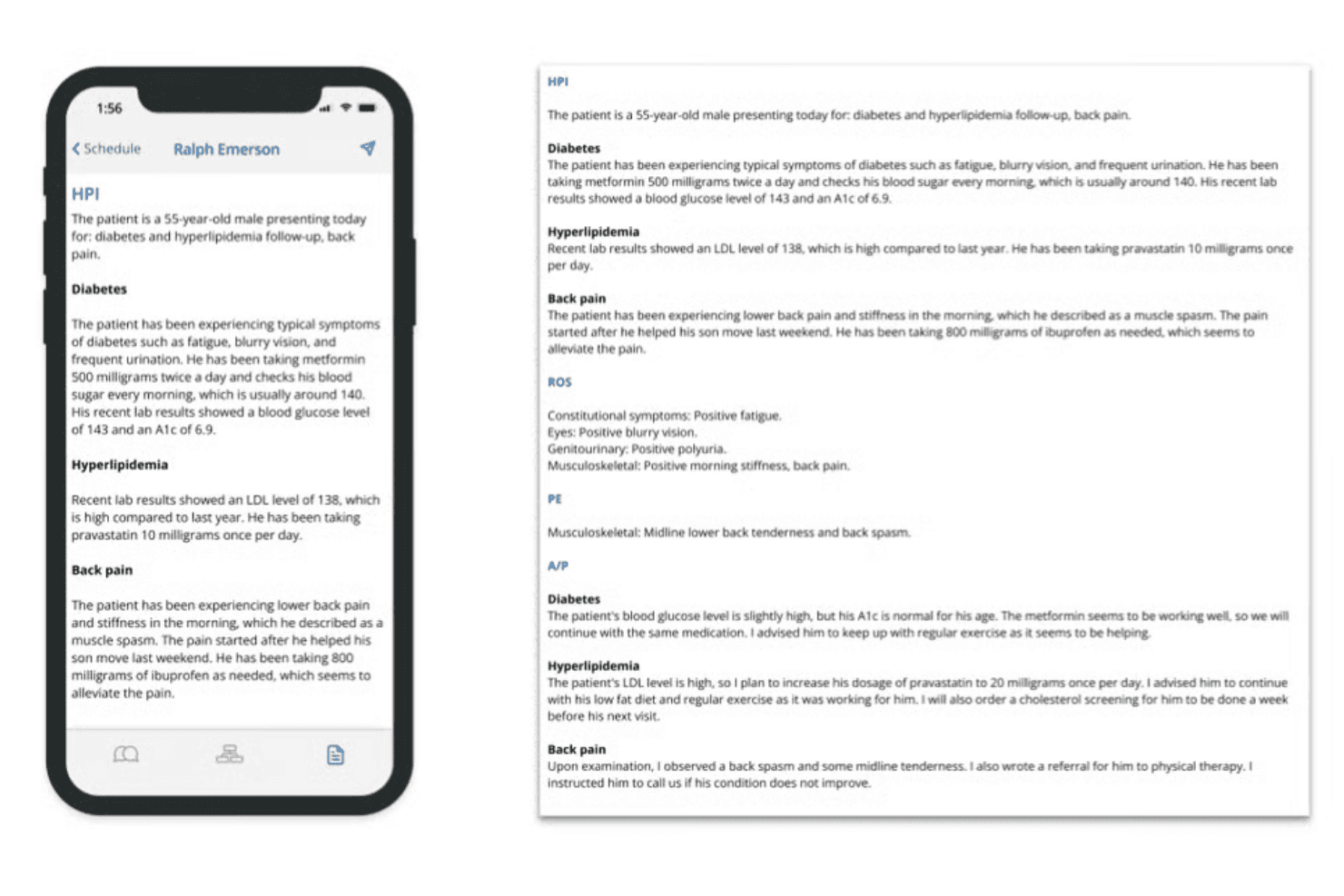
Augmedix captures live conversations and turns them into structured EHR notes. Augmedix is an ambient AI scribe platform that captures live clinician-patient conversations and converts them into structured clinical notes using a combination of specialty-tuned AI models and human medical documentation specialists, with direct EHR integration.
Who Is Augmedix Best For?
Augmedix is a strong fit for hospitals, health systems, and specialty physician groups that handle high patient volumes across complex clinical environments.
Why I Picked Augmedix
Augmedix earns its spot as one of the best on my shortlist because of its Augmedix Live tier, which pairs a dedicated Medical Documentation Specialist with AI to generate signature-ready notes moments after each visit. I love that the MDS gets to know each clinician's preferences over time, so notes arrive already formatted the way a physician expects. Two-way communication with the scribe during the visit also allows real-time corrections before a note ever reaches the EHR.
Augmedix Key Features
- Specialty-tuned AI models: Processes conversations using pretrained medical language models tailored for multiple specialties and subspecialties.
- Bidirectional EHR integration: Directly uploads structured notes to Epic, Cerner, Meditech, athenahealth, and other major EHRs.
- CareCues real-time reminders: Delivers billing or care gap prompts during documentation to support compliance and reimbursement.
- Discrete data entry: Supports entry of labs, imaging orders, and referral letters into the EHR as part of the documentation workflow.
Augmedix Integrations
Augmedix offers native integrations with Epic, Cerner, Meditech, and athenahealth, and provides an API for custom integrations.
Pros and Cons
Pros:
- CareCues surfaces billing reminders during live encounters
- Specialty-tuned models cover multiple clinical disciplines
- Human scribes verify all AI-generated notes
Cons:
- No self-service onboarding without implementation support
- Requires a dedicated wearable or mobile device
Learn more about Augmedix: Best for scalable cloud-based speech processing
- Free plan available
- Pricing upon request
Visit WebsiteCustomer Rating:4.6/5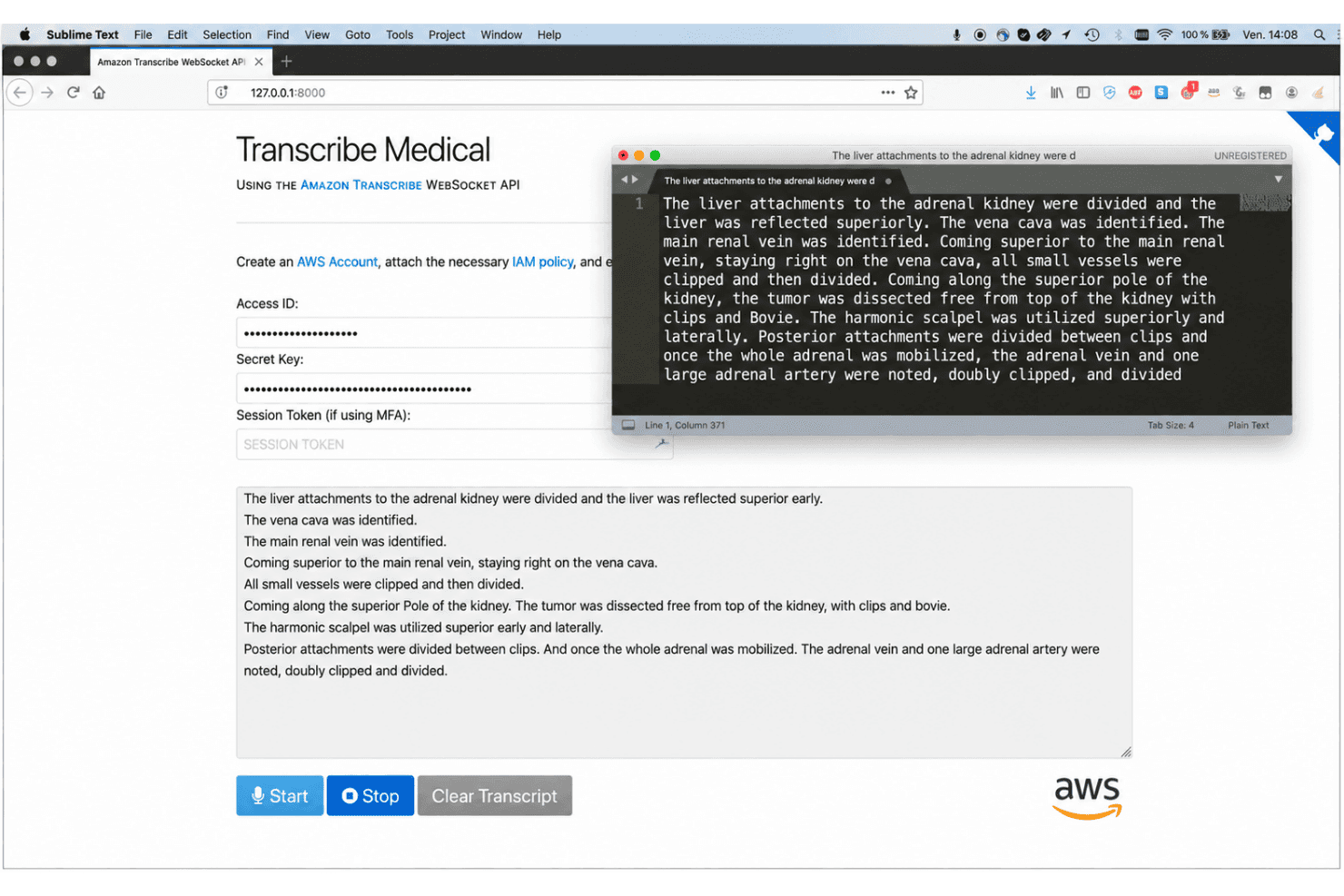
Amazon Transcribe Medical converts clinical speech into real-time medical text. Amazon Transcribe Medical is a cloud-based ASR API that converts clinical speech to text in real time, covering medical terminology across specialties like cardiology, neurology, oncology, and radiology, with support for both dictation and multi-speaker conversational audio.
Who Is Amazon Transcribe Medical Best For?
It's a strong fit for health-tech developers and ISVs building clinical documentation or telehealth applications that require scalable, HIPAA-eligible speech-to-text infrastructure.
Why I Picked Amazon Transcribe Medical
I picked Amazon Transcribe Medical as one of the best because its cloud-native architecture handles concurrent audio workloads that would overwhelm a desktop dictation tool. Its batch API processes pre-recorded files at high concurrency, while the streaming API delivers real-time output across simultaneous sessions. I also appreciate that it covers seven clinical specialties natively, so accuracy holds up across cardiology, oncology, and radiology dictations without custom model training.
Amazon Transcribe Medical Key Features
- Medical specialty vocabularies: Supports terminology for cardiology, neurology, oncology, obstetrics-gynecology, pediatrics, radiology, and urology.
- Speaker diarization: Distinguishes and labels different speakers in multi-party clinical conversations.
- PHI identification: Automatically detects and labels protected health information in transcribed medical audio.
- Word-level timestamps: Outputs each word in the transcript with precise time markers for detailed review or downstream processing.
Amazon Transcribe Medical Integrations
Native integrations are not clearly documented. The tool supports integrations via API for custom workflows and development.
Pros and Cons
Pros:
- HIPAA-eligible with a BAA available
- Seven clinical specialty vocabularies supported natively
- Handles high-volume concurrent audio workloads
Cons:
- Requires developer setup for clinical deployment
- No native EHR field dictation support
Learn more about Amazon Transcribe Medical: Best for mobile on-the-go dictation workflows
- 7-day free trial
- From $39/month
Visit WebsiteCustomer Rating:5/5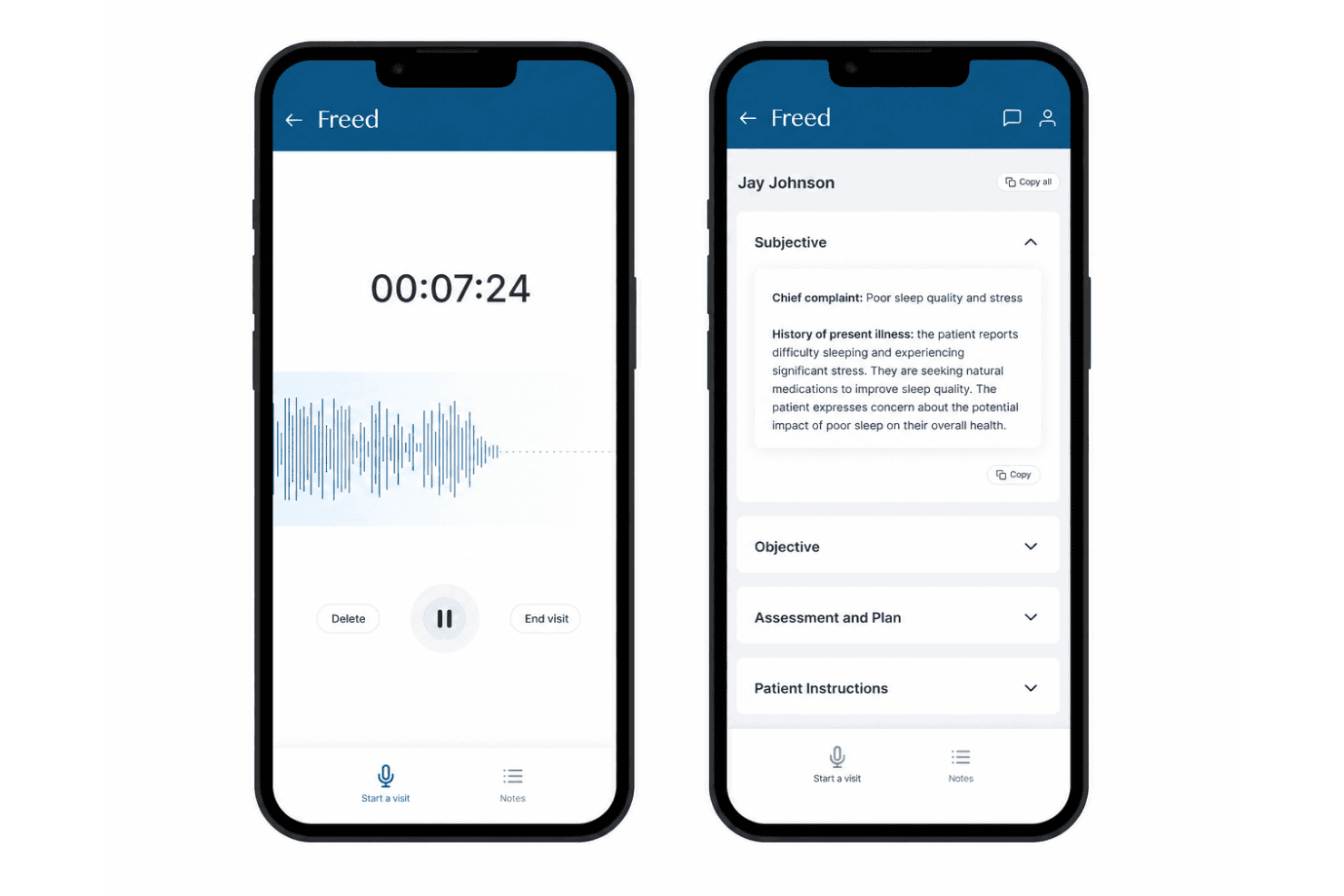
Freed AI captures patient conversations and creates SOAP notes and coding guidance. Freed AI is an ambient AI medical scribe that captures patient conversations in real time and generates SOAP notes, coding recommendations, and clinical documentation across 96 specialties.
Who Is Freed AI Best For?
Freed AI suits independent and small-practice clinicians who need a lightweight, mobile-friendly documentation tool without a complex IT setup.
Why I Picked Freed AI
I picked Freed AI as one of the best because its iOS app (rated 4.8/5 on the App Store) delivers the full ambient scribe experience from a smartphone, something most clinical voice recognition tools treat as an afterthought. Clinicians can open the app between rooms, capture a full encounter, and have a complete SOAP note ready before reaching the next patient. Specialty-specific templates and multilingual capture across 14 languages work just as well on mobile as on desktop.
Freed AI Key Features
- Clinical evidence answers: Instantly provides cited clinical sources connected to the patient note for reference.
- Coding assistant: Recommends ICD-10, CPT, and E/M codes as part of the scribe workflow.
- Multilingual ambient capture: Captures and transcribes encounters in over a dozen languages, outputting notes in English.
- Team template library: Allows groups to share and access a collection of specialty and workflow-specific templates.
Freed AI Integrations
Native integrations include Athenahealth and eClinicalWorks. Freed AI also provides a Chrome helper extension for browser-based EHR workflows. An API is available for custom integrations.
Pros and Cons
Pros:
- Multilingual capture supports over 14 languages
- Covers documentation across 96 medical specialties
- Instantly generates SOAP notes after each encounter
Cons:
- Primarily built for solo or small practices
- No on-premise deployment option available
Learn more about Freed AI: Best for AI-driven clinical documentation accuracy
- 14-day free trial
- From $110/user/month (billed annually)
Visit WebsiteCustomer Rating:4.9/5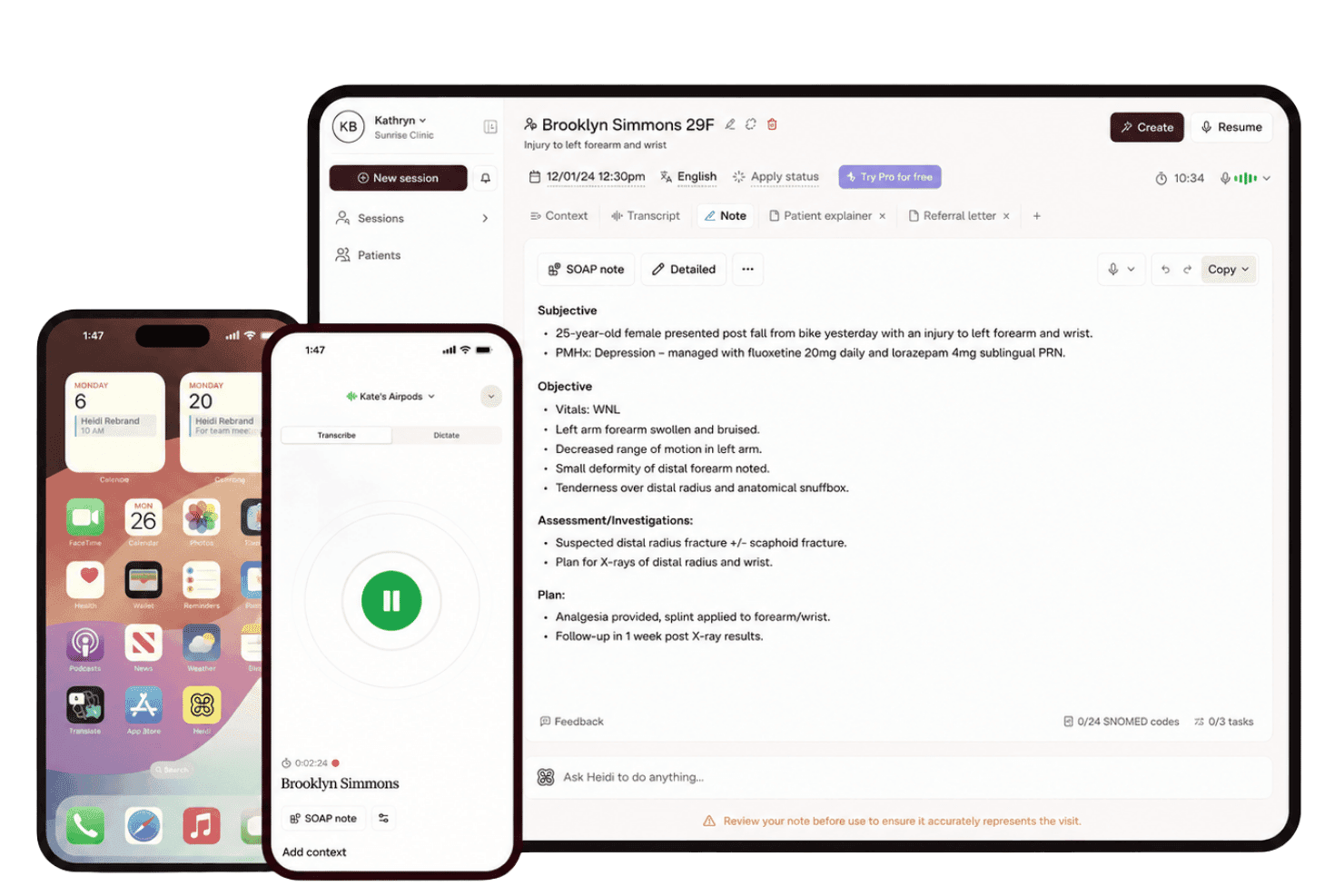
Heidi Health captures patient conversations and converts them into structured notes. Heidi Health is an ambient AI scribe and clinical documentation platform that captures patient encounters via voice, converts them into structured clinical notes, and pushes documentation directly into EHR systems.
Who Is Heidi Health Best For?
Heidi Health suits independent physicians and multi-provider practices that want to cut documentation time without overhauling their existing EHR setup.
Why I Picked Heidi Health
I picked Heidi Health as one of the best because its AI doesn't just transcribe, it structures. The ambient scribe captures a full patient encounter and organizes output into clinician-defined templates, adapting to individual terminology preferences through a personal Word Library. What I find particularly strong is the "Ask Heidi" layer, which lets me refine or restructure notes using conversational commands immediately after a session, without touching a keyboard.
Heidi Health Key Features
- Multi-specialty vocabularies: Recognizes clinical terms, medications, and procedures across 110+ medical specialties and subspecialties.
- Push-to-EHR integrations: Supports direct charting in Epic, Cerner, athenahealth, eClinicalWorks, and dozens of PMS/EHR platforms.
- Ambient listening mode: Captures and transcribes patient-clinician conversations passively for structured documentation.
- Mobile app dictation: Lets clinicians document patient encounters using iOS and Android devices on the go.
Heidi Health Integrations
Heidi Health offers native integrations with Epic, athenahealth, Cerner, eClinicalWorks, Best Practice, Cliniko, Halaxy, MedicalDirector, Nookal, and Zedmed. An API is available for custom integrations.
Pros and Cons
Pros:
- Structured SOAP output requires minimal post-session edits
- Note accuracy adapts to individual clinician terminology
- Ambient mode captures notes without dictation commands
Cons:
- Note quality can dip in noisy clinical environments
- No on-premise deployment for strict data residency needs
Learn more about Heidi Health:
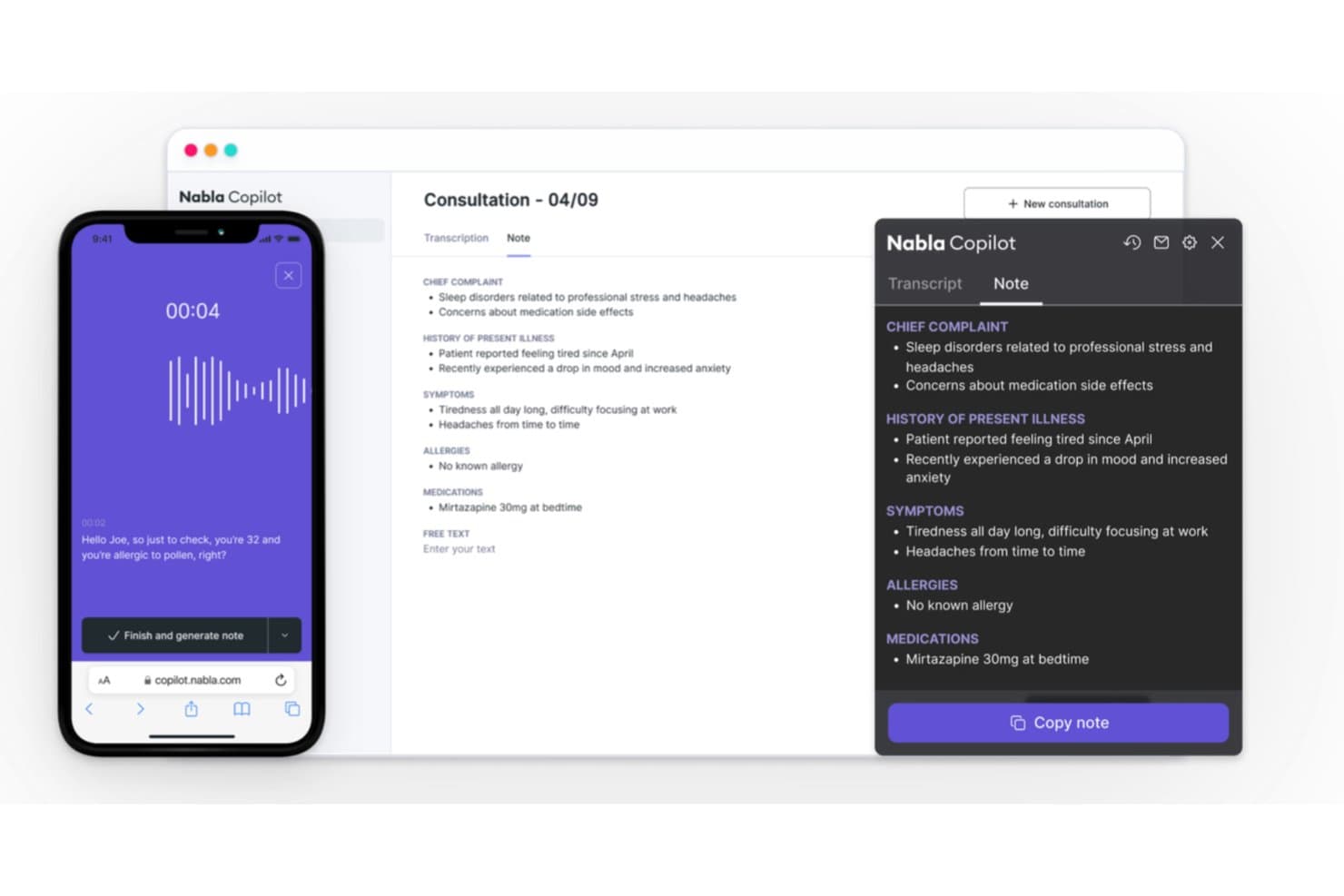
Nabla converts doctor-patient conversations into structured clinical notes. Nabla is an ambient clinical AI platform that combines real-time ambient documentation, clinical-grade dictation, and AI-assisted coding to support clinicians across in-person and virtual patient encounters.
Who Is Nabla Best For?
Nabla suits physicians and clinicians in multi-provider practices or health systems who want to cut documentation time without changing how they conduct patient encounters.
Why I Picked Nabla
I picked Nabla as one of the best because of how it handles the full SOAP note workflow in a single passive step. It listens during the encounter and generates a structured note in roughly five seconds, which means I'm not dictating after the fact or filling in templates manually. The Magic Edit feature lets me shape how the AI writes to match my clinical voice, and the 16 built-in specialty templates cover different visit types without extra setup.
Nabla Key Features
- Multilingual, specialty-specific vocabularies: Supports 55+ medical specialties and over 35 languages for broad clinical terminology recognition.
- EHR-native integration: Connects natively to Epic, Cerner, athenahealth, NextGen, Arya EHR, and Greenway Health.
- AI-assisted coding suggestions: Automatically suggests ICD-10 and E/M codes from clinical documentation within the workflow.
- Customizable note templates: Allows providers to select and personalize documentation templates for different visit types or specialties.
Nabla Integrations
Nabla offers native integrations with Epic, Oracle Health (Cerner), athenahealth, NextGen, Arya EHR, Greenway Health, and Meditech. An API is available for custom integrations.
Pros and Cons
Pros:
- Passive ambient listening needs no dictation commands
- Covers documentation across 55+ medical specialties
- SOAP notes generated in roughly five seconds
Cons:
- Limited voice command navigation within EHR fields
- No on-premise deployment option available
Learn more about Nabla: Best for ambient patient conversation capture
- Free demo available
- Pricing upon request
Visit WebsiteCustomer Rating:4.1/5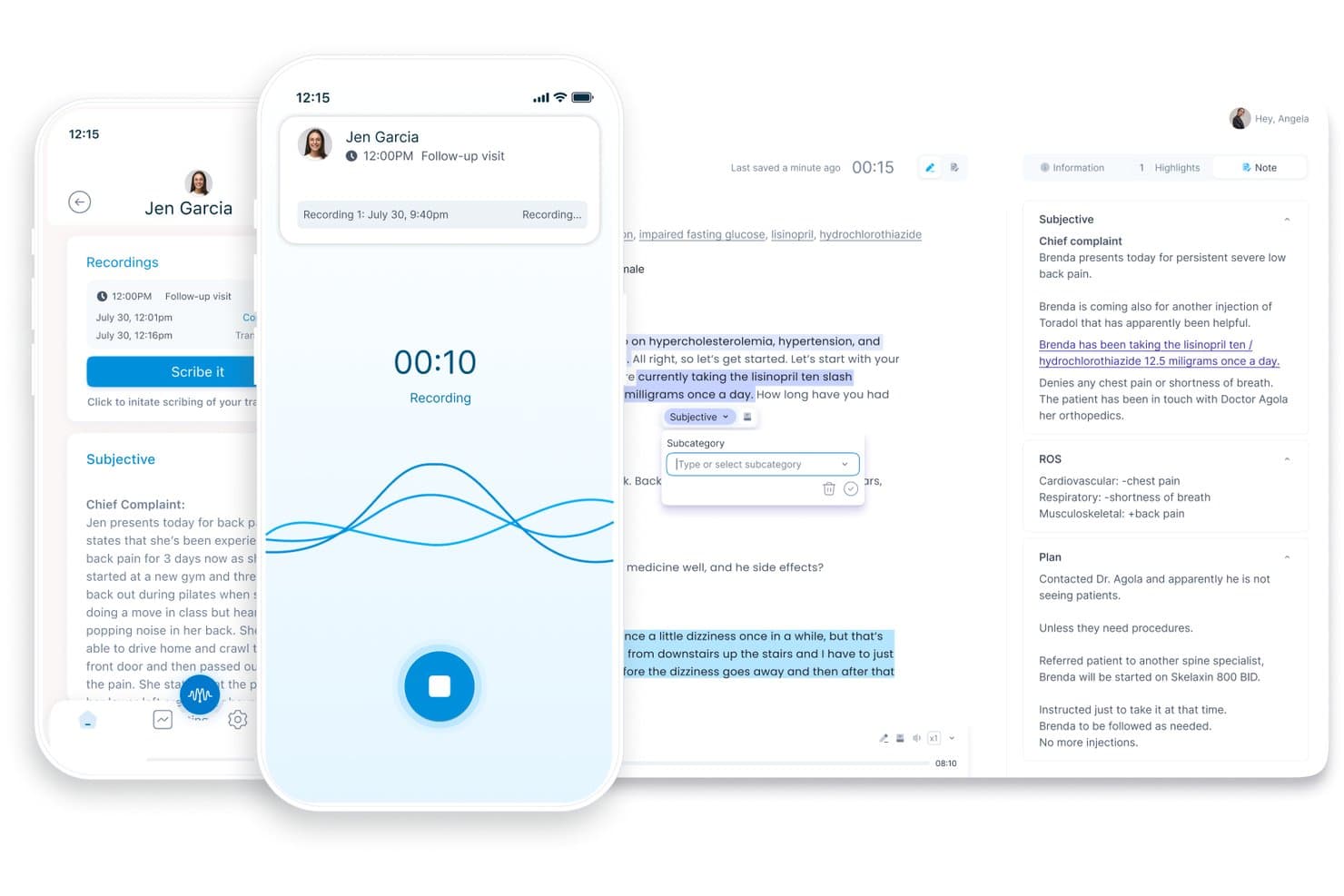
DeepScribe offers an AI-powered voice recording and transcription interface that automatically generates structured clinical notes with subjective, ROS, and plan sections. DeepScribe is an ambient AI medical scribe that captures live clinician-patient conversations and converts them into structured clinical notes, with built-in AI coding and specialty-tuned documentation models across oncology, cardiology, and other complex specialties.
Who Is DeepScribe Best For?
DeepScribe is a strong fit for specialty care physicians—particularly in oncology and cardiology—who handle high volumes of complex, terminology-heavy patient encounters.
Why I Picked DeepScribe
DeepScribe earns its spot on my shortlist because of how it handles ambient patient conversation capture. Unlike dictation tools that require voice commands, DeepScribe listens passively to the encounter and generates a structured note automatically. I particularly like the specialty-tuned models: an oncology note looks nothing like a cardiology note, and DeepScribe handles that distinction natively. The AI Coding layer also pulls E/M, HCC, and ICD-10 codes straight from the conversation.
DeepScribe Key Features
- Customizable templates and macros: Create and refine documentation templates tailored to specialty or provider preferences.
- EHR bidirectional integration: Sync notes directly with Epic, athenahealth, eClinicalWorks, ModMed, and other major EHR platforms.
- Multilingual conversation support: Capture clinical encounters in over 110 supported languages for diverse patient populations.
- HIPAA-compliant data handling: Delivers secure encryption, audit controls, and BAA support for all recorded clinical data.
DeepScribe Integrations
DeepScribe offers native integrations with Epic, athenahealth, eClinicalWorks, DrChrono, AdvancedMD, ModMed, Practice Fusion, Veradigm, Kareo, Elation, and Charm. An API is available for custom integrations.
Pros and Cons
Pros:
- Specialty note models across 50+ disciplines
- Generates HCC and ICD-10 codes automatically
- Passive capture without voice commands needed
Cons:
- Notes occasionally require manual editing after visits
- Accuracy varies with heavy accents or noise
Learn more about DeepScribe: Best for automated encounter summarization
- Not available
- Pricing upon request
Visit WebsiteCustomer Rating:4.2/5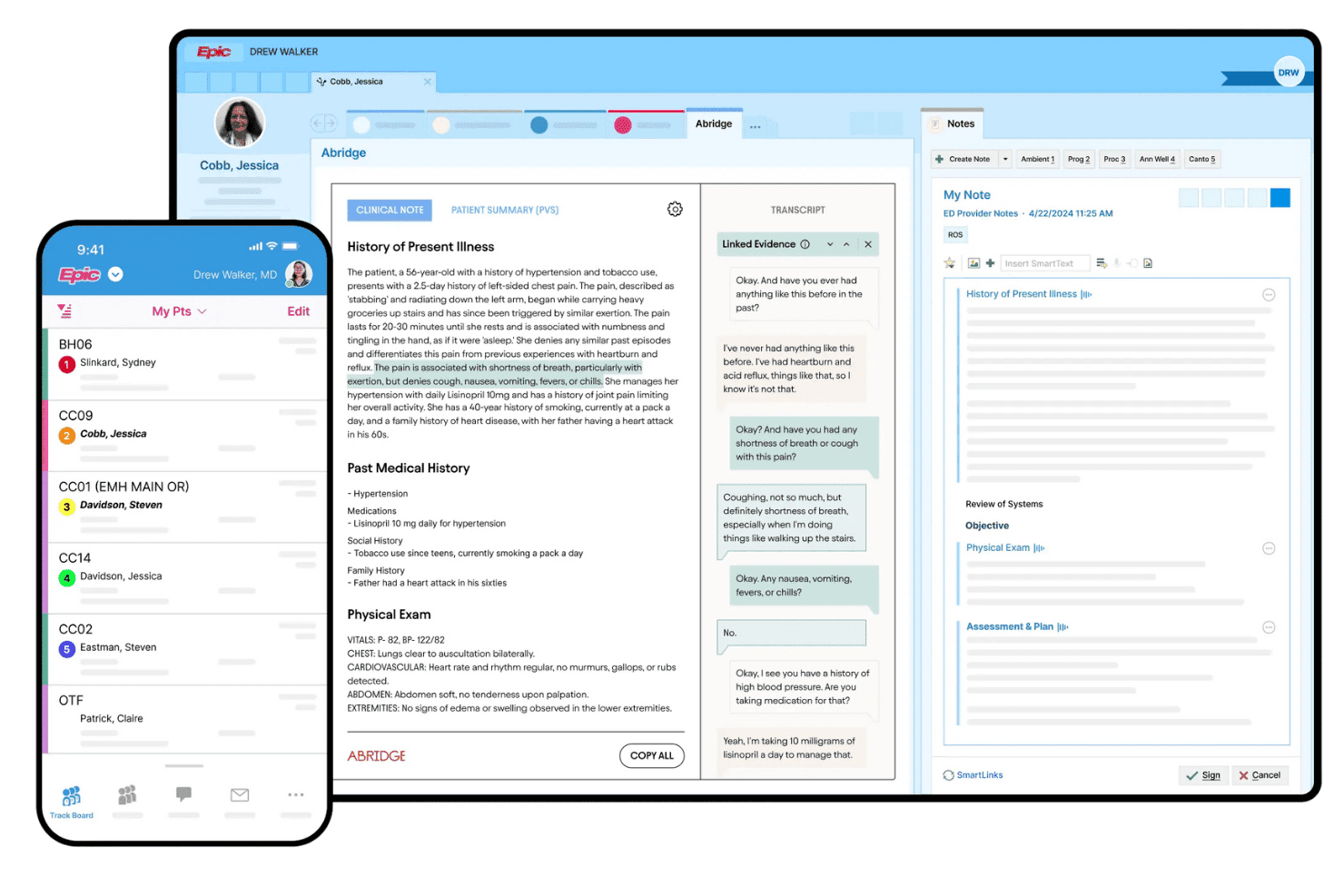
Abridge converts patient conversations into AI-generated clinical documentation. Abridge is an ambient AI scribe platform that passively captures patient-clinician conversations in real time and converts them into structured clinical notes across 50+ specialties and 28+ languages, with deep EHR integration.
Who Is Abridge Best For?
Abridge is built for large health systems and hospital networks that run Epic and need ambient AI documentation deployed at scale across multiple departments and specialties.
Why I Picked Abridge
I've included Abridge in my top picks because its Linked Evidence feature is unlike anything else in the ambient AI scribe space. Every line of a generated note traces back to the exact audio and transcript segment that produced it, so I can verify accuracy without replaying the entire encounter. Notes also form in real time during the conversation, not after, which means documentation gaps get caught before the patient leaves the room.
Abridge Key Features
- Multi-specialty language recognition: Recognizes clinical terminology across 50+ medical specialties and 28+ languages out of the box.
- Epic-native integration: Directly integrates with Epic workflows including Haiku, Canto, and Hyperdrive for seamless note capture and review.
- Enterprise security controls: Offers HIPAA compliance, 256-bit encryption, SOC 2 Type II certification, and single sign-on.
- Structured note generation: Transforms full patient–clinician conversations into SOAP notes and encounter summaries in real time.
Abridge Integrations
Abridge offers native integrations with Epic, Oracle Health, Athenahealth, eClinicalWorks, Allscripts, and NextGen. An API is also available for custom integrations.
Pros and Cons
Pros:
- Covers 50+ specialties and 28+ languages
- Real-time note generation during live encounters
- Linked evidence traces notes to source audio
Cons:
- Designed primarily for large health systems
- Heavily dependent on Epic for full functionality
Learn more about Abridge:
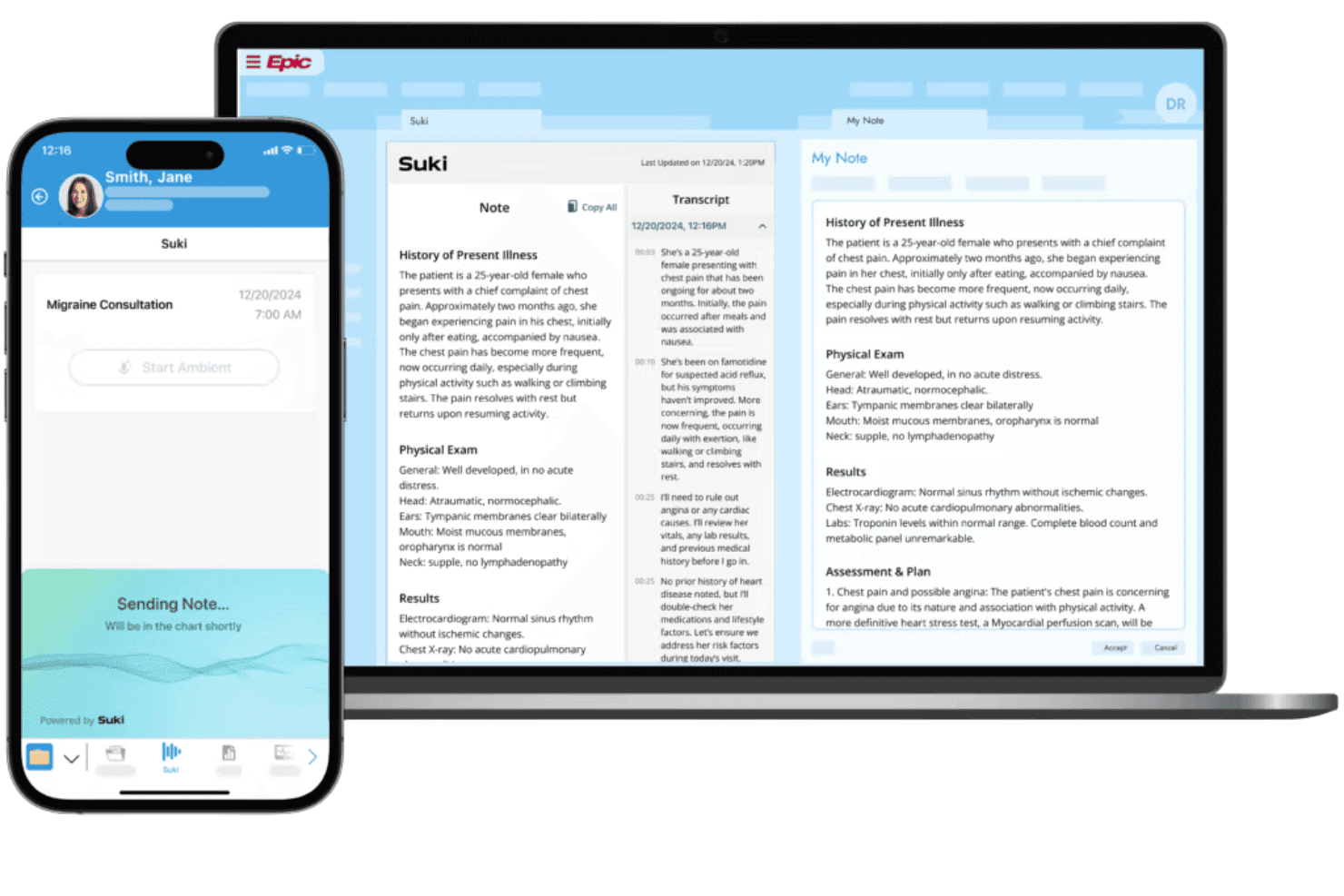
Suki AI turns ambient voice conversations into structured clinical documentation. Suki AI is a voice-first ambient clinical intelligence platform that combines real-time medical dictation, AI-generated note creation, voice command navigation, and EHR integration across 100+ specialties.
Who Is Suki AI Best For?
Suki AI suits physicians and clinicians across specialties who carry heavy documentation loads and want to dictate notes hands-free during or immediately after patient encounters.
Why I Picked Suki AI
I picked Suki AI because it's genuinely voice-first, not just an ambient listener with a voice layer bolted on. During an encounter, I can issue voice commands to stage orders, pull up patient history, and trigger specific note sections without touching a screen. The ambient documentation engine captures the full conversation, differentiates between speaker voices, and writes specialty-specific notes directly into the EHR in real time with sub-300ms latency.
Suki AI Key Features
- Specialty-specific medical vocabularies: Built-in support for clinical terms, drug names, and procedure codes across 100+ specialties.
- Bidirectional EHR integrations: Pushes and pulls structured data directly to and from major EHRs like Epic, Oracle Health, and athenahealth.
- Customizable note templates: Lets you set up reusable templates and macros for faster, standardized clinical documentation.
- Mobile dictation app: Supports secure dictation and documentation from iOS and Android devices, syncing instantly with your EHR.
Suki AI Integrations
Suki AI offers native integrations with Epic, Oracle Health, athenahealth, MEDITECH, MEDENT, and Azalea Health. An API is available for custom integrations.
Pros and Cons
Pros:
- Covers 100+ specialty-specific clinical vocabularies
- Sub-300ms real-time transcription latency
- Passive ambient capture without dictation commands
Cons:
- Voice accuracy varies with strong accents
- Occasional mis-transcriptions require manual correction
Learn more about Suki AI:
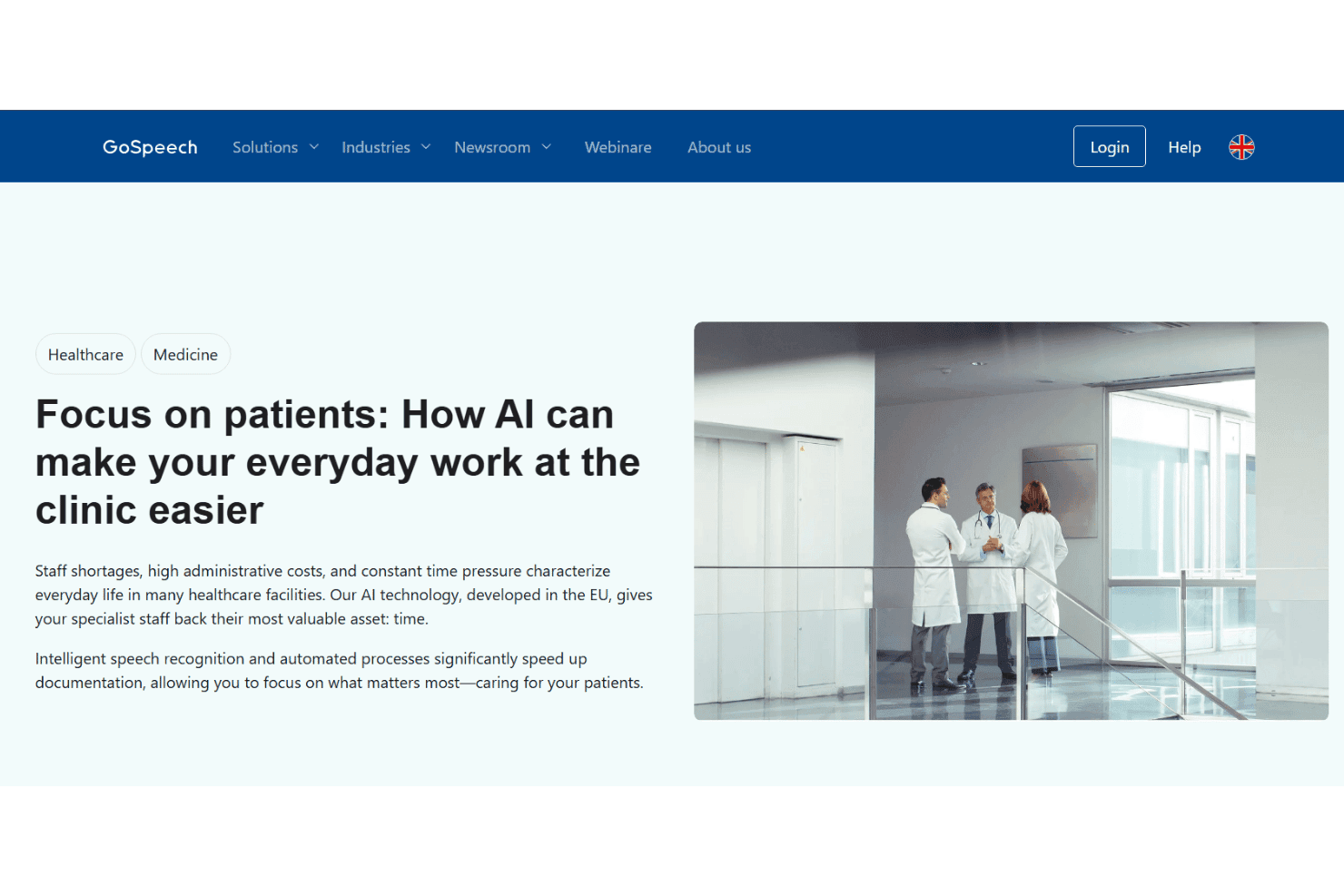
GoSpeech converts medical speech into transcripts and structured SOAP notes. GoSpeech is a medical voice recognition platform from Grundig Business Systems that combines AI-powered clinical transcription, real-time speech-to-text, mobile dictation, and structured SOAP note generation for healthcare documentation workflows.
Who Is GoSpeech Best For?
GoSpeech is a strong fit for European healthcare organizations and clinicians who need GDPR-compliant, multilingual clinical documentation tools.
Why I Picked GoSpeech
I've included GoSpeech in my top picks because its multilingual support goes beyond basic language switching. GoSpeech Medical Translate processes real-time medical translation directly inside hospital infrastructure, keeping patient data local while handling terminology across languages like German, English, French, Spanish, and Italian. I also like that speaker recognition works across dialects, so mixed-language clinical conversations don't derail the transcription output.
GoSpeech Key Features
- Speaker recognition: Identifies and separates multiple speakers automatically in transcriptions.
- Centralized management center: Lets organizations control roles, rights, and usage for all users.
- On-premises deployment: Supports installation on local servers for added European data residency and privacy needs.
- API for custom workflows: Provides open API access so teams can design integrations or automate transcription-related tasks.
GoSpeech Integrations
Native integrations are not clearly documented. GoSpeech offers an open API for custom integrations and supports on-premises deployment for connecting with local health IT systems.
Pros and Cons
Pros:
- Real-time speaker separation in multi-clinician settings
- On-premises deployment for strict data residency
- Strong support for multiple clinical languages
Cons:
- Smaller global presence outside European healthcare markets
- Fewer documented clinical specialty vocabularies than competitors
Learn more about GoSpeech: Best for real-time EHR integration
- Free demo available
- Pricing upon request
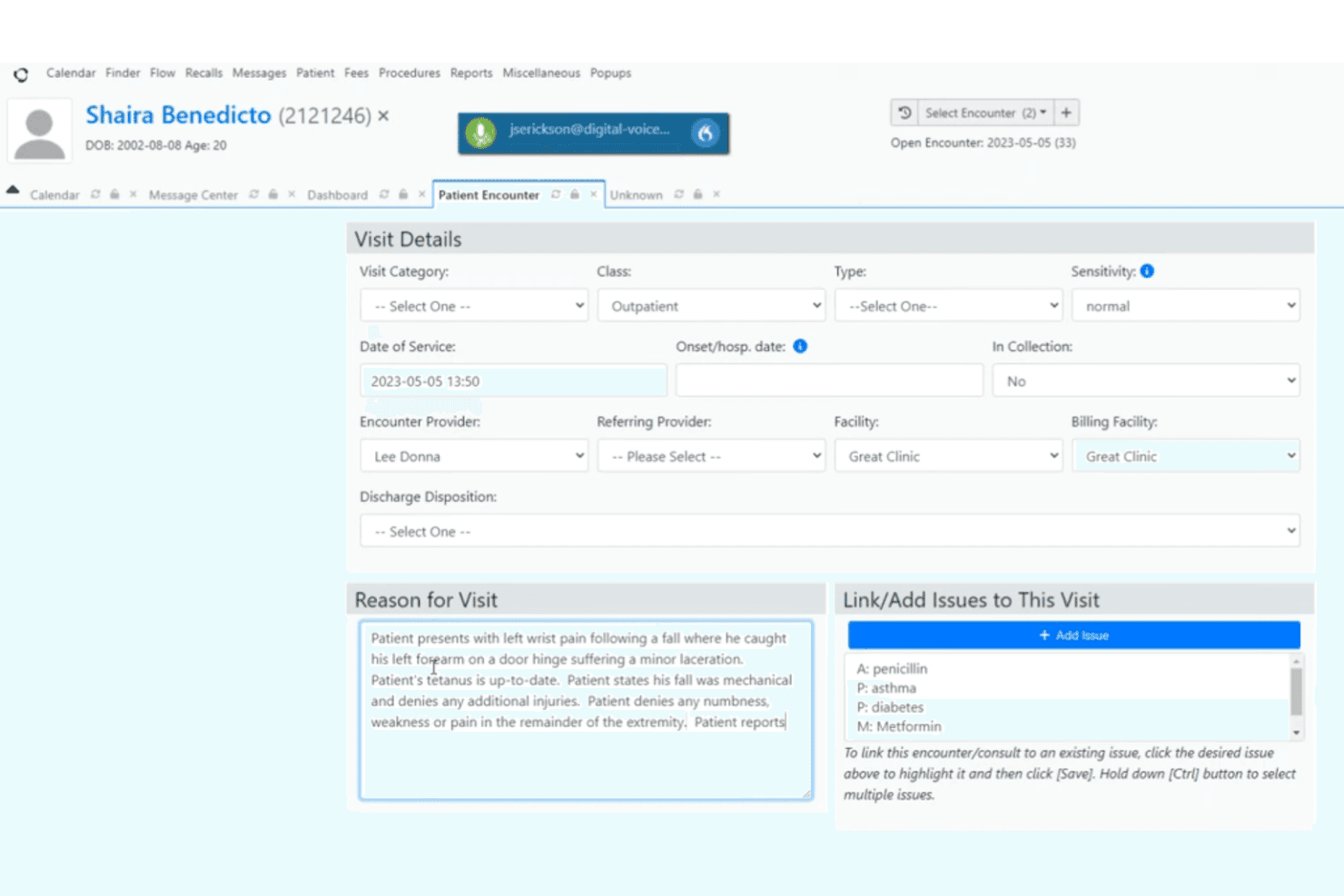
Dragon Medical One turns clinical speech into structured documentation and commands. Dragon Medical One is a cloud-based speech recognition platform designed specifically for clinical documentation, with specialty medical vocabulary, voice-driven EHR navigation, and AutoText templates built in from the start.
Who Is Dragon Medical One Best For?
Dragon Medical One is a strong fit for independent and small-practice physicians who dictate across specialties and need a purpose-built solution without relying on a transcription service.
Why I Picked Dragon Medical One
Dragon Medical One earns its spot on my shortlist because of how deeply it embeds into live EHR workflows. I particularly like the integrated voice skills, which let me navigate charts, place orders, and sign notes without touching a keyboard. It connects natively with Epic (Haiku, Canto, and Rover), Oracle Cerner PowerChart Touch, and MEDITECH Expanse, so dictation lands directly into the right field in real time, with no copy-paste step between the microphone and the patient record.
Dragon Medical One Key Features
- Specialty-specific medical vocabularies: Supports jargon and terminology used in areas like radiology, pathology, and emergency medicine.
- AutoText templates: Lets you create, save, and share custom shortcuts and documentation templates across users or departments.
- PowerMic Mobile integration: Turns your smartphone into a wireless and secure dictation microphone for clinical use.
- Select-and-Say voice control: Enables natural language commands for correcting, formatting, and navigating clinical notes.
Dragon Medical One Integrations
Dragon Medical One offers native integrations with Epic (Haiku, Canto, Rover), Oracle Cerner PowerChart Touch, and MEDITECH Expanse. An API is available for custom integrations.
Pros and Cons
Pros:
- User-specific voice profile adapts over time
- Specialty vocabularies cover 80+ medical fields
- Deep native EHR field-level voice navigation
Cons:
- Initial voice profile setup takes noticeable time
- Requires consistent microphone hardware for accuracy
Learn more about Dragon Medical One:
Annen programvare for medisinsk talegjenkjenning
Her er noen flere alternativer innen programvare for medisinsk talegjenkjenning som ikke kom med på kortlisten min, men som likevel er verdt å se nærmere på:
- 11SolventumBest for specialty-specific vocabularies
- 12Philips SpeechLiveBest for secure cloud transcription management
- 13Voicebox MDBest for dictation accuracy with diverse accents
- 14LindyBest for instant AI-generated patient notes
- 15Ambience HealthcareBest for multi-specialty voice recognition
- 16Sunoh.aiBest for fully automated medical note creation
- 17Mobius ConveyorBest for universal dictation across devices
- 18nVoq.VoiceBest for customizable workflow automation
- 19Tali AIBest for AI-powered charting assistance
- 20ChartnoteBest for customizable clinical note templates
How I Evaluate Medical Voice Recognition Software
I split my evaluation into baseline criteria—like EHR integration and HIPAA compliance—and the differentiators that separate a useful tool from one that actually fits a busy clinical workflow.
Core Functionality (Table Stakes For This List)
When I'm selecting tools for my list, I rank each one on a scale from 0 (does not offer the functionality) to 5 (excels in this area) for each core functionality listed below. I then calculate the tool's total score into a percentage, using 65% as a benchmark to help assess its overall fit for the list.
- Medical Vocabulary Recognition: I check whether the lexicon covers drug names, procedures, and specialty terms so a cardiologist dictating "troponin" gets it right first try.
- EHR Integration: I evaluate whether dictation flows directly into EHR fields in systems like Epic, Cerner, or athenahealth without copy-paste workarounds.
- Real-Time Transcription: Latency matters during a patient encounter. I look for sub-second conversion so clinicians can review and correct notes while context is fresh.
- HIPAA Compliance: I confirm the vendor provides a BAA, end-to-end encryption, and audit logging—baseline requirements for any tool handling protected health information.
- Voice Command Navigation: Hands-free field navigation is key. I look for commands that let clinicians jump between EHR fields or insert formatting without touching a keyboard mid-exam.
- Custom Templates & Macros: Each provider has go-to phrases and findings. I look for tools that let you build voice-triggered macros and share them across your practice.
Once I have a list of tools that meet the criteria, I consider what sets each platform apart.
Differentiating Factors (What Sets Vendors Apart)
Here's how I compare and contrast different vendors:
Standout Features
Ambient clinical intelligence is a major differentiator. Tools that passively capture patient-clinician conversations and generate structured SOAP notes save clinicians from after-hours charting. I also evaluate specialty-specific vocabularies, since a dermatologist and a cardiologist need very different terminology out of the box. Mobile dictation with desktop handoff matters for providers who round at multiple locations and need notes to sync back to the EHR without manual re-entry.
Beyond Features
Accuracy across accents and background noise is something I evaluate closely, especially for multi-provider practices where clinicians speak different first languages. I also check EHR integration depth—certified connections through marketplaces like Epic App Orchard or Oracle Cerner are more reliable than generic API workarounds. Pricing structure matters too. I look at whether vendors offer per-provider subscriptions that scale from a solo practice to a multi-site health system without forcing a full enterprise contract.
Slik velger du programvare for medisinsk talegjenkjenning
Lurer du på hvordan du kan finne den riktige programvaren for medisinsk talegjenkjenning til arbeidsflyten på legekontoret? Ta utgangspunkt i denne prioriteringsmatrisen:
| Hvis prioriteten din er … | Se etter … |
|---|---|
| Hvis prioriteten din er …Innebygde EHR-arbeidsflyter | Se etter …Sertifisert, toveis integrasjon med EHR-systemet ditt |
| Hvis prioriteten din er …Høy nøyaktighet for fagspesifikke begreper | Se etter …Dokumenterte ordforråd for spesialiteten din |
| Hvis prioriteten din er …Å redusere journalføring etter arbeidstid | Se etter …Omgivelsesbasert klinisk intelligens og verktøy for automatiske SOAP-notater |
| Hvis prioriteten din er …Sikker håndtering av PHI | Se etter …HIPAA-samsvar med BAA og kryptering |
| Hvis prioriteten din er …Fleksibel bruk på tvers av steder | Se etter …Mobile dikteringsapper med overføring til datamaskin |
Slik vurderer du kortlisten
- Bekreft integrasjonen: Be om en direktedemonstrasjon som viser talekommandoer og synkronisering av notater i det faktiske EHR-systemet ditt, ikke bare en statisk video.
- Test nøyaktigheten for spesialiteten: Sett opp en prøve på diktering med komplekse kliniske begreper som er unike for spesialiteten din, innenfor 5 notater.
- Kontroller sikkerhetssamsvaret: Be leverandøren om den nyeste BAA-malen og et sammendrag av SOC 2-revisjonen (eller tilsvarende).
- Bekreft malalternativene: Be kundestøtten om å gi deg et eksempel på en arbeidsflyt som viser hvordan du oppretter og bruker talemakroer eller maler på under én uke.
- Velg mellom direkte EHR-integrasjon og automatisering av notater etter pasientbesøk: EHR-synkronisering i sanntid og omgivelsesbasert KI gir ulike fordeler, så behovene i arbeidsflyten er viktigst.
Hva er programvare for medisinsk talegjenkjenning?
Programvare for medisinsk talegjenkjenning gjør muntlige medisinske notater og samtaler om til digitale journaler. Den bruker medisinske begreper og talegjenkjenning for å støtte diktering, pasientjournalføring og dokumentasjon direkte i EHR-systemer.
Programvaren kan gjøre medisinsk dokumentasjon raskere og mer nøyaktig. Den støtter også ulike medisinske spesialiteter, notatskriving i sanntid og sikre arbeidsflyter som oppfyller HIPAA-kravene.
Funksjoner i programvare for medisinsk talegjenkjenning
Når du velger programvare for medisinsk talegjenkjenning, bør du se etter følgende nøkkelfunksjoner:
- Bibliotek med medisinsk vokabular: Inneholder oppdatert terminologi, legemiddelnavn og spesialiserte begreper, slik at komplekst klinisk språk blir gjengitt nøyaktig i dokumentasjonen.
- Sanntidstranskripsjon: Gjør tale om til tekst mens du dikterer, slik at du kan gjennomgå, redigere og fullføre pasientnotater umiddelbart under eller etter en konsultasjon.
- Direkte integrasjon med EHR: Kobler seg direkte til ledende EHR-systemer, slik at du kan legge inn notater og pasientdata uten å forlate det primære journalsystemet.
- HIPAA-kompatibel sikkerhet: Beskytter pasientdata med kryptering, revisjonslogging og avtaler med forretningsforbindelser for å sikre trygg håndtering av sensitive helseopplysninger.
- Navigering med talekommandoer: Gjør det mulig å navigere håndfritt i maler, tekstfelt og kliniske arbeidsflyter, slik at du kan fullføre oppgaver uten å berøre tastaturet eller musen.
- Egendefinerte maler og makroer: Lar deg lage gjenbrukbare maler og snarveier for vanlige undersøkelsesfunn eller dokumentasjonsmønstre, slik at effektiviteten og konsekvensen forbedres.
- Støtte for flere talere: Skiller nøyaktig mellom og transkriberer flere stemmer i gruppe- eller pasient- og familiesamtaler, noe som gir tydeligere samarbeidsnotater.
- Tilpasning til aksenter: Gjenkjenner et bredt utvalg av aksenter og talemønstre, slik at dikteringen blir pålitelig for behandlere med ulik språklig bakgrunn.
- Kontekstbevisst korrigering: Tilbyr redigering og forslag til korrigeringer direkte i teksten, basert på klinisk kontekst, uten å forstyrre dikteringsflyten.
- Enhetskompatibilitet: Fungerer på stasjonære enheter, mobile enheter og dikteringsmikrofoner, slik at notater kan tas opp og gjennomgås fleksibelt.
Vanlige AI-funksjoner i programvare for medisinsk talegjenkjenning
I tillegg til standardfunksjonene i programvare for medisinsk talegjenkjenning som er nevnt ovenfor, tar mange av disse løsningene i bruk AI med funksjoner som:
- Omgivelsesbasert klinisk intelligens: AI lytter passivt under pasientbesøk og genererer automatisk strukturerte SOAP-notater fra naturlige samtaler uten eksplisitt diktering.
- Kontekstuell feilretting: AI analyserer den kliniske konteksten for å foreslå korrigeringer eller flagge uoverensstemmelser i dikterte notater, noe som reduserer behovet for manuell gjennomgang og forbedrer dokumentasjonskvaliteten.
- Prediktive tekstforslag: AI forutser og anbefaler neste fraser eller setninger basert på spesialområde, pasienthistorikk og tidligere dokumentasjonsmønstre, noe som gjør det raskere å fullføre notater.
- Identifisering av talere: AI skiller mellom flere talere – for eksempel lege, pasient og sykepleier – og merker hvert bidrag for å gi tydeligere og mer organiserte journaler.
- Automatisert uttrekk av koder: AI skanner dikterte notater for å identifisere og trekke ut relevante faktureringskoder, noe som støtter nøyaktig og effektiv medisinsk koding for refusjon.
- Kontinuerlig læring og tilpasning: AI-modeller lærer av brukerkorrigeringer og medisinsk terminologi i utvikling, noe som forbedrer gjenkjenningsnøyaktigheten og tilpasser seg den enkelte klinikers stil over tid.
Fordeler med programvare for medisinsk talegjenkjenning
Implementering av programvare for medisinsk talegjenkjenning gir flere fordeler for teamet og virksomheten din. Her er noen av fordelene du kan se frem til:
- Raskere klinisk dokumentasjon: Sanntidstranskripsjon og direkte integrasjon med EHR minimerer manuell journalføring og reduserer tiden som brukes på papirarbeid.
- Større nøyaktighet i pasientnotater: Medisinske vokabularer, spesialiserte ordbøker og AI-drevet feilretting bidrar til at kompleks terminologi gjengis korrekt hver gang.
- Reduserte transkripsjonskostnader: Automatisert diktering eliminerer behovet for utkontraktert medisinsk transkripsjon eller manuelle dataregistreringstjenester.
- Mer komplette pasientjournaler: Makroer, maler og omgivelsesbaserte verktøy som aktiveres med stemmen, fanger opp flere komplette kliniske detaljer.
- Bedre samsvar og datasikkerhet: HIPAA-kompatible arbeidsflyter, kryptering og revisjonslogging bidrar til å sikre at regelverket for beskyttede helseopplysninger overholdes.
- Økt tilfredshet blant behandlere: Reduserer journalføring etter arbeidstid, slik at klinikere får mer tid til pasientbehandling og fritid.
- Tilpasning for ulike brukere: Tilpasning til aksenter, enhetskompatibilitet og mobil diktering gjør det mulig for et bredt spekter av behandlere å arbeide effektivt i ulike kliniske miljøer.
Kostnader og priser for programvare for medisinsk talegjenkjenning
Valg av programvare for medisinsk talegjenkjenning krever en forståelse av de ulike prismodellene og abonnementene som er tilgjengelige. Kostnadene varierer basert på funksjoner, teamstørrelse, tillegg og mer. Tabellen nedenfor oppsummerer vanlige abonnementer, gjennomsnittsprisene deres og typiske funksjoner som er inkludert i løsninger for medisinsk talegjenkjenning:
Sammenligningstabell for programvare for medisinsk talegjenkjenning
| Abonnementstype | Gjennomsnittspris | Vanlige funksjoner |
|---|---|---|
| AbonnementstypeGratisabonnement | Gjennomsnittspris$0 | Vanlige funksjonerGrunnleggende tale-til-tekst, begrenset ordforråd, kun skybasert tilgang og minimal brukerstøtte. |
| AbonnementstypePersonlig abonnement | Gjennomsnittspris$20-$50/bruker/måned | Vanlige funksjonerTranskripsjon i sanntid, medisinsk ordforråd, direkte EHR-integrasjon, mobiltilgang og grunnleggende sikkerhet. |
| AbonnementstypeBedriftsabonnement | Gjennomsnittspris$50-$100/bruker/måned | Vanlige funksjonerAvanserte maler, tilpasning til aksenter, egendefinerte makroer, navigering med talekommandoer og prioritert brukerstøtte. |
| AbonnementstypeVirksomhetsabonnement | Gjennomsnittspris$100-$200/bruker/måned | Vanlige funksjonerVirksomhetsintegrasjoner, AI-funksjoner for omgivelseslyd, full HIPAA-samsvar, revisjonslogger og dedikert innføring. |
Vanlige spørsmål om programvare for medisinsk talegjenkjenning
Her er noen svar på vanlige spørsmål om programvare for medisinsk talegjenkjenning:
Kan programvare for medisinsk talegjenkjenning gjenkjenne komplekse medisinske faguttrykk og legemiddelnavn?
Ja, de fleste løsninger inkluderer spesialiserte medisinske ordlister og legemiddeldatabaser for å registrere komplekst klinisk språk som brukes innen ulike spesialområder, på en nøyaktig måte. Dette bidrar til å redusere manuelle korrigeringer og sikrer at pasientjournalene er presise og fullstendige.
Hvordan integreres programvare for medisinsk talegjenkjenning med elektroniske pasientjournaler?
Leverandører tilbyr vanligvis direkte integrasjon gjennom sertifiserte forbindelser med ledende EHR-plattformer, slik at klinikere kan diktere, redigere og signere notater direkte i journalføringsmiljøet sitt. Noen løsninger støtter også HL7- eller FHIR-protokoller for bredere interoperabilitet.
Er programvare for medisinsk talegjenkjenning sikker og i samsvar med HIPAA?
Ja, anerkjente plattformer er utviklet for å overholde HIPAA-standarder og bruker ende-til-ende-kryptering, revisjonslogger og avtaler med forretningsforbindelser for å beskytte helseopplysninger. Be alltid om dokumentasjon på sikkerhetstiltakene før implementering.
Kan programvaren støtte ulike aksenter og flere stemmer i samme konsultasjon?
De fleste ledende verktøy bruker AI-baserte modeller som tilpasser seg ulike aksenter og kan skille mellom talere i samme opptak. Dette gjør dokumentasjon i ulike behandlingsmiljøer mer pålitelig og nøyaktig.
Hvilken type støtte er tilgjengelig for innføring og feilsøking?
Leverandører tilbyr vanligvis innføringsøkter, opplæringsressurser og løpende brukerstøtte – noen ganger inkludert døgnåpne brukerstøtteteam eller dedikerte kundeansvarlige for virksomhetskunder – for å sikre en smidig innføring og bistå med feilsøking.