

Det kan være krevende å velge riktig EMR-programvare for anestesi. Du trenger en løsning som dekker teamets unike behov uten å tilføre kompleksitet. Etter min erfaring er det avgjørende å finne programvare som forenkler journalføringen og samtidig sikrer at kravene overholdes.
Jeg forstår det – du ser etter pålitelig informasjon for å kunne ta en veloverveid beslutning. Derfor har jeg uavhengig testet og vurdert en rekke EMR-verktøy for anestesi. Målet mitt er å gi deg et objektivt innblikk i de beste tilgjengelige alternativene.
I denne artikkelen finner du de beste alternativene for vanlige utfordringer som datahåndtering og pasientbehandling. Du får innsikt som hjelper deg med å velge et verktøy som faktisk dekker behovene dine. La oss se nærmere på alternativene og finne den rette løsningen for teamet ditt.
Why Trust Our Software Recommendations
6,700+
Reviews
20
Industry experts
16+
Evaluation factors
14
Years
Our team has been testing and reviewing software since 2012. As medical practice leaders ourselves, we know how difficult—and important—it is to choose the right software.
For this guide, we evaluated tools using hands-on testing and independent research, scoring tools using our selection criteria.
Our reviews reflect our human editorial judgment, not a sales pitch.
Sammenligningstabell for EMR-programvare for anestesi
| Tool | Best For | Trial Info | Price | ||
|---|---|---|---|---|---|
| 1 | Best for customizable anesthesia charting | 15-day free trial | From $99/month | Website | |
| 2 | Best for AI-driven documentation | Free demo available | Pricing upon request | Website | |
| 3 | Best for simplified documentation | Free demo available | Pricing upon request | Website | |
| 4 | Best for multi-brand OR device integration | Free demo available | Pricing upon request | Website | |
| 5 | Best for hospital EHR interoperability at scale | Free demo available | Pricing upon request | Website | |
| 6 | Best for hospital-wide anesthesia registry integration | Free demo available | Pricing upon request | Website | |
| 7 | Best for anesthesiologist-designed mobile charting | Free demo available | Pricing upon request | Website | |
| 8 | Best for DoD-proven perioperative anesthesia records | Not available | Pricing upon request | Website | |
| 9 | Best for continuous perioperative record keeping | Free demo available | Pricing upon request | Website | |
| 10 | Best for specialized anesthesia workflow optimization | Free demo available | Pricing upon request | Website |


Anmeldelser av den beste EMR-programvaren for anestesi
 Best for customizable anesthesia charting
- 15-day free trial
- From $99/month
Visit WebsiteCustomer Rating:4.8/5
OptiMantra’s customizable charting interface lets anesthesia providers tailor documentation to their specific procedural workflows. OptiMantra is an electronic medical record (EMR) and practice management platform designed to support healthcare providers that require detailed documentation and patient management — including anesthesia practices. Its customizable charting, telehealth capabilities, and integrated billing tools make it a flexible option for clinics that handle both procedural and post-operative care.
Why I Picked OptiMantra:
I picked OptiMantra because of its highly customizable charting tools that allow you to create detailed intake and follow-up forms tailored to anesthesia workflows. This flexibility helps you capture critical pre-op and post-op information accurately while maintaining compliance. I also found its telehealth functionality particularly useful for remote consultations, such as pre-anesthesia assessments or post-procedure follow-ups. Combined with diagnostics and e-prescribing integrations, it provides a well-rounded system for anesthesia care management.
Standout Features and Integrations:
OptiMantra’s features include electronic prescriptions through the Surescripts network, integrated lab ordering with results directly embedded in patient records, and secure document sharing via e-fax. The system also supports superbills, insurance billing, inventory management, and a patient portal for engagement and transparency. Integrations include Surescripts, LabCorp, Mercy Diagnostics, Quest Diagnostics, Access Medical Lab, Clinical Labs of Hawaii, Rupa Health, SimonMed, DigitalOne, Boston Heart Diagnostics, Fullscript, and Clinical Pathology Laboratories, Inc. (CPL).
Pros and Cons
Pros:
- HIPAA-compliant telehealth platform
- Integrated diagnostics and prescription tools
- Customizable charting for anesthesia workflows
Cons:
- Learning curve for new users
- Occasional system glitches reported
Learn more about OptiMantra: Best for AI-driven documentation
- Free demo available
- Pricing upon request
Visit WebsiteCustomer Rating:5/5
NextGen Healthcare dashboard displaying recent activity summaries and financial reporting tools. NextGen is a healthcare IT platform that delivers electronic health records and practice management solutions tailored to a variety of specialties, including anesthesia. Its standout tools include mobile access, AI-powered note capture, and built-in analytics to support both clinical and financial operations.
Why I Picked NextGen: NextGen stood out to me for its AI-powered Ambient Assist tool, which turns doctor-patient conversations into structured SOAP notes—helping anesthesiologists reduce documentation time significantly. I also liked its specialty-focused flexibility, which includes configurable billing workflows and mobile access that supports providers inside and outside the OR.
Standout Features and Integrations:
NextGen offers AI-powered documentation, a mobile EHR, anesthesia billing tools, and regulatory reporting. Its platform supports over 40 specialties with customizable templates and real-time data access. Integrations include CGM LABDAQ, Klara, DoctorConnect, Medsender, FrameworkLTC, and others covering labs, communication, and billing systems.
Pros and Cons
Pros:
- Supports over 40 specialties, including surgical and anesthesia settings
- Strong interoperability with labs and third-party systems
- Mobile EHR access allows anesthesiologists to manage tasks on the go
Cons:
- Some features are iOS-optimized; Android support varies
- May require integration with third-party anesthesia AIMS
Learn more about NextGEN: Best for simplified documentation
- Free demo available
- Pricing upon request
Visit WebsiteCustomer Rating:5/5
The patient history management feature in Athenahealth allows users to view and manage patient records through simplified processes. Athena Health is a provider of cloud-based healthcare solutions designed to enhance clinical effectiveness, patient experience, and financial performance. The company's flagship platform, athenaOne, integrates Electronic Health Records (EHR), Revenue Cycle Management (RCM), and patient engagement tools to consolidate operations.
Why I Picked Athenahealth:
In my comparison of various systems, Athenahealth emerged as a leader in providing an integrated healthcare experience. Its core strength is its seamless integration of key practice operations, from clinical records to patient engagement and revenue cycle management. I also like that Athenahealth offers simplified documentation processes to allow health professionals, like anesthesiologists, to view and manage patient profiles easily.
Standout Features & Integrations:
Athenahealth offers a plethora of useful features, such as revenue cycle management, communication and care tools for patient engagement, an easy-to-read summary of patient records, a patient portal, automated reminders, telehealth capabilities, and mobile accessibility. Integrations include NextPatient, DocResponse, Yosi Health, Secondwave, Recovery Plus, TSI, VaxCare, Fullscript, QueueDr, and CallMyDoc.
Pros and Cons
Pros:
- Cloud-based system for remote access
- Robust patient engagement tools
- Broad range of integrations with other healthcare systems and devices
Cons:
- Data migration can be time-consuming
- Complexity of the system may result in a learning curve
Learn more about Athenahealth: Best for multi-brand OR device integration
- Free demo available
- Pricing upon request
Visit WebsiteCustomer Rating:3.5/5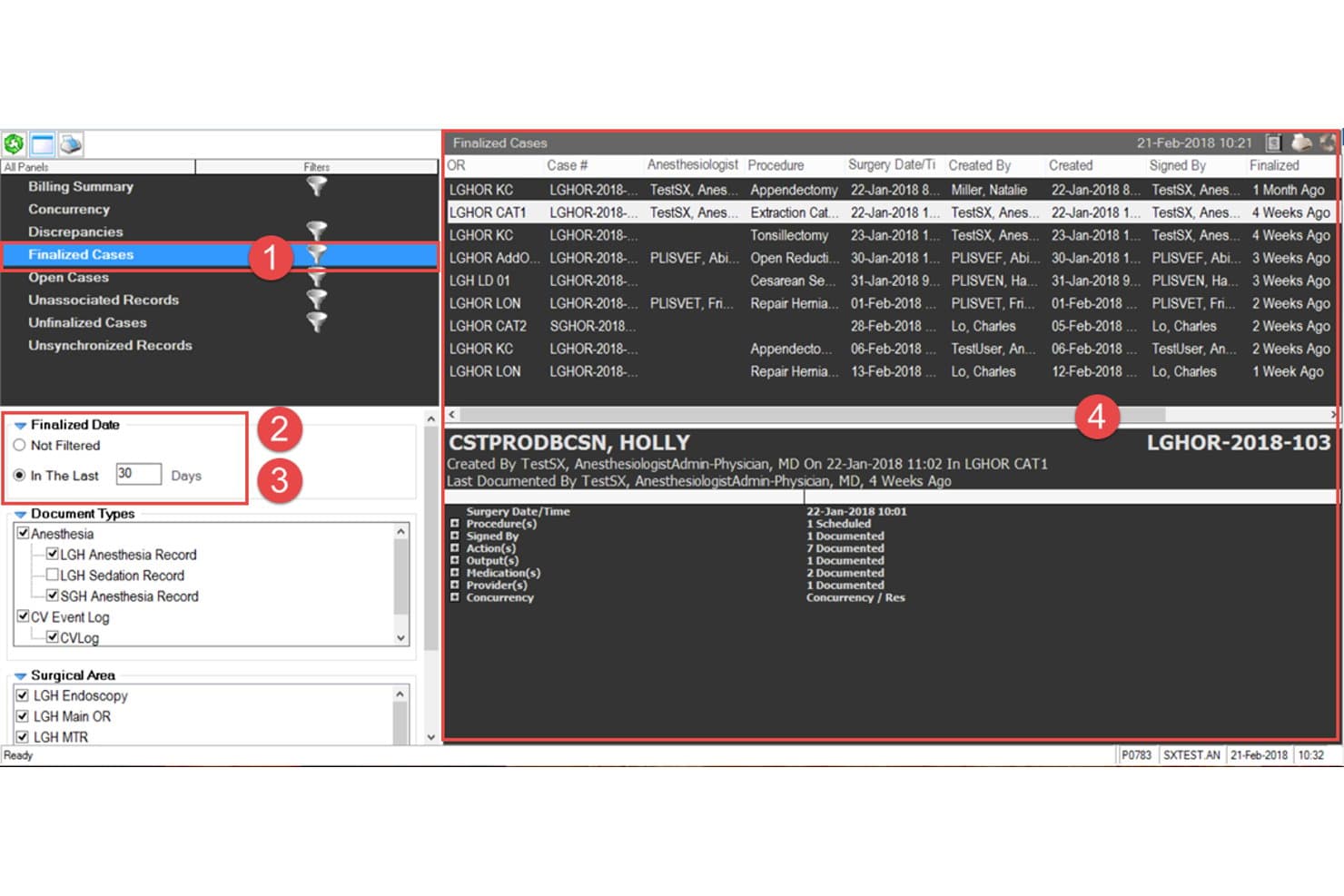
Cerner lets users review and filter finalized anesthesia cases by date. Oracle Health Anesthesia is an enterprise anesthesia EMR module that covers intraoperative documentation, device data integration, pre- and post-anesthesia records, staff scheduling, and adverse drug reaction alerts within the broader Oracle Health EHR ecosystem.
Who Is Cerner Best For?
Cerner is a strong fit for large hospital systems and health networks that prioritize seamless data exchange across departments and care settings.
Why I Picked Cerner
I've included Cerner in my top picks because its interoperability infrastructure is genuinely hard to replicate at scale. Oracle Health's FHIR APIs and Connection Hub let anesthesia records pull patient data from across departments, so a pre-anesthesia evaluation can reflect the most current labs, medications, and allergies without manual data entry. I also like that its device connectivity catalog covers over 1,000 devices, including named anesthesia monitors from Dräger Medical, GE Healthcare, and Mindray, feeding vitals directly into the intraoperative record.
Cerner Key Features
- Macro-driven intraoperative documentation: Predefined macros accelerate intra-anesthesia record completion during live cases.
- Adverse drug reaction alerts: The system flags potential drug reactions in near real time within the anesthesia workflow.
- Pre-anesthesia evaluation records: Clinicians can document and access structured pre-anesthesia assessments before cases begin.
- Multi-case supervisor monitoring: Supervisors can view data from multiple simultaneous cases in graphical or numeric displays.
Cerner Integrations
Cerner offers documented integrations with CommonWell Health Alliance, Surescripts, and Haemonetics BloodTrack. It also supports FHIR and cloud-native EHR APIs for custom connections, plus device connectivity through Oracle Health Bedside Medical Device Integration.
Pros and Cons
Pros:
- Supervisors can view multiple cases
- Pre- and post-anesthesia records are supported
- Some users report workable anesthesia charting
Cons:
- Vital-sign transfers can be unreliable
- Some users report tripled charting effort
Learn more about Cerner: Best for hospital EHR interoperability at scale
- Free demo available
- Pricing upon request
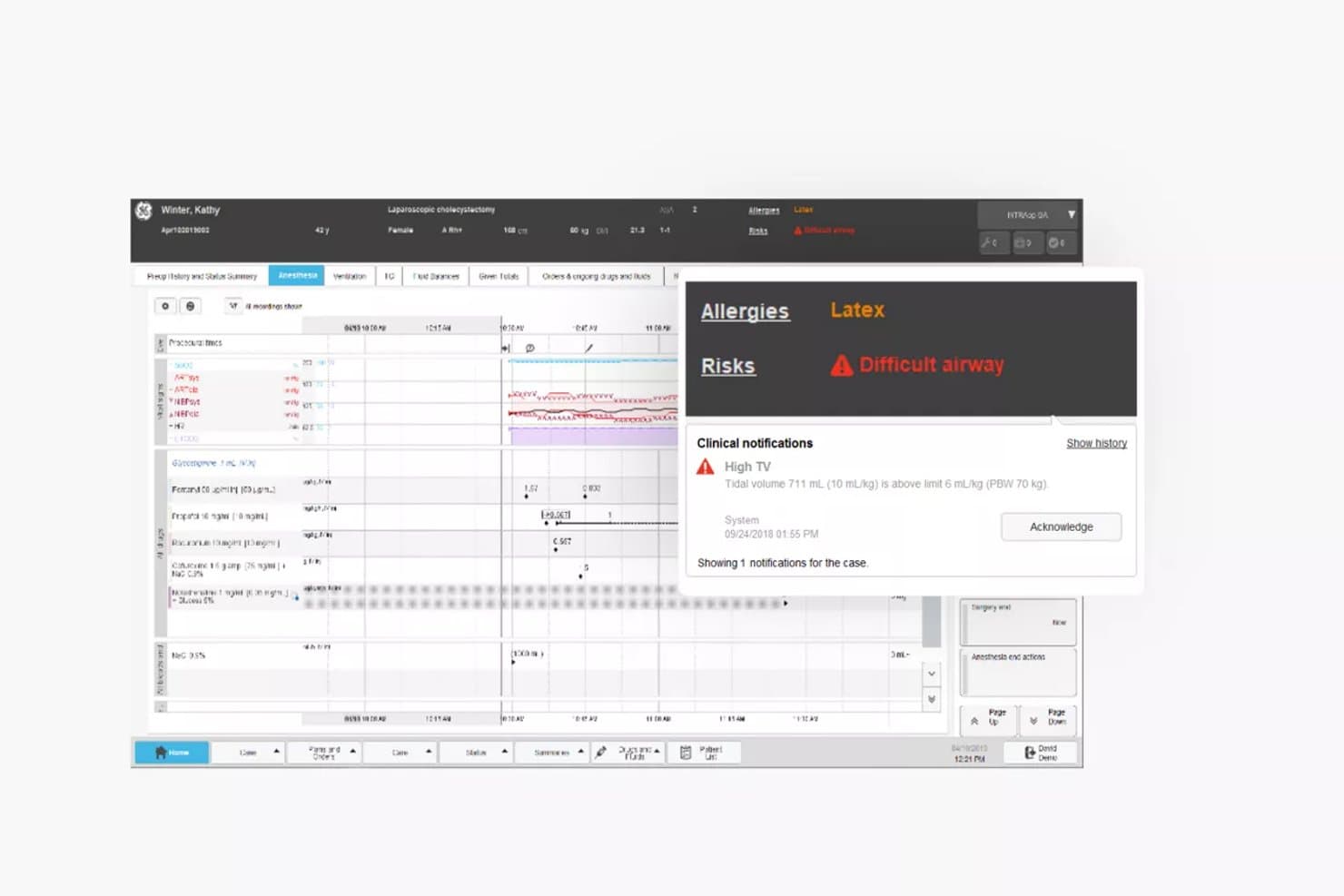
GE Healthcare surfaces allergy and airway risk alerts during surgery. GE HealthCare's Centricity Perioperative Anesthesia is an anesthesia information management system that covers intraoperative touch-screen charting, automated vital-sign capture, perioperative workflow from pre-op through PACU, and bidirectional data exchange with hospital EHR and HIS platforms.
Who Is GE HealthCare Best For?
GE HealthCare's Centricity Perioperative Anesthesia is a strong fit for large hospitals and health systems that need deep, bidirectional integration with existing EHR and HIS platforms across complex perioperative environments.
Why I Picked GE HealthCare
I picked GE HealthCare's Centricity Perioperative Anesthesia because its depth of hospital EHR connectivity is genuinely hard to replicate. With over 600 interfaces across 35 IT systems, including bidirectional exchange with Epic, Cerner, Meditech, and McKesson, it fits naturally into complex health system environments where data has to flow cleanly between anesthesia, nursing, and the inpatient record. I also like that the Discrete Data Interface passes discrete elements like vitals, medications, and discharge summaries directly into other enterprise systems, not just as documents.
GE HealthCare Key Features
- Touch-screen intraoperative charting: A touch-screen interface lets anesthesia providers document drugs, events, and vitals during a case using event-document templates and procedure-note scripts.
- Perioperative workflow coverage: The system supports anesthesia workflow across preoperative care, the OR, PACU, and ancillary areas where anesthesia is provided.
- Vital-sign device capture: Vitals auto-populate from connected OR monitors, reducing the need for manual data entry during a case.
- Clinical protocol scripts: Built-in clinical scripts guide anesthesia providers through standard protocols to support consistent, compliant care delivery.
GE HealthCare Integrations
GE HealthCare offers over 600 integrations across 35 IT systems, including Epic, Cerner, Meditech, McKesson, Siemens, and Eclipsys. Its Discrete Data Interface supports configurable HL7 v2.4 and ORU messaging, plus bidirectional exchange with hospital EHR and HIS platforms.
Pros and Cons
Pros:
- Vital-sign capture reduces repetitive manual documentation
- Clinical scripts reinforce standard anesthesia protocols
- Touch-screen charting supports intraoperative documentation
Cons:
- Supported monitor models and capture frequency are unspecified
- Current anesthesia registry reporting remains unconfirmed
Learn more about GE Healthcare: Best for hospital-wide anesthesia registry integration
- Free demo available
- Pricing upon request
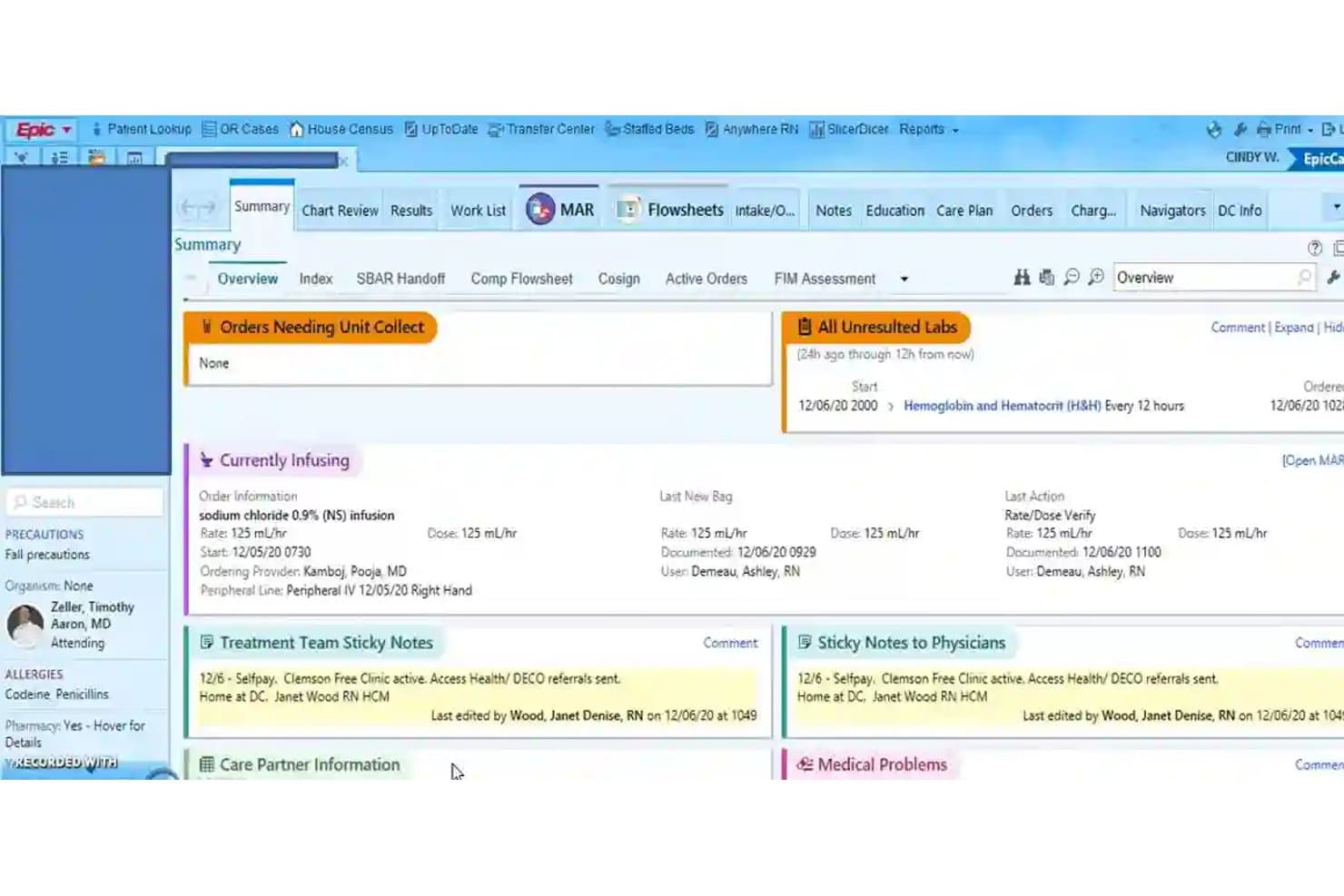
Epic EHR centralizes patient data, labs, and infusions in one view. Epic EHR is a hospital-grade electronic health record system that covers perioperative documentation, anesthesia charge capture, outcomes reporting, and OR staffing analysis across the full surgical episode.
Who Is Epic EHR Best For?
Epic EHR is the strongest fit for large hospital systems that need anesthesia documentation, outcomes reporting, and registry integration woven into a single enterprise-wide EHR platform.
Why I Picked Epic EHR
Epic EHR earns its spot on my shortlist because no other platform ties anesthesia documentation directly into a hospital-wide registry at this scale. I'm particularly drawn to its collaboration with the ASA and Anesthesia Quality Institute to build the Anesthesia Community Registry, which connects anesthesia episode data to NACOR for outcomes tracking and quality benchmarking. On top of that, OR Staffing Analysis forecasts anesthesiology coverage needs directly from the OR schedule, which is a level of operational integration I haven't seen matched elsewhere.
Epic EHR Key Features
- Perioperative documentation: Supports clinical documentation across the full surgical episode, from pre-op through post-anesthesia care.
- Incoming device data interface: Captures discrete measurements from patient-monitoring devices, with configurable automatic filing for surgical procedures.
- Art for Clinicians AI summary: Gives anesthesia providers a pre-case chart summary covering procedural notes, medication history, and cardiology information.
- OR Staffing Analysis: Forecasts nursing and anesthesiology staffing needs directly from the OR schedule to support specialty-level coverage planning.
Epic EHR Integrations
Epic EHR supports integrations with GE, Dräger, Masimo, Mindray, Nihon Kohden, Philips, and Spacelabs devices, plus infusion pumps and perioperative workflows. It offers FHIR APIs, HL7v2 interfaces, and CDS Hooks for custom connectivity.
Pros and Cons
Pros:
- Registry plans target anesthesia quality benchmarking
- Flexible templates can speed clinical documentation
- Centralized records support perioperative coordination
Cons:
- Medication entry may require repeated clicks
- Complex navigation can slow anesthesia workflows
Learn more about Epic EHR: Best for anesthesiologist-designed mobile charting
- Free demo available
- Pricing upon request
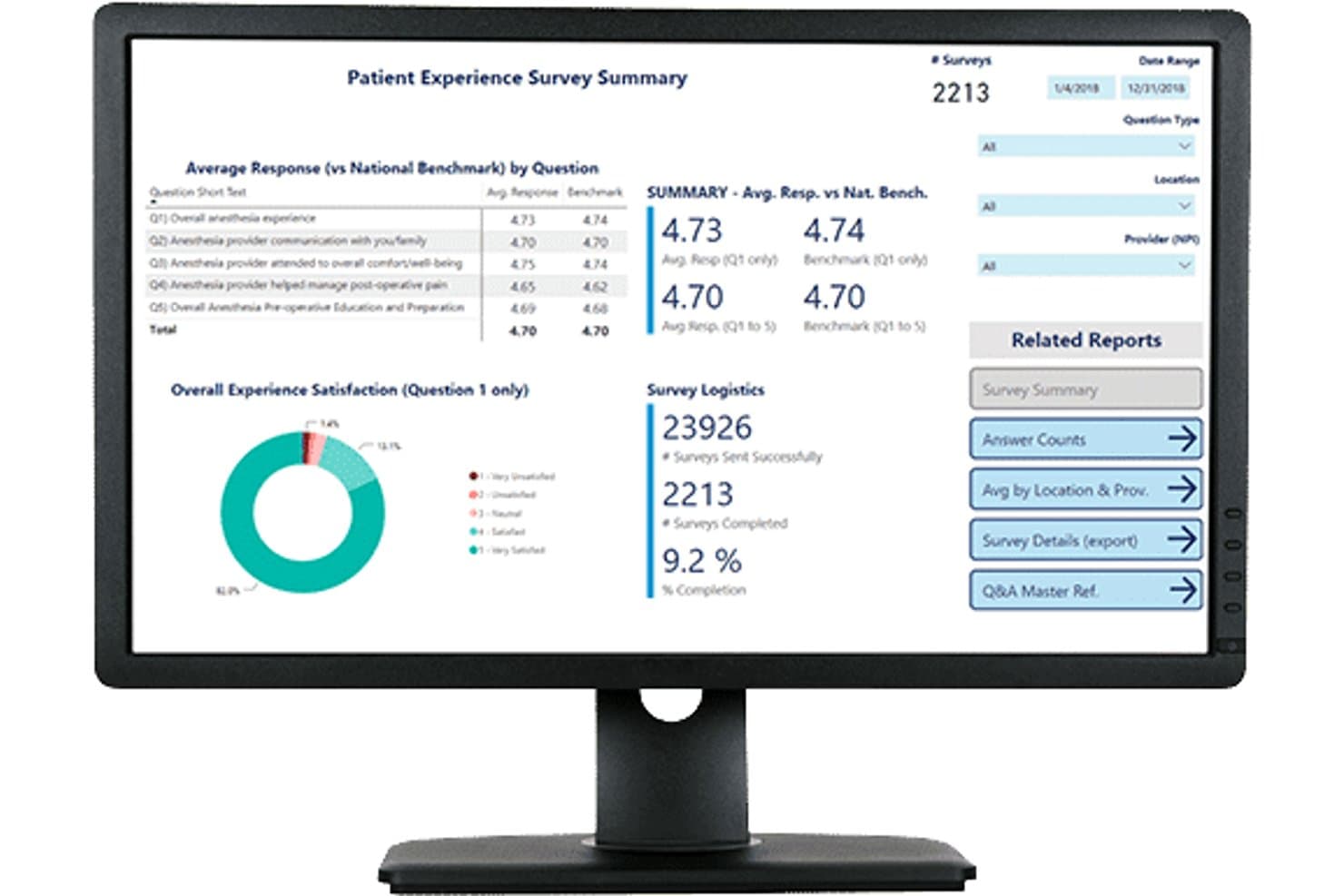
ePreop tracks patient experience survey results in a visual dashboard. Provation iPro AIMS is a mobile, cloud-based anesthesia information management system built for intraoperative charting, automated vitals capture, and peri-anesthesia documentation across pre-op, intra-op, and post-op phases.
Who Is ePreop Best For?
Provation iPro AIMS is a strong fit for anesthesiologists and anesthesia groups who need a mobile-first AIMS built around how they actually work in the OR and NORA settings.
Why I Picked ePreop
I picked ePreop as one of the best because Provation iPro AIMS was built by practicing anesthesiologists, and that shows in how it handles intraoperative documentation. I love that it wirelessly streams physiological data from anesthesia machines directly into the record in real time, eliminating manual vitals entry mid-case. The mobile-first design also lets me chart NORA cases from any location, without a fixed workstation, and dark mode keeps the interface usable in low-light ORs.
ePreop Key Features
- Auto-quality documentation: iPro automatically detects anesthesia quality measures and records them directly in the chart without manual entry.
- POCUS documentation: Providers can document point-of-care ultrasound use within the record to support compliant billing and reimbursement.
- iPro Billing Package: This add-on standardizes ASA unit, modifier, and charge calculations from finalized clinical documentation and submits charges automatically.
- Mira iPro Insights: A built-in analytics platform delivers role-appropriate clinical, operational, and financial performance data to support practice decisions.
ePreop Integrations
ePreop offers integrations with MEDITECH Expanse, Altera Digital Health, Alcidion, and VitalHub. MEDITECH Expanse connectivity includes vital signs, medications, allergies, demographics, medical history, and lab results; API availability isn’t documented.
Pros and Cons
Pros:
- Long-term reviewer praised speed and reliability
- Wireless vitals capture reduces manual entry
- Anesthesiologist-designed mobile charting
Cons:
- Few independent reviews offer limited peer insight
- Supported anesthesia-machine models aren’t specified
Learn more about ePreop: Best for DoD-proven perioperative anesthesia records
- Not available
- Pricing upon request
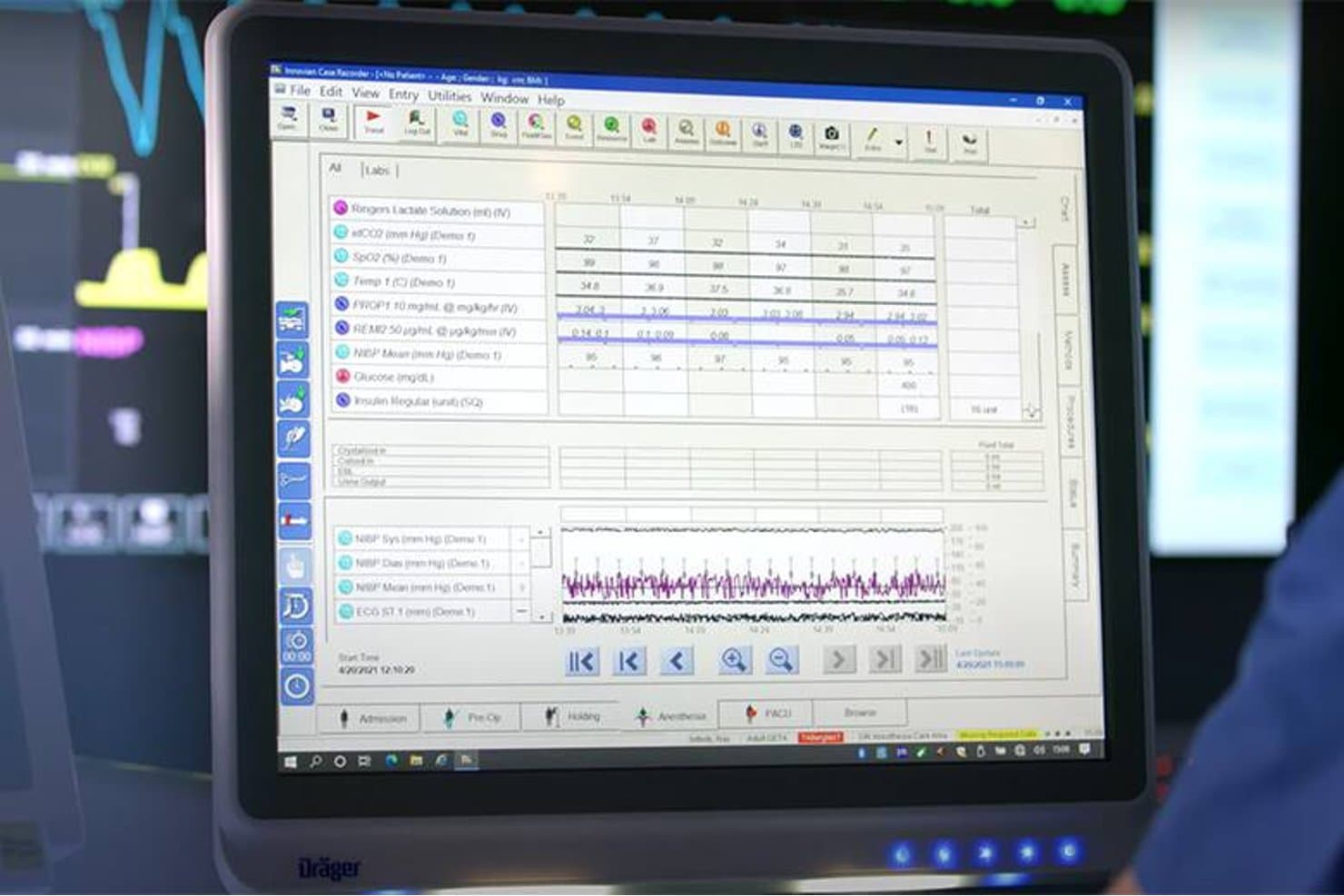
Innovian Anesthesia pulls device data into a continuous anesthesia record. Dräger Innovian Anesthesia is a perioperative anesthesia EMR that spans the full care continuum—from web-based pre-anesthesia assessments through intraoperative charting, automated vitals capture, PACU documentation, and analytics reporting.
Who Is Dräger Innovian Anesthesia Best For?
Innovian Anesthesia is a strong fit for military treatment facilities, VA medical centers, and large hospital systems that need a proven, perioperative-grade anesthesia record with deep DoD deployment history.
Why I Picked Dräger Innovian Anesthesia
I picked Dräger Innovian Anesthesia because its DoD deployment history is genuinely hard to match in this category: it's been a DoD standard worldwide since 2008 and was active across 40 Military Treatment Facilities. I also like that it covers the full perioperative record, from web-based pre-anesthesia assessments through intraoperative charting with configurable case workflows and quick-event triggers, all the way through PACU documentation in a single continuous record.
Dräger Innovian Anesthesia Key Features
- Automated vital-sign capture: Connects to anesthesia machines and patient monitors to automatically record vital signs into the continuous electronic anesthesia record.
- Innovian Anesthesia E-Forms: A configurable web-based interface captures admission and preoperative assessment data from pre-admission testing, holding areas, and inpatient units, then passes it directly into the system.
- Controlled-substance documentation trail: Shares medication information with anesthesia and pharmacy providers in real time to support controlled-substance reconciliation.
- Customizable analytics dashboards: Tracks room turnover, provider efficiency, staff assignments across up to six care areas, and patient outcomes using configurable reporting tools.
Dräger Innovian Anesthesia Integrations
Native integrations are not clearly documented. Dräger Innovian Anesthesia lists Rhapsody Integration Engine 6.0–6.5 for HL7 interfaces, plus a web API and enterprise EMR data export for custom connectivity.
Pros and Cons
Pros:
- Configurable intraoperative triggers support case documentation
- Perioperative record spans pre-op through PACU
- DoD deployment history offers proven military fit
Cons:
- Registry submission capabilities aren’t documented
- Billing automation details remain limited
Learn more about Dräger Innovian Anesthesia: Best for continuous perioperative record keeping
- Free demo available
- Pricing upon request
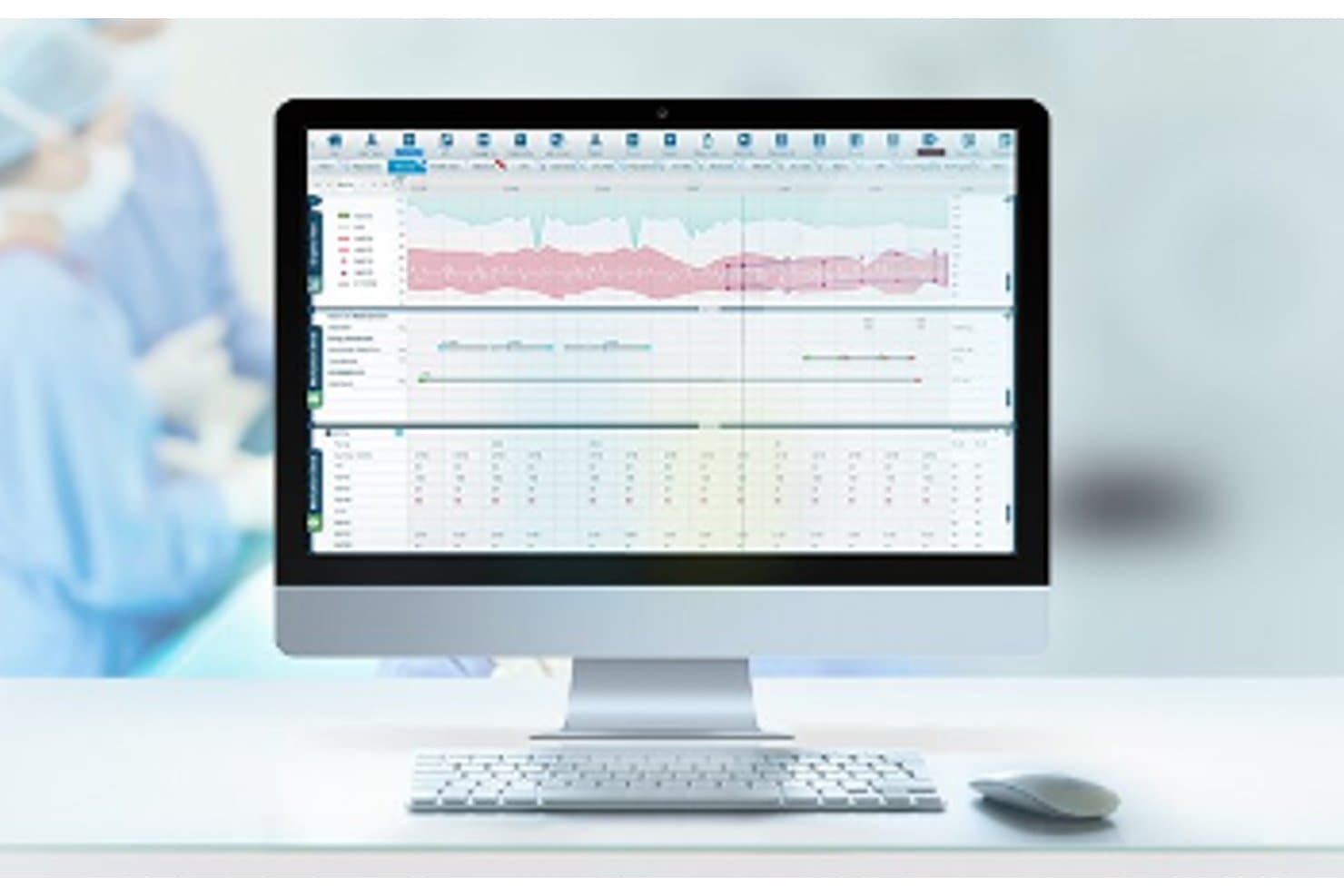
iMDsoft MetaVision Anesthesia displays real-time patient monitoring data on a clinical dashboard. MetaVision Anesthesia is an anesthesia information management system from iMDsoft that covers the full perioperative continuum—pre-op assessment, intraoperative charting, automated device data capture, and post-anesthesia recovery documentation.
Who Is iMDsoft MetaVision Anesthesia Best For?
MetaVision Anesthesia is a strong fit for hospital perioperative teams that need a single, unbroken patient record from pre-op assessment through intraoperative care and PACU discharge.
Why I Picked iMDsoft MetaVision Anesthesia
I picked MetaVision Anesthesia because it builds a single, unbroken patient record from pre-op assessment through intraoperative care and into PACU recovery, which is exactly what perioperative teams need to avoid documentation gaps at handoff. I love that intra-op event and medication recording works with one click or a barcode scan, with preset dosing templates keeping documentation tight during live cases. The continuous record then carries forward to PACU, where clinicians get the full anesthesia record at transfer alongside a combined pain-score and medication view to support discharge decisions.
iMDsoft MetaVision Anesthesia Key Features
- Pediatric-specific assessment tools: Supports pediatric scoring, documentation, and BMI charts to inform age-appropriate anesthesia protocol adjustments.
- Barcode-based patient identification: Scans patient barcodes at the point of care to access medical information and support medication administration checks.
- MetaVision Smart Alerts: Sends continuous notifications about patient, clinical, and administrative events throughout perioperative workflows.
- Multi-site architecture: Supports deployments from a single unit to a regional health network, with network-wide standardization alongside site-level configuration.
iMDsoft MetaVision Anesthesia Integrations
Native integrations are not clearly documented. MetaVision connects to an enterprise service bus through FHIR and HL7 v2 and supports more than 360 medical devices, but named systems and device models aren’t published.
Pros and Cons
Pros:
- One-click medication and event documentation
- Automated device capture reduces manual charting
- Continuous record supports perioperative handoffs
Cons:
- Reported infusion-rate edits can erase later notes
- Some users report cumbersome data navigation
Learn more about iMDsoft MetaVision Anesthesia: Best for specialized anesthesia workflow optimization
- Free demo available
- Pricing upon request

Graphium Health Anesthesia EMR Interface Graphium Health AnesthesiaEMR is a cloud-based electronic medical record software focused on optimizing the unique workflow needs of anesthesia practices. Its powerful tools target the specific challenges of anesthesia administration, qualifying it as best for specialized anesthesia workflow optimization.
Why I Picked Graphium Health AnesthesiaEMR:
When it comes to specialized workflow optimization in anesthesia, Graphium Health AnesthesiaEMR stands out. Its primary focus on anesthesia workflows is what drew me toward this tool. It offers specialized features that cater directly to the unique needs of anesthesiologists, setting it apart from the more generalized EMR systems. Its distinctiveness in this niche makes it best for specialized anesthesia workflow optimization.
Standout Features and Integrations:
Graphium Health AnesthesiaEMR comes with top-notch features like real-time data capture, custom reporting, and comprehensive anesthesia-specific document management. The software integrates seamlessly with numerous hospitals' information systems, providing a unified workflow.
Pros and Cons
Pros:
- Integrates with numerous hospitals' information systems
- Custom reporting capabilities offer in-depth insights
- Specialized features cater directly to anesthesiology workflows
Cons:
- Pricing information is not directly available on the website
- The system may seem complex for beginners
- Lacks a comprehensive suite covering all aspects of practice management
Learn more about Graphium Health AnesthesiaEMR:
How I Evaluate Anesthesia EMR
I split my evaluation into three parts, with the most weight on charting timed drugs and events and capturing OR vitals automatically. Next, I look for features like mobile pre-op rounding and multi-room dashboards. Finally, I consider implementation support, clinician training, and pricing fit.
Core Functionality (Table Stakes For This List)
When I'm selecting tools for my list, I score each one on a scale from 0 (does not offer the functionality) to 5 (excels in this area) for each core functionality listed below. I then convert the total into a percentage to help assess each tool's overall fit, with extra weight on any functionalities I’ve deemed essential.
- Intraoperative Charting (Essential): I look for a time-based anesthesia record where clinicians can log medications, airway interventions, and events as the case unfolds.
- Automated Vitals (Essential): I check whether OR monitors and anesthesia machines feed vitals into the record, so teams aren't re-entering readings during a case.
- Pre/Post Documentation: I assess whether structured pre-anesthesia assessments and recovery notes link to the same encounter, including handoff and discharge documentation.
- Anesthesia Billing: I look for anesthesia time units, modifiers, and case-level charge exports that support reconciliation with the practice’s billing workflow.
- Quality Reporting: I check for structured case-data exports or reports that help teams track quality measures and prepare regulatory submissions.
- EHR Interoperability: I assess how patient, schedule, and clinical data move between the anesthesia record and hospital EHR or perioperative systems.
Once I have a list of tools that meet the criteria, I consider what sets each platform apart.
Differentiating Factors (What Sets Vendors Apart)
Here's how I compare and contrast different vendors:
Standout Features
I look for a multi-room dashboard that lets anesthesiologists track concurrent cases from one screen. During a busy OR day, that view prevents coverage gaps. I also evaluate mobile pre-op rounding apps, since bedside assessments in holding areas cut duplicate documentation. QCDR registry partnerships matter too—I check whether the vendor handles NACOR submissions directly, which saves hours of manual data prep each quarter.
Beyond Features
I check how each vendor handles device interface setup—connecting OR monitors and anesthesia machines requires hands-on configuration support, and a missed feed during a live case is a real problem. Uptime reliability matters just as much, so I look for offline charting capability that keeps documentation running during network outages. I also evaluate whether the pricing model—per-provider, per-case, or site license—fits practices that cover multiple facilities.
Slik velger du EMR-programvare for anestesi
Det er lett å gå seg vill i lange funksjonslister og kompliserte prismodeller. For å hjelpe deg med å holde fokus mens du arbeider deg gjennom den unike prosessen med å velge programvare, har vi laget en sjekkliste over faktorer du bør ha i tankene:
| Faktor | Hva du bør vurdere |
|---|---|
| FaktorSkalerbarhet | Hva du bør vurdereKan programvaren vokse sammen med praksisen din? Sjekk om den støtter fremtidige utvidelsesplaner uten at det kreves store endringer. |
| FaktorIntegrasjoner | Hva du bør vurdereFungerer den sammen med de nåværende systemene dine? Se etter innebygde integrasjoner med eksisterende verktøy for å unngå kompatibilitetsproblemer. |
| FaktorTilpasningsmuligheter | Hva du bør vurdereKan du tilpasse den til arbeidsflyten din? Sørg for at programvaren tillater endringer som dekker de spesifikke behovene dine, uten at det kreves omfattende tekniske ferdigheter. |
| FaktorBrukervennlighet | Hva du bør vurdereEr den brukervennlig for teamet ditt? Vurder læringskurven og om det kreves omfattende opplæring, eller om de ansatte raskt kan ta den i bruk. |
| FaktorImplementering og oppstart | Hva du bør vurdereHvor smidig er overgangen? Vurder støtten som tilbys under oppsettet, og hvor raskt teamet ditt kan begynne å bruke programvaren effektivt. |
| FaktorKostnad | Hva du bør vurderePasser prisen inn i budsjettet ditt? Sammenlign de totale eierkostnadene, inkludert eventuelle skjulte gebyrer, og vurder verdien du får for prisen. |
| FaktorSikkerhetstiltak | Hva du bør vurdereEr dataene dine beskyttet? Se etter samsvar med personvernregler og funksjoner som kryptering og tilgangskontroller. |
| FaktorTilgjengelig kundestøtte | Hva du bør vurdereEr det hjelp tilgjengelig når du trenger det? Sjekk om det finnes brukerstøtte døgnet rundt og flere supportkanaler som kan hjelpe teamet ditt raskt. |
Hva er EMR-programvare for anestesi?
EMR-programvare for anestesi er et digitalt verktøy for håndtering av anestesijournaler og -prosesser i helsetjenesten. Anestesiologer og anestesisykepleiere bruker vanligvis disse verktøyene for å forbedre effektiviteten og nøyaktigheten i pasientbehandlingen.
Databehandling, prosedyresporing og funksjoner for samsvar bidrar til journalføring og overholdelse av regelverk. Samlet sett forbedrer disse verktøyene pasientsikkerheten og effektiviserer anestesiarbeidsflyten.
Funksjoner
Når du velger EMR-programvare for anestesi, bør du se etter følgende viktige funksjoner:
- Håndtering av pasientjournaler: Lagrer og organiserer pasientdata effektivt, slik at det er enkelt å få tilgang til og oppdatere informasjon.
- Planlegging: Bidrar til å administrere og koordinere avtaler og prosedyrer, og sikrer optimal bruk av tid og ressurser.
- Sporing av anestesi: Overvåker administrering og bruk av anestesi og gir viktige data for pasientsikkerhet og samsvar.
- Rapportering av samsvar: Genererer rapporter for å oppfylle regulatoriske krav og sikrer overholdelse av medisinske standarder.
- Fakturering og fakturautstedelse: Forenkler økonomiske transaksjoner ved å opprette og administrere fakturaer, noe som forbedrer styringen av inntektssyklusen.
- Tilpassbare oversikter: Gjør det mulig for brukere å tilpasse grensesnittet etter sine spesifikke behov, noe som forbedrer brukervennlighet og effektivitet.
- Mobil tilgang: Gir ekstern tilgang til data og funksjonalitet og støtter medisinsk personell på farten.
- Avansert analyse: Gir innsikt gjennom dataanalyse, bidrar til bedre beslutningstaking og forbedrer pasientresultater.
- Integrasjonsmuligheter: Sikrer smidig drift med eksisterende systemer ved å koble sammen andre programvareverktøy.
- Sikkerhetsfunksjoner: Beskytter sensitiv pasientinformasjon med kryptering og tilgangskontroller og sikrer personvern og datasikkerhet.
Fordeler
Implementering av EMR-programvare for anestesi gir flere fordeler for teamet og virksomheten din. Her er noen av fordelene du kan se frem til:
- Forbedret pasientbehandling: Sikrer nøyaktig journalføring og overvåking, noe som bidrar til bedre pasientresultater.
- Økt effektivitet: Automatiserer planlegging og fakturering, sparer tid og reduserer den administrative arbeidsmengden.
- Overholdelse av regelverk: Genererer nødvendige rapporter for å oppfylle standarder og hjelper deg med å overholde regelverket.
- Datadrevet innsikt: Bruker analyse til å gi verdifull innsikt og støtter informert beslutningstaking.
- Økt tilgjengelighet: Gir mobil tilgang til data, slik at helsepersonell kan hente informasjon på farten.
- Sikker datahåndtering: Beskytter pasientinformasjon gjennom kryptering og sikrer personvern og konfidensialitet.
- Tilpassbare arbeidsflyter: Tilpasser seg dine spesifikke behov med tilpassbare funksjoner, noe som forbedrer brukeropplevelsen og produktiviteten.
Kostnader og priser
Valg av EMR-programvare for anestesi krever en forståelse av de ulike prismodellene og abonnementene som er tilgjengelige. Kostnadene varierer avhengig av funksjoner, teamstørrelse, tillegg og mer. Tabellen nedenfor oppsummerer vanlige abonnementer, gjennomsnittsprisene deres og typiske funksjoner som er inkludert i EMR-løsninger for anestesi:
Sammenligningstabell for abonnementer for EMR-programvare for anestesi
| Abonnementstype | Gjennomsnittspris | Vanlige funksjoner |
|---|---|---|
| AbonnementstypeGratisabonnement | Gjennomsnittspris$0 | Vanlige funksjonerGrunnleggende håndtering av pasientjournaler, begrenset planlegging og grunnleggende rapportering. |
| AbonnementstypePersonlig abonnement | Gjennomsnittspris$10-$30/bruker/måned | Vanlige funksjonerHåndtering av pasientjournaler, planlegging, grunnleggende analyse og rapportering av samsvar. |
| AbonnementstypeBedriftsabonnement | Gjennomsnittspris$40-$70/bruker/måned | Vanlige funksjonerAvansert planlegging, sporing av anestesi, fakturering og fakturautstedelse samt mobil tilgang. |
| AbonnementstypeVirksomhetsabonnement | Gjennomsnittspris$80-$120/bruker/måned | Vanlige funksjonerTilpassbare oversikter, avansert analyse, integrasjonsmuligheter og full støtte. |
Vanlige spørsmål om anestesi-EMR-programvare
Her er noen svar på vanlige spørsmål om anestesi-EMR-programvare:
Hva er den typiske implementeringstiden for anestesi-EMR-programvare?
Implementeringstiden for anestesi-EMR-programvare varierer, men er vanligvis fra noen uker til noen måneder. Faktorer som størrelsen på praksisen din, kompleksiteten i de nåværende systemene dine og graden av nødvendig tilpasning kan påvirke tidsrammen. For å fremskynde prosessen bør du sørge for at teamet ditt er forberedt på overgangen, og samarbeide tett med programvareleverandøren. Ved å planlegge opplæringsøkter tidlig kan du hjelpe de ansatte med å komme raskt i gang.
Kan anestesi-EMR-programvare integreres med andre medisinske systemer?
Ja, det meste av anestesi-EMR-programvare kan integreres med andre medisinske systemer, for eksempel EHR- og faktureringsplattformer. Integrasjon bidrar til å opprettholde en sammenhengende arbeidsflyt og sikrer datakonsistens på tvers av systemene. Før du kjøper, bør du kontrollere at programvaren støtter systemene du bruker. En sømløs dataflyt kan forbedre driftseffektiviteten og nøyaktigheten betydelig.
Tilbys det opplæring ved kjøp av anestesi-EMR-programvare?
Ja, de fleste leverandører tilbyr opplæring som en del av implementeringsprosessen. Opplæringen kan omfatte videoveiledninger, webinarer og økter på stedet for å hjelpe teamet ditt med å bli raskt fortrolig med systemet. Sørg for å undersøke hvilke opplæringsalternativer som er tilgjengelige, og velg en leverandør som tilbyr omfattende støtte. Effektiv opplæring sikrer at de ansatte kan bruke programvaren fullt ut, samtidig som avbrudd begrenses.
Hvilke typer tilgangskontroller er tilgjengelige for ulike ansatteroller?
Rollebasert tilgang brukes vanligvis for å skille mellom hva anestesileger, CRNA-er, sykepleiere og administratorer kan se eller redigere. Tillatelser kan som regel konfigureres helt ned til bestemte moduler eller datafelt. Kontrollnivået varierer mellom plattformene, særlig i delte miljøer som operasjonsstuer.
Hvordan håndterer programvaren registrering og sporing av legemidler?
Anestesi-EMR-systemer har vanligvis innebygde moduler for administrering av legemidler, doseregistrering og tidsstempling. Noen verktøy tillater skanning av strekkoder eller integrasjon med apoteksystemer. Legemiddeloppføringer er ofte knyttet direkte til pasientjournaler og dokumentasjon fra operasjonen.