
Reseña de Tebra: Ventajas, Desventajas, Características y Precios
Tebra integra la gestión de consultorios en una sola plataforma, desde la programación y la facturación hasta la comunicación con pacientes, flujos de trabajo EHR y operaciones clínicas.

Revisamos herramientas de manera independiente, y las comisiones ayudan a financiar nuestras pruebas. Consulta nuestra política de transparencia, nuestra metodología o sugiere una herramienta.
Tebra is a practice management software built for independent medical practices that need billing, scheduling, EHR, and patient engagement in one platform. I'd consider it if you want stronger patient acquisition tools than athenahealth provides. It keeps clinical, billing, and digital marketing workflows in a single system.
Tebra Evaluation Summary
3.9/5
- Pricing upon request
- Free demo available
Por qué confiar en nuestras recomendaciones de software
6,700+
Reviews
20
Industry experts
16+
Evaluation factors
14
Years
Nuestro equipo lleva probando y evaluando software desde 2012. Como líderes de centros médicos, sabemos lo difícil —y lo importante— que es elegir el software adecuado.
Para esta guía, evaluamos las herramientas mediante pruebas prácticas e investigación independiente, puntuando las herramientas según nuestros criterios de selección.
Nuestras reseñas reflejan nuestro criterio editorial humano, no un discurso de ventas.
Tebra Overview
When judging Tebra against the field, its interface is easier to navigate and onboarding is faster than most. The built-in telehealth tools and strong patient communication features make it a top pick if your team values digital engagement. I’ve noticed its integration options and billing automation outperform many alternatives, but custom reporting is less flexible than I’d like.
In my experience, small to midsize practices wanting a solid all-in-one platform will find Tebra hard to beat for price and value.
Pros
- Patient self-scheduling tools help reduce missed appointments.
- Automated billing workflows handle claims and denials efficiently.
- Telehealth features work directly from the main dashboard.
Cons
- Detailed custom reporting options are limited for advanced users.
- Occasional system lags during high-volume usage windows.
- Batch payment posting lacks some advanced filtering options.
Is Tebra Right For Your Needs?
Who Would be a Good Fit for Tebra?
Tebra is a solid choice if you’re in outpatient care, run a small to midsized office, or need easy patient engagement tools built in. Practices that want all-in-one scheduling, billing, and telehealth will see the most value, especially if they need fast onboarding and a clean interface.
Tebra fits best when your team prefers fewer logins and a unified workflow.
- Independent ClinicsTebra simplifies billing and appointment management for clinics with smaller administrative teams.
- Multi-Specialty GroupsCentralized dashboards and flexible scheduling work well for practices with multiple types of providers sharing resources.
- Behavioral HealthTebra’s video visit features and digital intake forms are ideal for mental health professionals delivering remote care.
- Billing DepartmentsAutomated claims and eligibility verification help billing staff process insurance tasks faster without manual back-and-forth.
- Office ManagersAppointment reminders and patient portals cut down phone time and help streamline front-desk tasks.
- New PracticesGuided onboarding and accessible support help new offices set up quickly with minimal hassle.
Who Would be a Bad Fit for Tebra?
Tebra is less useful for large hospital systems, inpatient facilities, or organizations with highly specialized workflow or compliance needs outside outpatient settings. Fully custom or enterprise-scale setups may find the reporting and integration options limiting, as Tebra is designed for standard office-based care.
If you rely on niche EHR features or 24/7 project-based care, Tebra probably isn’t your best match.
- Large Hospital SystemsTebra lacks the advanced customization and interoperability larger hospitals typically require.
- Inpatient FacilitiesFeatures focus on outpatient workflow, so inpatient management and bed tracking aren’t included.
- Specialty SurgicalCenters High-volume procedure scheduling and OR management tools are limited.
- Research OrganizationsTebra doesn’t offer advanced data exports or integrations required for clinical research workflows.
- Enterprise IT DepartmentsCustom integration, deep reporting, and on-premise setup options are not Tebra’s strengths.
- Home Health AgenciesWorkflows and documentation for recurring, home-based episode care aren’t built into Tebra’s suite.
Cómo Probamos y Puntamos las Herramientas
Hemos pasado años construyendo, refinando y mejorando nuestro sistema de pruebas y puntuación de software. La rúbrica está diseñada para captar los matices de la selección de software y lo que hace que una herramienta sea eficaz, centrándose en los aspectos críticos del proceso de toma de decisiones. A continuación, puedes ver exactamente cómo funcionan nuestras pruebas y puntuaciones en siete criterios. Nos permite proporcionar una evaluación imparcial del software en función de funcionalidad principal, características destacadas, facilidad de uso, incorporación, soporte al cliente, integraciones, opiniones de clientes y relación calidad-precio.
Funcionalidad Principal (25% de la puntuación final)
El punto de partida de nuestra evaluación es siempre la funcionalidad principal de la herramienta. ¿Tiene las funciones y características básicas que un usuario esperaría? ¿Alguna de esas funciones principales está restringida a planes de precios superiores? En esencia, esperamos que una herramienta cumpla con las capacidades básicas frente a sus competidores.
Características Destacadas (25% de la puntuación final)
Luego, evaluamos características destacadas poco comunes que van más allá de la funcionalidad principal que normalmente se encuentra en herramientas similares. Una puntuación alta refleja funciones especializadas o únicas que hacen que el producto sea más rápido, eficiente o aporte valor adicional al usuario. También evaluamos lo fácil que es integrar la herramienta con otros sistemas normalmente utilizados en el entorno tecnológico para ampliar la funcionalidad y utilidad del software. Las herramientas que ofrecen abundantes integraciones nativas, conexiones de terceros y acceso a API para crear integraciones personalizadas obtienen mejores puntuaciones.
Facilidad de Uso (10% de la puntuación final)
Consideramos qué tan rápido y fácil es ejecutar las tareas definidas en la funcionalidad principal usando la herramienta. El software que tiene una alta puntuación está bien diseñado, es intuitivo de usar, ofrece aplicaciones móviles, plantillas y hace que las tareas relativamente complejas parezcan sencillas.
Incorporación (10% de la puntuación final)
Sabemos lo importante que es la rápida adopción del equipo para una nueva plataforma, así que evaluamos lo fácil que es aprender y usar una herramienta con mínimo entrenamiento. Analizamos cuán rápido un miembro del equipo puede configurarse y empezar a usar la herramienta sin experiencia previa. Las soluciones con mayor puntuación indican que se requiere poco o ningún soporte.
Soporte al Cliente (10% de la puntuación final)
Revisamos la rapidez y facilidad para encontrar ayuda por teléfono, chat en vivo o base de conocimientos. Las herramientas y empresas que ofrecen soporte en tiempo real obtienen mejor puntuación, mientras que los chatbots obtienen la peor.
Opiniones de Clientes (10% de la puntuación final)
Más allá de nuestras propias pruebas y evaluaciones, consideramos el puntaje neto del promotor de clientes actuales y anteriores. Revisamos la probabilidad de que, dado el caso, elegirían nuevamente la herramienta por su funcionalidad principal. Un software con alta puntuación refleja un alto puntaje neto de promotores de clientes actuales o pasados.
Relación Calidad-Precio (10% de la puntuación final)
Por último, considerando todos los demás criterios, revisamos el precio promedio de los planes de entrada frente a las funciones principales y consideramos el valor de los demás criterios de evaluación. El software que ofrece más por menos, obtiene una mayor puntuación.
Core Features
Online Scheduling
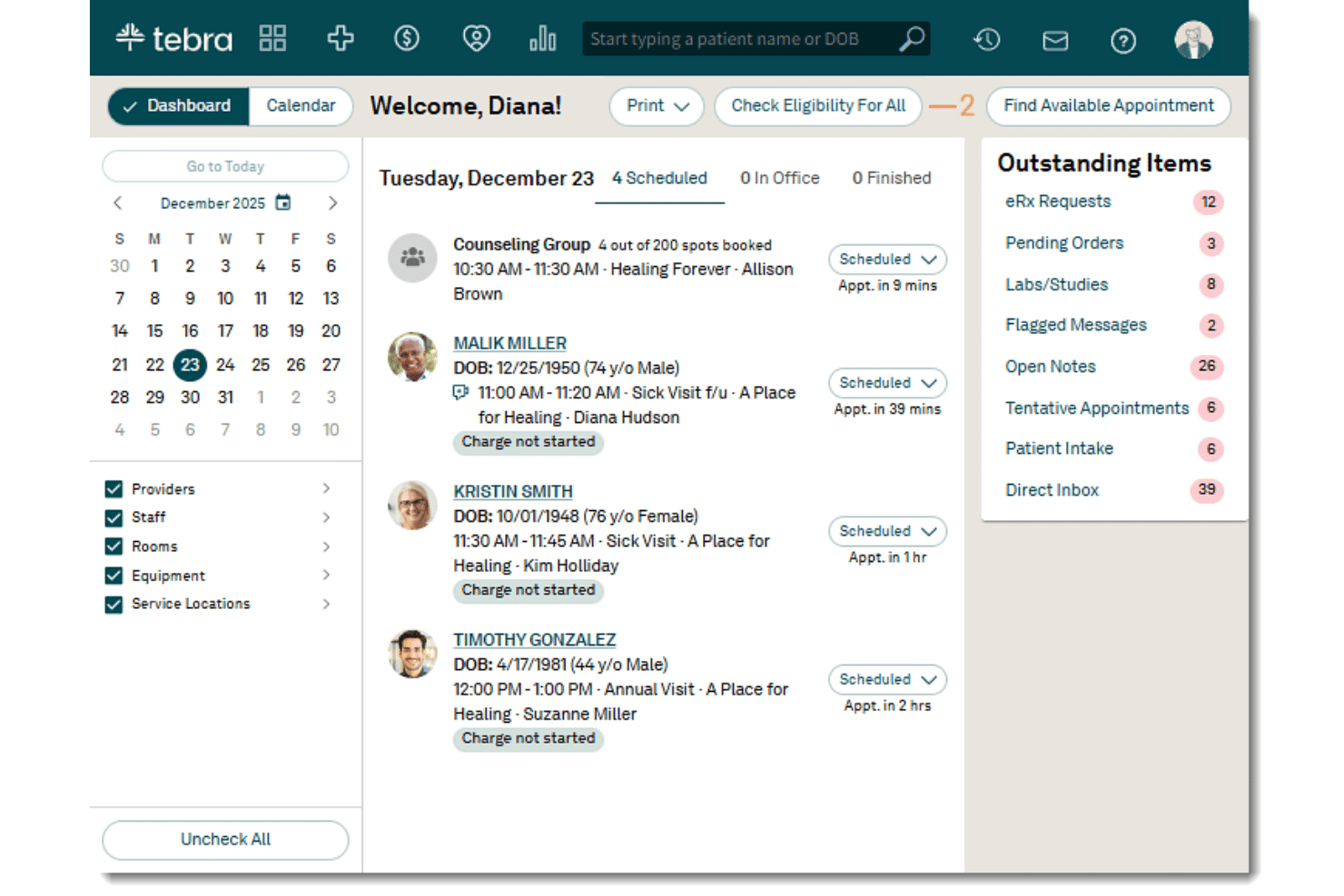
Patients can book appointments through a secure, mobile-friendly portal. This cuts down on phone traffic and helps fill open slots quickly.
Insurance Eligibility Verification
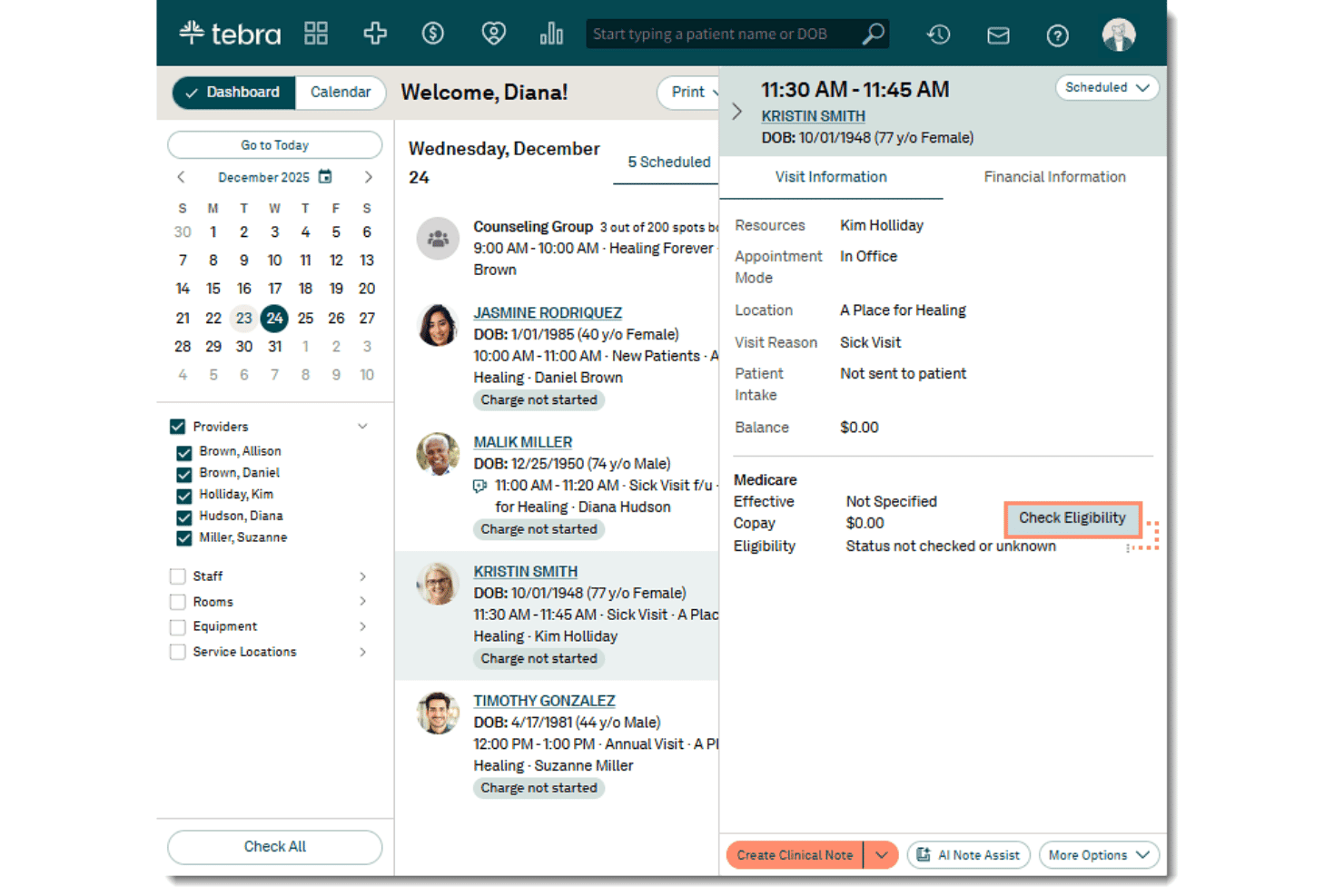
Tebra checks patient insurance in real-time before appointments. This helps prevent claim denials and speeds up billing.
Digital Intake and Forms
Patients complete registration and intake forms online before their visit. Responses are instantly added to their chart with less manual entry.
Appointment Reminders
Automated reminders go out by text, email, or phone. This reduces no-shows and keeps patients informed.
Billing and Claims Management
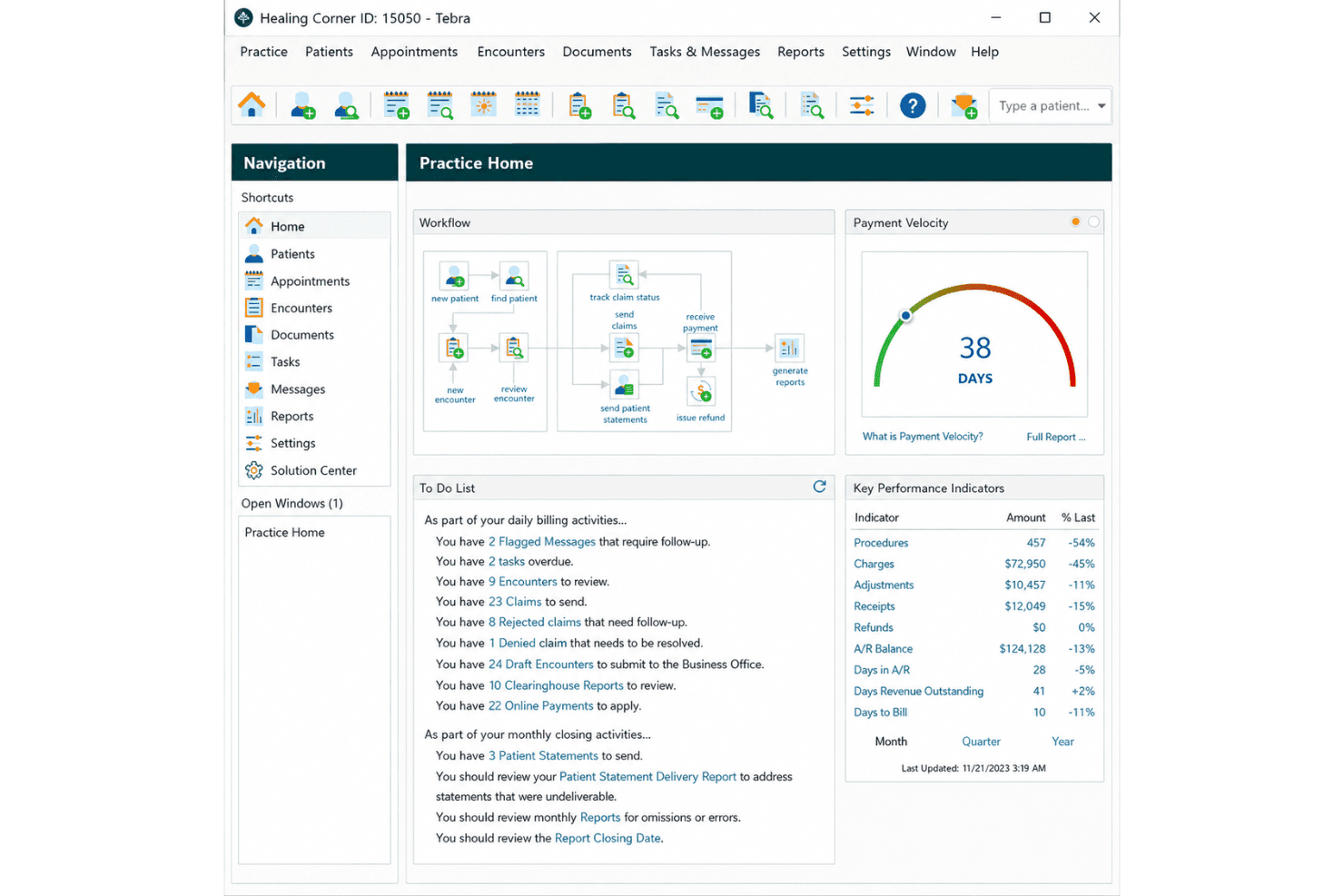
Tebra automates claims submission, payment posting, and denial management. Practices get paid faster without chasing down paperwork.
Telehealth Visits
Video visits launch right from the Tebra dashboard—no extra logins. This makes offering virtual care simple for both staff and patients.
Ease of Use
Tebra stands out for its clean dashboard and streamlined workflows, letting most staff pick it up without much training. Scheduling, claims, and telehealth are all accessible from one login, and users appreciate that appointment reminders and billing tools don’t require digging around.
I’ve seen fewer complaints about clutter or confusion compared to similarly featured systems.
Integrations
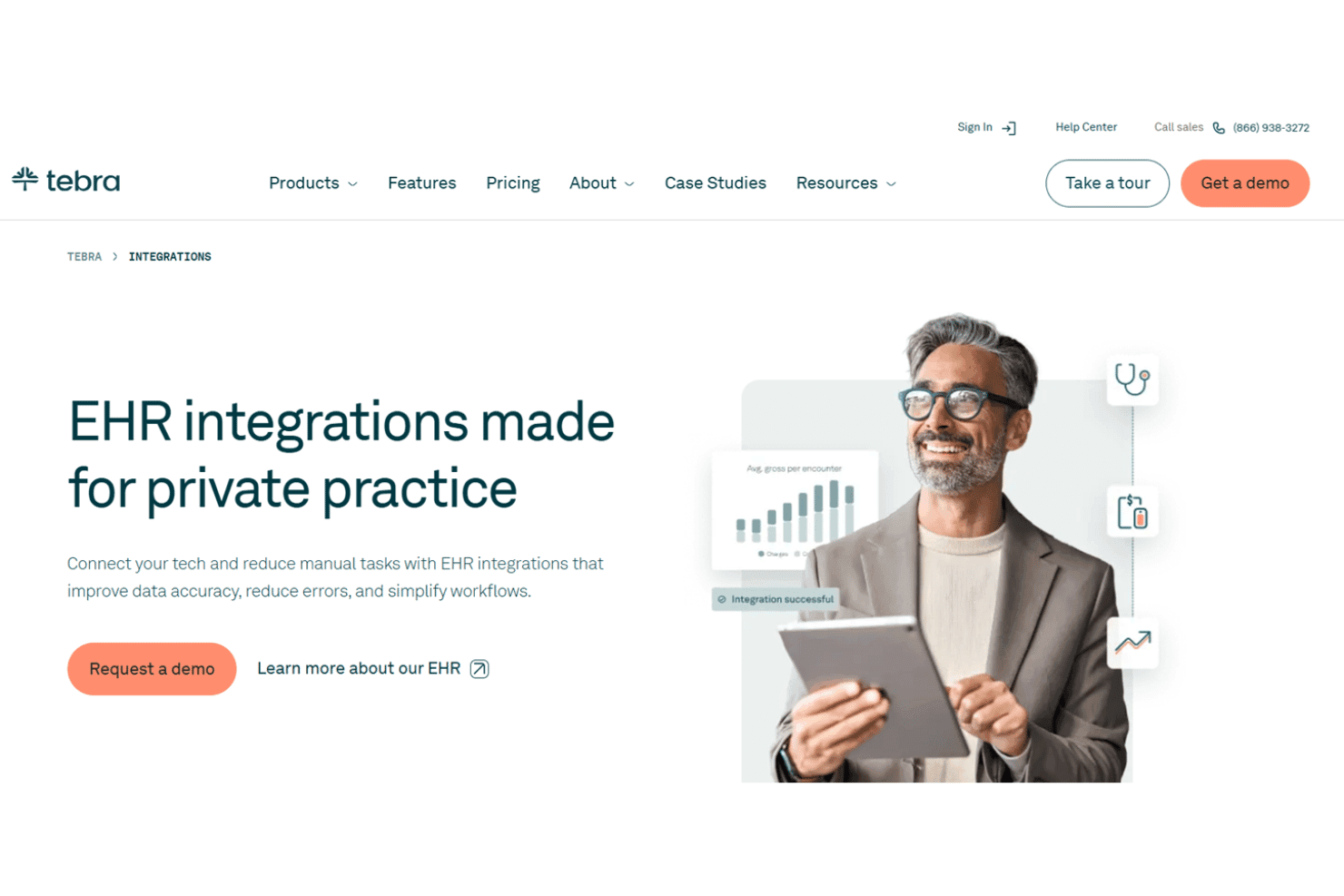
Tebra integrates with Quest Diagnostics, LabCorp, Change Healthcare, Surescripts, ECW, Elation Health, Athenahealth, QuickBooks, Surescripts, and Twilio, among others.
Tebra also offers an API for advanced connections and works with select third-party integration tools.
Tebra Specs
- API: Yes
- Appointment Scheduling: Yes
- Athlete Management: No
- Audit Management: No
- Calendar Management: Yes
- Compliance Tracking: Yes
- Customer Management: No
- Dashboard: Yes
- Data Export: Yes
- Data Import: Yes
- Data Visualization: Yes
- Electronic Prescribing: Yes
- External Integrations: Yes
- File Sharing: Yes
- File Transfer: Yes
- Health Management: Yes
- HIPAA Compliance: Yes
- Inventory Tracking: No
- Multi-User: Yes
- Notifications: Yes
- Organization Management: Yes
- Patient Management: Yes
- Project Management: No
- Regulatory Alerts: No
- Risk Assessment: No
- Scheduling: Yes
- Supplier Management: No


