

Entiendo los desafíos que conlleva gestionar una consulta sanitaria con mucha actividad. ¿Uno de los mayores problemas? Asegurarse de que el personal disponga de los conocimientos más recientes que necesita para ofrecer una atención excepcional, todo ello cumpliendo unas normativas que cambian constantemente. Ahí es donde entra en juego un sólido Sistema de Gestión del Aprendizaje (LMS) para el sector sanitario: una plataforma basada en la nube que ofrece aprendizaje electrónico, realiza un seguimiento del progreso de la formación y garantiza que siempre esté al día con las prácticas más recientes.
Un software LMS no solo proporciona a tu equipo los conocimientos que necesita, sino que también es una herramienta potente para mejorar la atención al paciente. Entonces, ¿por qué esperar? Ha llegado el momento de explorar estas plataformas LMS y dar la bienvenida al futuro de la educación sanitaria.
Por qué confiar en nuestras recomendaciones de software
6,700+
Reviews
20
Industry experts
16+
Evaluation factors
14
Years
Nuestro equipo lleva probando y evaluando software desde 2012. Como líderes de centros médicos, sabemos lo difícil —y lo importante— que es elegir el software adecuado.
Para esta guía, evaluamos las herramientas mediante pruebas prácticas e investigación independiente, puntuando las herramientas según nuestros criterios de selección.
Nuestras reseñas reflejan nuestro criterio editorial humano, no un discurso de ventas.
Tabla comparativa: plataformas LMS para el sector sanitario
Esta tabla comparativa resume los detalles de precios de mis principales selecciones de plataformas LMS para el sector sanitario.
| Tool | Best For | Trial Info | Price | ||
|---|---|---|---|---|---|
| 1 | Mejor para certificaciones de formación | Prueba gratuita de 14 días | Precios bajo solicitud | Website | |
| 2 | Ideal para la creación de contenido asistida por IA | Prueba gratuita disponible | Desde $239/mes (80 usuarios) | Website | |
| 3 | Ideal para formación sanitaria basada en funciones | Plan gratuito + demo gratuita disponible | Desde $119/mes (facturado anualmente) | Website | |
| 4 | Ideal para gestionar competencias clínicas a gran escala | Prueba gratuita de 30 días + demo gratis disponible | Desde $3.97/usuario/mes | Website | |
| 5 | Ideal para la automatización de la incorporación y asignación de cursos | Demostración gratuita disponible | Precios a consultar | Website | |
| 6 | Ideal para una interfaz LMS de arrastrar y soltar | Demo gratuita disponible | Desde $5/empleado/mes | Website | |
| 7 | La mejor opción para integraciones amplias con contenido de terceros | Demostración gratuita disponible | Desde $1,500/año (facturación anual) | Website | |
| 8 | Ideal para aprendizaje intuitivo y autodirigido en el sector salud | No | Precios a consultar | Website | |
| 9 | Mejor para una implementación rápida y la ampliación de la formación sanitaria | No | $599 al mes para hasta 50 usuarios activos | Website | |
| 10 | Mejor para cursos médicos en línea interactivos y atractivos | No | Precios a consultar | Website |


Análisis de las mejores plataformas LMS para el sector sanitario
A continuación encontrarás mis resúmenes detallados de las mejores plataformas LMS para el sector sanitario que llegaron a mi lista final. Mis análisis ofrecen una visión detallada de las funciones principales, ventajas e inconvenientes, integraciones y casos de uso ideales de cada herramienta para ayudarte a encontrar la mejor opción para ti.
 Mejor para certificaciones de formación
- Prueba gratuita de 14 días
- Precios bajo solicitud
Visit WebsiteCustomer Rating:4.7/5
El panel de control de Resumen de Gestión de SkyPrep destaca el progreso de la formación, tareas pendientes y accesos directos clave para administradores. SkyPrep es un sistema de gestión del aprendizaje diseñado para empresas y organizaciones que buscan impartir de manera eficiente formación y contenido educativo. Permite a los usuarios crear, gestionar y hacer seguimiento de cursos en línea, evaluaciones y rutas de aprendizaje adaptadas a sus necesidades específicas.
Por qué elegí SkyPrep: Admite la formación certificada al permitirte otorgar certificados con firmas electrónicas tras la finalización del curso, asegurando que tu equipo cumpla con las cualificaciones necesarias. Además, SkyPrep facilita la formación en cumplimiento de HIPAA y políticas, ayudando a tu organización a cumplir con normativas esenciales a través de informes detallados.
Funcionalidades e integraciones destacadas:
Otras características incluyen accesibilidad móvil, lo que permite a tu equipo acceder a los materiales de formación en cualquier momento y lugar, algo vital para profesionales de la salud que pueden trabajar en horarios irregulares. La plataforma también ofrece informes de cumplimiento, proporcionando seguimiento en tiempo real del progreso del usuario para garantizar que se cumplan todos los requisitos formativos.
Las integraciones incluyen ADP, Workday, SAP SuccessFactors, BambooHR, UKG Ready, UKG Pro, Oracle HCM, Paycom, HubSpot, Salesforce, Zoom y Microsoft Teams.
Pros and Cons
Pros:
- Herramientas eficaces para crear cursos
- Permite distintos tipos de contenido y rutas de aprendizaje
- Ofrece análisis e informes muy útiles
Cons:
- La configuración inicial puede ser compleja
- La aplicación móvil carece de ciertas funcionalidades
Learn more about SkyPrep: Ideal para la creación de contenido asistida por IA
- Prueba gratuita disponible
- Desde $239/mes (80 usuarios)

Usa IA para generar al instante módulos de cursos y actividades interactivas con EducateMe. EducateMe LMS está diseñado para satisfacer las necesidades únicas de las organizaciones sanitarias proporcionando una plataforma centralizada para la formación y el desarrollo. Resulta atractivo para administradores de hospitales y responsables de formación que buscan una solución que mejore los procesos de capacitación, incorporación y cumplimiento normativo. Con sus herramientas de creación de contenido impulsadas por IA y análisis del desempeño, EducateMe LMS aborda los retos de mantener el cumplimiento regulatorio y mejorar la participación del aprendiz, convirtiéndose en un recurso valioso para los equipos de salud.
Por qué elegí EducateMe LMS
Elegí EducateMe LMS por su potente enfoque en la creación de contenido a través de inteligencia artificial, lo que ahorra mucho tiempo a consultorios médicos y equipos tecnológicos del sector salud. A diferencia de los sistemas antiguos que requieren introducción manual para cada módulo, EducateMe utiliza IA para crear simulaciones de roles y verificaciones de conocimiento que reflejan escenarios clínicos reales. Por ello, es una excelente opción para organizaciones sanitarias en crecimiento que necesitan difundir materiales de formación de alta calidad sin contar con un equipo exclusivo de diseñadores instruccionales.
Funciones principales de EducateMe LMS
Además del coach de roles con IA y los análisis de desempeño, también encontré:
- Gestión inteligente de cohortes: Automatiza el proceso de agrupar a los aprendices según departamento o fecha de ingreso, asegurando que los profesionales indicados reciban automáticamente las rutas de formación adecuadas.
- Personalización de marca (White-Label): Esta función permite personalizar la plataforma para reflejar la imagen institucional de tu organización, asegurando una experiencia de aprendizaje consistente.
- Soporte para aprendizaje colaborativo: Facilita el trabajo en equipo y el intercambio de conocimientos entre profesionales de la salud, promoviendo un entorno de aprendizaje colaborativo.
- Compatibilidad con archivos SCORM: Esta compatibilidad garantiza que tu contenido e-learning existente pueda integrarse fácilmente en la plataforma, maximizando el aprovechamiento de recursos.
Integraciones de EducateMe LMS
Incluye integraciones con Google Workspace, Slack, Zoom, Salesforce, Figma, Calendly y varias otras herramientas a través de su API.
Pros and Cons
Pros:
- Proporciona información sobre la participación de los aprendices
- Ofrece creación centralizada de contenidos
- Las actualizaciones periódicas mantienen la plataforma innovadora
Cons:
- Requiere un número mínimo de usuarios para su precio
- No dispone de funciones de gamificación avanzadas
Learn more about EducateMe LMS: Ideal para formación sanitaria basada en funciones
- Plan gratuito + demo gratuita disponible
- Desde $119/mes (facturado anualmente)
Visit WebsiteCustomer Rating:4.6/5
El panel de cursos de cumplimiento de TalentLMS muestra el contenido de formación, el progreso de los alumnos y las herramientas de creación de cursos con IA en una sola vista. Probablemente esté buscando un LMS para el sector salud que ayude a sus equipos clínicos y no clínicos a mantenerse en cumplimiento, capacitados y preparados para las exigencias de un entorno regulado, y TalentLMS responde a estas necesidades con una configuración que le permite impartir formación rápidamente. Ya sea que esté incorporando nuevo personal, estandarizando procedimientos de atención al paciente o manteniéndose al día con las certificaciones obligatorias, le ofrece una forma flexible de crear o cargar contenido y guiar a los alumnos a través de trayectorias estructuradas.
Por qué elegí TalentLMS
Elegí TalentLMS porque su soporte para ramas, roles de usuario y rutas de aprendizaje brinda a las organizaciones de salud una manera clara de ofrecer formación específica por departamento y por función sin crear sistemas separados. Puede subir sus propias políticas, procedimientos operativos estándar y materiales de formación clínica, o usar herramientas integradas como el generador de cursos con IA y evaluaciones para crear contenido adaptado a sus protocolos. También me gusta que las automatizaciones gestionan tareas recurrentes de cumplimiento—como los recordatorios de recertificación o las reglas de inscripción—por lo que no necesita hacer seguimiento manualmente. Y su suite de informes ofrece visibilidad del estado de finalización en todos los equipos, algo crucial cuando las auditorías y controles regulatorios exigen pruebas de formación continua.
Funciones clave de TalentLMS
Además de su sólido control de asignación de usuarios y enfoque en el cumplimiento, TalentLMS ofrece varias características que apoyan las necesidades de formación habituales en entornos sanitarios:
- Aprendizaje basado en habilidades: El mapeo de habilidades con IA le ayuda a identificar brechas de competencia y conectar al personal con formación específica.
- Herramientas de aprendizaje combinado: Le permite combinar módulos en línea con sesiones presenciales para validaciones clínicas o prácticas.
- Rutas de aprendizaje: Proporciona secuencias estructuradas para que el personal sepa exactamente qué cursos realizar según su puesto o trayectoria de certificación.
- Gamificación: Utiliza puntos, insignias y tablas de clasificación para mantener el compromiso de los alumnos con las formaciones obligatorias.
Integraciones de TalentLMS
TalentLMS ofrece integraciones nativas con herramientas populares como Zoom, Salesforce, Shopify, WordPress, BambooHR, GoToMeeting, LinkedIn Learning, Microsoft Teams, Slack y Google Workspace. También dispone de una API para integraciones personalizadas, lo que brinda flexibilidad para adaptar la plataforma a las necesidades específicas de su organización.
Pros and Cons
Pros:
- Rutas de aprendizaje claras respaldan la formación estructurada clínica y no clínica.
- Las reglas de automatización reducen la supervisión manual de recertificaciones recurrentes.
- Las herramientas de cursos con IA ayudan al personal a desarrollar formación a partir de materiales existentes rápidamente.
Cons:
- El editor ofrece flexibilidad limitada para módulos médicos altamente especializados.
- La personalización de informes puede quedarse corta para necesidades regulatorias complejas.
Learn more about TalentLMS: Ideal para gestionar competencias clínicas a gran escala
- Prueba gratuita de 30 días + demo gratis disponible
- Desde $3.97/usuario/mes
Visit WebsiteCustomer Rating:4.6/5
iSpring LMS ofrece una plataforma centralizada para formar a los trabajadores de la salud en todo, desde cumplimiento normativo hasta nuevas prácticas. iSpring LMS ofrece funciones diseñadas para gestionar todo el ciclo de formación en el sector sanitario. Con iSpring LMS, las organizaciones de salud pueden incorporar nuevos empleados, gestionar la formación en cumplimiento normativo y capacitar al personal en productos y procesos de atención al cliente. Ofrece gestión segura de datos, lo cual es crucial para mantener la confidencialidad y cumplir regulaciones como HIPAA.
Por qué elegí iSpring LMS: La plataforma asegura que el personal sanitario se mantenga actualizado con las normativas vigentes mediante evaluaciones a prueba de trampas y formación práctica con simulaciones de diálogo. Los informes y análisis avanzados ofrecen información detallada sobre el desempeño de los empleados, ayudando a las organizaciones a mantener altos estándares y reducir el riesgo de sanciones por incumplimiento. iSpring LMS también destaca por sus capacidades de formación y recertificación automatizadas, que te permiten gestionar competencias clínicas a gran escala y mejorar el proceso de formación asignando automáticamente los cursos requeridos y rastreando su finalización. Esto es especialmente importante para el cumplimiento continuo.
Características destacadas e integraciones:
Características incluyen una herramienta de creación de cursos incorporada que permite crear rápidamente cursos interactivos y desplazables directamente en el LMS. Para contenido más complejo con videos de formación, juegos de roles y escenarios ramificados, puedes utilizar la herramienta de autoría iSpring Suite incluida. Los empleados pueden acceder al contenido en sus dispositivos móviles a través de la app, incluso cuando están sin conexión, lo que garantiza una formación continua incluso fuera de la oficina o centro médico.
Las integraciones incluyen sistemas de información de recursos humanos como BambooHR, PeopleWeek y OrangeHRM. La plataforma también se integra con software de supervisión y analítica, como ProctorEdu y Power BI. Otras integraciones incluyen Zoom, Microsoft Teams, Zapier, Microsoft Outlook, Udemy Business, Oracle PeopleSoft y LinkedIn Learning.
Pros and Cons
Pros:
- Acceso móvil robusto al material de formación
- Formación y (re)certificación automatizadas a gran escala
- Informes y análisis avanzados
Cons:
- Podría tener mejores mecanismos de retroalimentación dentro de la plataforma
- Opciones de personalización limitadas
Learn more about iSpring LMS: Ideal para la automatización de la incorporación y asignación de cursos
- Demostración gratuita disponible
- Precios a consultar
Visit WebsiteCustomer Rating:4.4/5
Mitratech Perform facilita la creación de programas educativos y rutas de formación para la incorporación y el desarrollo de empleados. Mitratech Perform es un software integral de gestión del desempeño con un LMS que mejora la capacitación y el desarrollo de los profesionales de la salud mediante su interfaz fácil de usar y sus potentes funcionalidades.
Por qué elegí Mitratech Perform: Ofrece incorporación automatizada, lo que simplifica la integración de nuevos empleados del sector salud al asignar automáticamente los cursos y evaluaciones relevantes. Además, la función de autoinscripción simplifica el proceso de capacitación inscribiendo automáticamente a los empleados en cursos según su puesto, departamento o antigüedad, asegurando que todo el personal reciba la formación adecuada sin carga administrativa.
Características y integraciones destacadas:
Las características incluyen creación de contenido de cursos, contenido multimedia, gamificación, creación de programas de actualización de habilidades, bibliotecas de cursos en línea, cuestionarios y evaluaciones interactivas, y reportes de capacitación. También ofrece herramientas de gestión del desempeño.
Las integraciones incluyen ADP Workforce Now, Paylocity, BambooHR, Namely, Ramco, UKG Pro, Syntrio, SFTP, Azure, Okta, Salesforce, Zoom, GoToWebinar y Docusign.
Pros and Cons
Pros:
- Interfaz fácil de usar
- Buenas funciones de gestión del desempeño
- Informes y análisis sólidos
Cons:
- Las opciones de personalización pueden resultar abrumadoras
- Puede no integrarse con algunas aplicaciones especializadas de salud de terceros
Learn more about Mitratech Perform: Ideal para una interfaz LMS de arrastrar y soltar
- Demo gratuita disponible
- Desde $5/empleado/mes
Visit WebsiteCustomer Rating:4.8/5
Deel te permite personalizar la experiencia de aprendizaje a través de varios elementos interactivos, como cuestionarios. Deel es una plataforma integral diseñada para simplificar la nómina, los recursos humanos y el cumplimiento normativo para equipos globales. Permite a las empresas contratar empleados y contratistas en más de 150 países de manera rápida y eficiente, automatizando procesos esenciales como la nómina, la gestión de beneficios y el aprendizaje.
Por qué elegí Deel: Como parte de su suite Engage, Deel ofrece un LMS que permite a las instituciones de salud diseñar y ofrecer programas de capacitación personalizados de manera eficiente a través de su interfaz de arrastrar y soltar. Sus funciones de automatización también permiten la asignación automática de cursos según criterios específicos, como departamentos, fechas de inicio y roles de los empleados. El LMS también integra evaluaciones de desarrollo y desempeño para ayudar a asegurar que el aprendizaje se aplique en la práctica.
Características destacadas e integraciones:
Las características incluyen un marco de progresión profesional impulsado por IA, evaluaciones de desempeño personalizables, retroalimentación 360°, análisis avanzados como mapas de calor y matrices 9-box, y funcionalidades de nómina y cumplimiento.
Las integraciones incluyen BambooHR, Personio, Workday y otros sistemas de recursos humanos. También ofrece integración con Slack y una API para integraciones personalizadas.
Pros and Cons
Pros:
- Se integra con Deel HR
- Interfaz intuitiva de arrastrar y soltar
- Automatiza los flujos de trabajo de capacitación
Cons:
- Podría ofrecer más opciones de personalización
- Curva de aprendizaje para nuevos usuarios
Learn more about Deel HR: La mejor opción para integraciones amplias con contenido de terceros
- Demostración gratuita disponible
- Desde $1,500/año (facturación anual)
Visit WebsiteCustomer Rating:3.8/5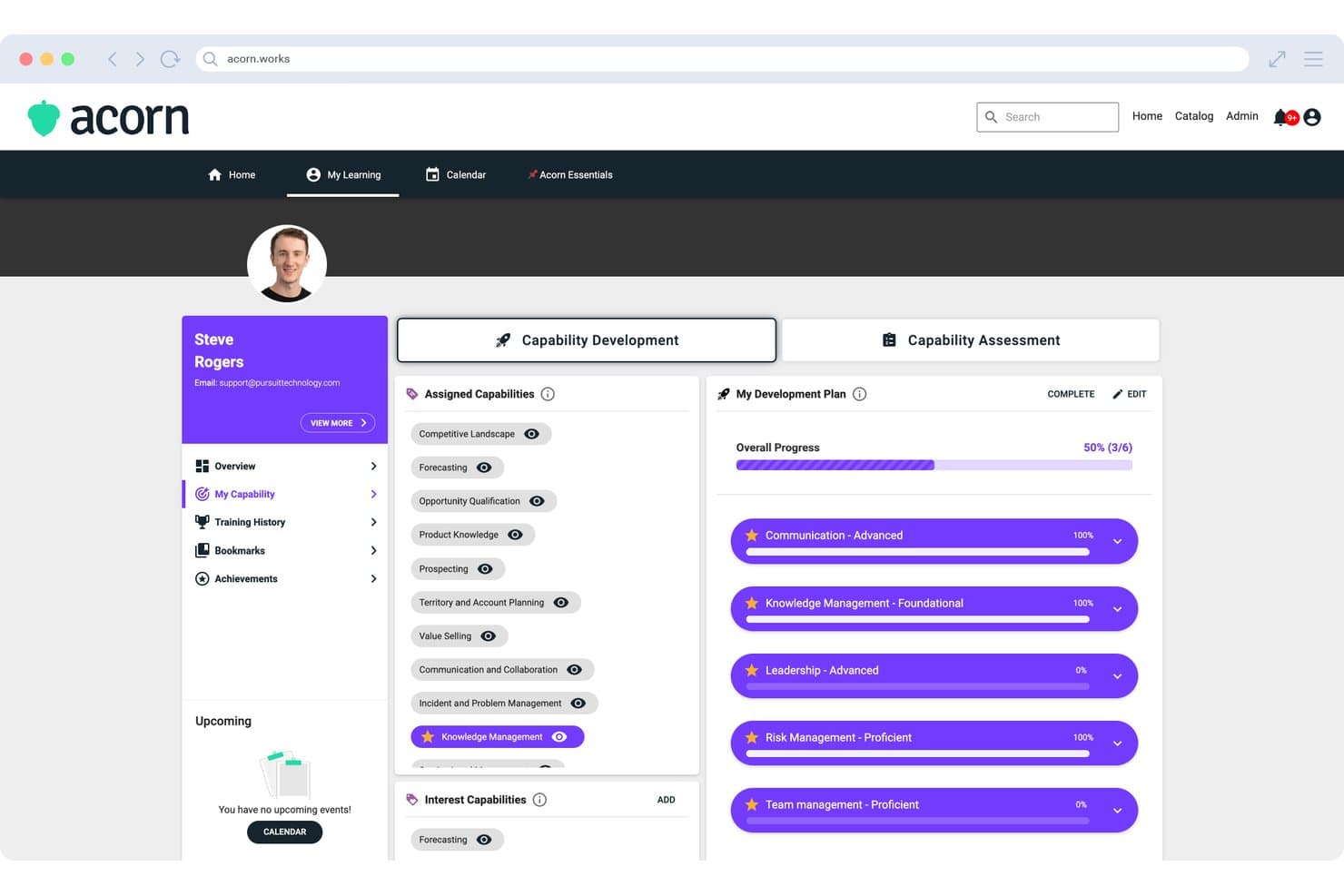
Acorn muestra un Plan de desarrollo de capacidades con capacidades asignadas, seguimiento del progreso de desarrollo y habilidades prioritarias marcadas con una estrella para cada alumno. Acorn es un LMS centrado en el rendimiento que combina la impartición de aprendizaje, el seguimiento de créditos de educación continua, la gestión de capacidades y los flujos de trabajo de incorporación en una sola plataforma para organizaciones sanitarias medianas y empresariales.
¿Para quién es mejor Acorn?
Acorn está diseñado para organizaciones y asociaciones sanitarias de tamaño mediano a empresarial que gestionan la impartición de educación continua en grandes redes distribuidas de profesionales sanitarios.
Por qué elegí Acorn
Acorn ocupa un lugar en mi lista final por la forma en que integra contenido de cumplimiento normativo de todo el mercado en una sola plataforma. Me gusta que se conecte de forma nativa con OpenSesame, Go1, LinkedIn Learning y Skillsoft, y que su Adaptador universal sincronice automáticamente las finalizaciones externas con Acorn para que nada se pase por alto. He comprobado que esto es especialmente importante al obtener contenido sobre HIPAA, OSHA y educación continua de distintos proveedores: todo queda registrado en un único registro de auditoría consolidado.
Características principales de Acorn
- Consolidación de créditos de educación continua: Realiza el seguimiento y actualiza automáticamente los créditos y certificados de educación continua del personal clínico en múltiples fuentes de contenido.
- Marcos de funciones y capacidades: Configura las asignaciones de formación en función de las funciones clínicas, los requisitos de acreditación y las evaluaciones de capacidades.
- Gestión multiinquilino: Admite portales de aprendizaje independientes, contenido compartido y administración centralizada en redes sanitarias distribuidas.
- Aplicación móvil de aprendizaje: Proporciona aplicaciones nativas para Android e iOS que permiten acceder desde cualquier lugar a la formación asignada y a los registros de certificación.
Integraciones de Acorn
Acorn ofrece integraciones nativas con OpenSesame, Go1, LinkedIn Learning y Skillsoft, además de una API para integraciones personalizadas.
Pros and Cons
Pros:
- Seguimiento automatizado de créditos de educación continua entre profesionales
- La estructura multiinquilino se adapta a redes sanitarias distribuidas
- Marcos de capacidades diseñados para la asignación de funciones clínicas
Cons:
- No incluye una biblioteca propia de contenido sobre cumplimiento normativo sanitario
- Personalización limitada de los informes para estructuras organizativas complejas
Learn more about Acorn: Ideal para aprendizaje intuitivo y autodirigido en el sector salud
- No
- Precios a consultar
Visit WebsiteCustomer Rating:4.6/5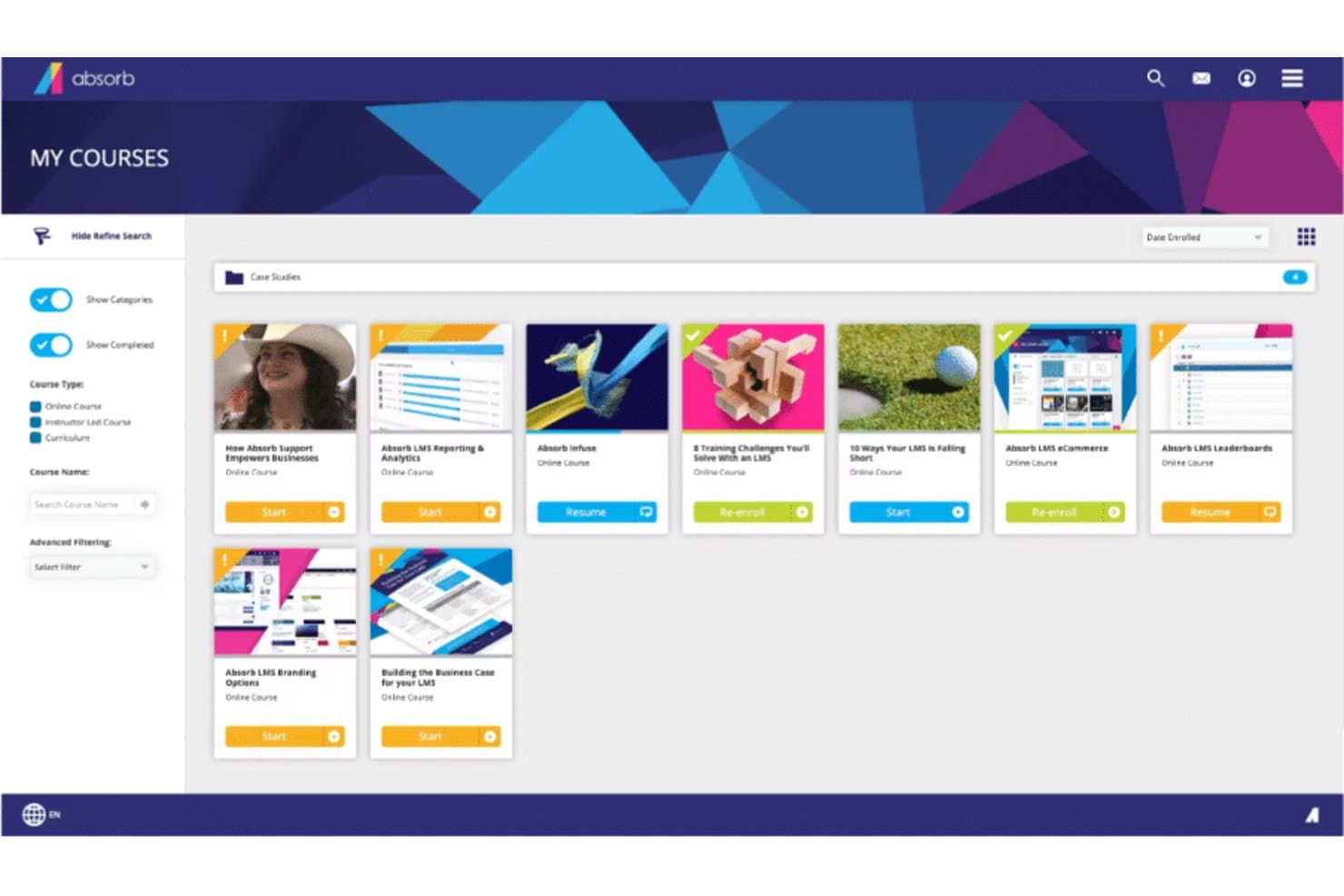
Aquí tienes la vista general de cursos de Absorb Absorb es un sistema de gestión de aprendizaje que ofrece una interfaz moderna e intuitiva, fácil de navegar incluso para quienes tienen habilidades técnicas limitadas. Ofrece una variedad de funciones, incluyendo la creación de cursos, herramientas de evaluación y analíticas, lo que lo convierte en una excelente opción para organizaciones que buscan un LMS fácil de usar.
Por qué elegí Absorb: Absorb captó mi atención por su diseño intuitivo y su interfaz fácil de usar, diferenciándose de otras plataformas LMS más complejas. La facilidad de uso es un factor crítico para cualquier LMS, y en este aspecto, Absorb destaca. Por eso lo seleccioné como el mejor LMS por su interfaz fácil de usar.
Características destacadas e integraciones:
Las características clave de Absorb incluyen la creación de cursos, herramientas de evaluación, portales para alumnos y analíticas. Además, proporciona oportunidades de aprendizaje social mediante su tablón de anuncios. En cuanto a integraciones, Absorb puede integrarse con varios sistemas de software como HRIS, CRM y plataformas de comercio electrónico, lo que agrega comodidad para sus usuarios.
Pros and Cons
Pros:
- Interfaz fácil de usar
- Funciones extensas para gestión de cursos e involucramiento del alumno
- Ofrece integración con diversos sistemas de software
Cons:
- La información sobre precios no está disponible fácilmente
- Puede carecer de funciones avanzadas en comparación con otras plataformas LMS
- La interfaz puede ser demasiado sencilla para quienes buscan un alto nivel de personalización
Learn more about Absorb: Mejor para una implementación rápida y la ampliación de la formación sanitaria
- No
- $599 al mes para hasta 50 usuarios activos
Visit WebsiteCustomer Rating:4.6/5
Una vista del panel de LearnUpon LearnUpon es un sistema de gestión del aprendizaje diseñado para adaptarse al crecimiento. Ofrece una plataforma LMS escalable que ayuda a las empresas a gestionar, supervisar y alcanzar sus diversos objetivos de aprendizaje. Está diseñado para ampliarse según las necesidades de tu empresa, por lo que lo clasifiqué como 'el mejor para' la escalabilidad.
Por qué elegí LearnUpon: Elegí LearnUpon por su capacidad de crecer eficazmente junto con las necesidades de aprendizaje de una organización. Su arquitectura escalable garantiza que siga siendo eficiente incluso a medida que una empresa se expande, lo que lo diferencia de otros LMS que pueden tener dificultades con cargas aumentadas.
En mi opinión, LearnUpon es la opción óptima para empresas que planean un crecimiento y expansión significativos.
Funciones destacadas e integraciones:
Las funciones destacadas de LearnUpon incluyen su interfaz fácil de usar, analíticas detalladas, capacidades de comercio electrónico y una arquitectura de múltiples portales, que permite a las empresas crear entornos de aprendizaje separados para diferentes audiencias.
En cuanto a integraciones, se conecta con una amplia gama de herramientas, incluyendo Salesforce, Webex y Zoom, lo que lo hace flexible y adaptable a distintos flujos de trabajo.
Pros and Cons
Pros:
- Infraestructura robusta y escalable
- Amplia variedad de integraciones
- Excelente atención al cliente
Cons:
- El precio inicial es superior en comparación con otras plataformas LMS
- Las funciones más avanzadas pueden requerir una curva de aprendizaje
- Opciones de personalización limitadas para la apariencia de los cursos
Learn more about LearnUpon: 10Mejor para cursos médicos en línea interactivos y atractivos
Tovuti
- No
- Precios a consultar
Visit WebsiteCustomer Rating:4.7/5
Aquí tienes una captura de pantalla de muestra del panel de Tovuti en todos los dispositivos. Tovuti es un sistema integral de gestión del aprendizaje diseñado para apoyar un entorno de aprendizaje atractivo e interactivo. Ofrece un conjunto de herramientas y funciones que lo convierten en una excelente plataforma para desarrollar e impartir cursos médicos en línea inmersivos.
Por qué elegí Tovuti: Cuando estaba seleccionando un LMS que realmente pudiera revolucionar la educación médica en línea, Tovuti destacó de inmediato. Aporta una interactividad y participación únicas a la experiencia de aprendizaje en línea, haciéndola realmente dinámica.
Sus herramientas de autoría de cursos permiten la creación de contenidos ricos y atractivos, lo que lo distingue como la mejor opción para quienes priorizan el aprendizaje interactivo en la entrega de sus cursos.
Características destacadas e integraciones:
Tovuti ofrece una herramienta interactiva de autoría de cursos que permite la creación de cursos convincentes y ricos en multimedia. Sus lecciones interactivas incluyen elementos como gamificación y cuestionarios, mejorando la experiencia de aprendizaje.
Además, Tovuti ofrece una amplia gama de integraciones, incluyendo con sistemas populares como Salesforce, Zoom y WordPress, lo que permite una compartición de datos fluida y el aumento de funcionalidades en todo el conjunto de herramientas de su organización.
Pros and Cons
Pros:
- Herramienta interactiva de autoría de cursos
- Amplia gama de integraciones
- La gamificación mejora la participación del alumno
Cons:
- No hay información de precios disponible
- Puede resultar abrumador para usuarios primerizos
- La personalización puede ser un desafío para usuarios sin conocimientos técnicos
Learn more about Tovuti:
Otras plataformas LMS para el sector sanitario
A continuación se incluye una lista de herramientas LMS adicionales para el sector sanitario que seleccioné, pero que no llegaron a estar entre las 10 mejores. Sin duda, merece la pena echarles un vistazo.
- 11DoceboMejor para experiencias de aprendizaje personalizadas impulsadas por IA
- 12eFrontIdeal para la personalización y la seguridad en la formación médica
- 13HealthStreamEl mejor para capacitación en cumplimiento y regulaciones en salud
- 14MedTrainerMejor para cursos específicos del sector sanitario
- 15MedTrainerMejor para la automatización de flujos de trabajo y capacitación en el sector salud
- 16Litmos LMSIdeal para rutas de aprendizaje flexibles y compatibles con dispositivos móviles
- 17CornerstoneLa mejor opción para un desarrollo sólido de habilidades en el sector sanitario
- 18ReliasIdeal para reducir riesgos y garantizar atención al paciente de alta calidad
- 19MedBridgeMejor para mejorar el desempeño clínico y la participación del paciente
- 20ParadisoIdeal para experiencias de aprendizaje mixto y multiidioma
- 21ContinuIdeal para la formación en cumplimiento sanitario
- 22ConnecteamIdeal para una app móvil de LMS compatible con HIPAA para trabajadores de primera línea
- 23Synergy LearningIdeal para sistemas de gestión de aprendizaje a medida
Cómo evalúo los LMS para el sector salud
Divido mi evaluación en dos capas: los requisitos básicos que toda plataforma debe cumplir—como alojamiento compatible con HIPAA y una biblioteca real de contenido de cumplimiento—y los factores que diferencian a las principales opciones.
Funcionalidad básica (requisitos imprescindibles para esta lista)
Cuando selecciono herramientas para mi lista, califico cada una en una escala del 0 (no ofrece la funcionalidad) al 5 (sobresale en esta área) para cada funcionalidad básica listada a continuación. Después, calculo el puntaje total de la herramienta como un porcentaje. Cada herramienta debe alcanzar un puntaje total mínimo del 65% para ser considerada.
- Biblioteca de contenido de cumplimiento en salud: Verifico si la plataforma incluye cursos actualizados de HIPAA, OSHA y Patógenos Transmitidos por Sangre, en lugar de requerir que construyas todas las capacitaciones de cumplimiento desde cero.
- Seguimiento de créditos CE/CME: El seguimiento de horas de crédito, tipos de licencia y fechas de vencimiento es importante, especialmente cuando tus enfermeras, asistentes médicos y proveedores tienen diferentes cronogramas de renovación.
- Reportes listos para auditoría: Busco informes preconstruidos que se alineen con los requisitos de encuestas de la Comisión Conjunta o CMS, para que tu equipo de cumplimiento pueda obtener registros bajo demanda durante una auditoría.
- Rutas de aprendizaje basadas en roles: La plataforma debe permitirte asignar diferentes rutas de cursos según el puesto de trabajo, como separar la capacitación en concientización HIPAA para recepción y los módulos de seguridad para el personal clínico.
- Flujos de trabajo de recertificación automatizados: Evalúo cómo el sistema maneja la capacitación anual recurrente: reasignación automatizada, alertas de escalamiento y notificaciones para gerentes reducen la carga de seguimiento manual.
- Infraestructura compatible con HIPAA: Un BAA firmado, normas de encriptación y controles de acceso basados en roles son expectativas mínimas para cualquier plataforma que maneje datos de capacitación relacionados con la PHI.
Una vez que tengo una lista de herramientas que cumplen con los criterios, considero qué distingue a cada plataforma.
Factores diferenciadores (qué distingue a los proveedores)
Así es como comparo y contrasto diferentes proveedores:
Características destacadas
El acceso móvil es un diferenciador real—busco aplicaciones nativas que permitan al personal clínico completar un módulo entre pacientes sin estar atados a una estación de trabajo. Las listas de verificación de habilidades y evaluaciones de competencia también destacan plataformas, especialmente cuando los tutores pueden validar competencias clínicas observadas directamente en el sistema. Para prácticas con múltiples ubicaciones o DSOs, evalúo qué tan bien la plataforma maneja los reportes basados en ubicación y estructuras organizacionales jerárquicas entre instalaciones.
Más allá de las características
Verifico si los cursos de cumplimiento de un proveedor cuentan con acreditación real de ACCME o ANCC, ya que las plataformas que pueden emitir créditos CE/CME válidos evitan que tu equipo gestione un flujo de acreditación por separado. También importa la integración con tu EHR y HRIS existente—la provisión automatizada de usuarios a través de sistemas como ADP o BambooHR previene cuentas huérfanas cuando el personal rota. La estructura de precios vale la pena evaluarla detenidamente, en particular si la biblioteca de contenido viene incluida o se vende por separado, ya que esto puede afectar significativamente el costo total en prácticas en crecimiento.
Cómo elegir un LMS para el sector sanitario
Es fácil perderse entre largas listas de funciones y estructuras de precios complejas. Para ayudarte a mantener la concentración mientras avanzas en tu proceso único de selección de software, aquí tienes una lista de factores que debes tener en cuenta:
| Factor | Qué debes tener en cuenta |
|---|---|
| FactorEscalabilidad | Qué debes tener en cuenta¿Hasta qué punto crece el LMS junto con tu consulta? Ten en cuenta el número de usuarios que admite y si puede gestionar un aumento de los datos a medida que crecen tus necesidades. |
| FactorIntegraciones | Qué debes tener en cuenta¿Se integra el LMS con tus sistemas actuales? Busca compatibilidad con tu historia clínica electrónica, recursos humanos y otras herramientas para evitar silos de datos y agilizar los flujos de trabajo. |
| FactorPersonalización | Qué debes tener en cuenta¿Puedes adaptar el LMS a las necesidades de tu consulta? Comprueba si permite personalizar las rutas de aprendizaje, los paneles y los informes para que se ajusten a tus procesos específicos. |
| FactorFacilidad de uso | Qué debes tener en cuenta¿Es el LMS fácil de usar para personal de todos los niveles? Una interfaz sencilla reduce el tiempo de formación y ayuda al personal a adoptar rápidamente el sistema. |
| FactorImplementación e incorporación | Qué debes tener en cuenta¿Cuánto se tarda en empezar? Evalúa el proceso de configuración y los recursos disponibles, como vídeos de formación o recorridos por el producto, para garantizar una transición fluida. |
| FactorCoste | Qué debes tener en cuenta¿Se ajusta el precio a tu presupuesto? Compara el coste de los distintos planes y ten en cuenta las posibles tarifas ocultas. Busca soluciones que ofrezcan un buen equilibrio entre funciones y asequibilidad. |
| FactorMedidas de seguridad | Qué debes tener en cuenta¿Hasta qué punto es seguro el LMS? Asegúrate de que cumple las normativas de protección de datos y ofrece funciones como cifrado y controles de acceso para proteger la información confidencial. |
| FactorRequisitos de cumplimiento | Qué debes tener en cuenta¿Admite el LMS las necesidades de cumplimiento de tu sector? Comprueba si ofrece herramientas para realizar un seguimiento de las certificaciones, gestionar auditorías y mantenerte al día con los cambios normativos. |
¿Qué es un LMS para el sector sanitario?
El LMS para el sector sanitario es un sistema de gestión del aprendizaje diseñado para la industria sanitaria con el fin de facilitar la formación y la gestión del cumplimiento normativo. Estas herramientas suelen ser utilizadas por profesionales sanitarios, incluidos administradores, educadores y personal clínico, para mejorar la eficiencia de la formación y garantizar el cumplimiento de la normativa.
Funciones como los módulos de formación en línea, el seguimiento del progreso y la gestión de certificaciones ayudan a ofrecer una educación coherente y a mantener el cumplimiento de los estándares del sector. En general, estas herramientas aportan un valor significativo al mejorar las habilidades del personal y garantizar el cumplimiento de las normativas sanitarias.
Funciones del LMS para el sector sanitario
Al seleccionar un LMS para el sector sanitario, presta atención a las siguientes funciones clave:
- Seguimiento del cumplimiento: Te ayuda a supervisar y documentar fácilmente la formación de los empleados, las certificaciones y los requisitos normativos, garantizando que todo el mundo se mantenga al día con los estándares del sector y las exigencias legales.
- Gestión de cursos: Te permite crear, organizar y actualizar módulos de formación para distintos departamentos o puestos, lo que facilita la implementación de nuevas políticas y mantener a todo el mundo informado.
- Herramientas de evaluación: Ofrece cuestionarios, pruebas y encuestas para que puedas evaluar la comprensión, identificar lagunas de conocimiento y determinar dónde puede ser necesario proporcionar apoyo adicional.
- Informes y análisis: Proporciona información detallada sobre las tasas de finalización de los cursos, el progreso de los alumnos y la eficacia de la formación, para que puedas detectar rápidamente tendencias y tomar decisiones basadas en datos.
- Accesibilidad móvil: Permite a los alumnos acceder a cursos, recursos y evaluaciones desde teléfonos inteligentes o tabletas; el aprendizaje puede tener lugar en cualquier sitio, no solo delante de un escritorio.
- Gestión de usuarios: Te permite asignar funciones, gestionar grupos de alumnos y administrar permisos fácilmente, manteniendo tu proceso de formación organizado y seguro.
- Capacidades de integración: Se conecta con otros sistemas de recursos humanos o sistemas médicos que ya utilizas, agilizando la comunicación y reduciendo el trabajo manual de tu equipo.
- Biblioteca de contenidos: Ofrece una selección integrada de cursos y recursos médicos relevantes y actualizados, ahorrándote tiempo en la creación de contenidos y cubriendo al mismo tiempo las necesidades formativas principales.
- Itinerarios de aprendizaje personalizables: Te permite adaptar los recorridos formativos a distintas personas o equipos, garantizando que cada alumno reciba la información adecuada en el momento adecuado.
Funciones habituales de IA en los LMS para el sector sanitario
Además de las funciones estándar de los LMS para el sector sanitario mencionadas anteriormente, muchas de estas soluciones están incorporando IA con funciones como:
- Recomendaciones de aprendizaje personalizadas: Utiliza IA para sugerir cursos y recursos en función del puesto, el historial y los intereses de cada persona, haciendo que la formación sea eficiente y atractiva.
- Análisis automatizado de las carencias de competencias: La IA examina el rendimiento de los alumnos e identifica automáticamente las áreas en las que se necesita más formación o apoyo, para que puedas abordar las deficiencias de forma proactiva.
- Chatbots de lenguaje natural: Proporciona asistencia y respuestas instantáneas basadas en IA a preguntas relacionadas con la formación, ayudando a los alumnos a encontrar información de forma rápida e independiente.
- Análisis predictivo: La IA pronostica las necesidades formativas futuras y los posibles riesgos de incumplimiento mediante el análisis de los datos de participación, lo que te ayuda a adelantarte varios pasos.
- Evaluaciones adaptativas: Ajusta dinámicamente la dificultad y el tipo de preguntas en función de las respuestas de los alumnos en tiempo real, garantizando que las evaluaciones reflejen con precisión el nivel de competencias de cada persona.
Ventajas
La implementación de un LMS para el sector sanitario ofrece varias ventajas para tu equipo y tu empresa. Estas son algunas de las que puedes esperar:
- Mejora del cumplimiento: Realiza un seguimiento sencillo de las certificaciones y los requisitos normativos, garantizando que tu equipo cumpla los estándares del sector.
- Mayor eficiencia de la formación: Ofrece módulos de formación en línea coherentes, reduciendo el tiempo y los recursos dedicados a las sesiones de formación presenciales.
- Mayor accesibilidad: El acceso móvil permite al personal aprender sobre la marcha, proporcionando flexibilidad y adaptándose a distintos estilos de aprendizaje.
- Mejor información sobre el rendimiento: Los análisis avanzados proporcionan datos valiosos sobre el progreso de la formación del personal, ayudándote a tomar decisiones fundamentadas.
- Experiencias de aprendizaje personalizadas: Los itinerarios de aprendizaje personalizables se adaptan a las necesidades específicas de distintos puestos, mejorando la relevancia y la participación.
- Incorporación optimizada: Las visitas guiadas interactivas del producto y los recursos de formación facilitan que el personal nuevo se ponga al día rápidamente.
- Integración con otros sistemas: La integración fluida con las herramientas existentes reduce la introducción manual de datos y mejora la eficiencia de los flujos de trabajo.
Costes y precios
Seleccionar un LMS sanitario requiere comprender los distintos modelos de precios y planes disponibles. Los costes varían en función de las funcionalidades, el tamaño del equipo, los complementos y otros factores. La tabla siguiente resume los planes habituales, sus precios medios y las funcionalidades que suelen incluir las soluciones LMS sanitarias:
Tabla comparativa de planes para LMS sanitarios
| Tipo de plan | Precio medio | Funcionalidades habituales |
|---|---|---|
| Tipo de planPlan gratuito | Precio medio$0 | Funcionalidades habitualesMódulos de formación básicos, seguimiento del progreso y asistencia limitada para usuarios. |
| Tipo de planPlan personal | Precio medio$5-$25/usuario/mes | Funcionalidades habitualesItinerarios de aprendizaje personalizables, acceso móvil y gestión de certificaciones. |
| Tipo de planPlan empresarial | Precio medio$30-$60/usuario/mes | Funcionalidades habitualesAnálisis avanzados, integraciones con sistemas existentes y asistencia mejorada. |
| Tipo de planPlan corporativo | Precio medio$70-$100/usuario/mes | Funcionalidades habitualesPersonalización completa, gestor de cuenta dedicado y herramientas de seguimiento del cumplimiento. |
Preguntas frecuentes sobre los LMS sanitarios
Estas son algunas respuestas a preguntas habituales sobre los LMS sanitarios:
¿Cómo puede un LMS sanitario mejorar el cumplimiento?
Un LMS sanitario ayuda a realizar el seguimiento y gestionar la formación sobre cumplimiento, garantizando que el equipo cumpla los requisitos normativos. Proporciona recordatorios e informes automatizados, por lo que puedes supervisar fácilmente quién ha completado los cursos necesarios. Esto reduce el riesgo de incumplimiento y de posibles sanciones.
¿Qué aspectos de seguridad deben tenerse en cuenta en un LMS sanitario?
La seguridad es fundamental en un LMS sanitario para proteger los datos confidenciales. Busca funcionalidades como el cifrado de datos, la autenticación de usuarios y el cumplimiento de normativas como la HIPAA. Evalúa los protocolos de seguridad del proveedor para garantizar que los datos de los pacientes y de la organización permanezcan protegidos.
¿Qué dificultades suelen surgir al implementar un LMS en un entorno sanitario?
Entre los problemas habituales se incluyen la resistencia del personal clínico, que suele estar muy ocupado, la adaptación de la formación a los horarios de trabajo por turnos y la gestión de múltiples roles de usuario (personal de enfermería, médicos y personal de apoyo). Necesitarás un plan para la incorporación, la formación de los usuarios administradores y el mantenimiento de los contenidos para que sigan siendo pertinentes. También debes planificar la gestión del cambio y asegurarte de que la dirección respalde el despliegue.
¿Qué debemos tener en cuenta sobre la escalabilidad y el mantenimiento continuo del LMS?
Si tu organización crece (nuevos departamentos, ubicaciones o personal remoto), tu LMS debe poder escalar sin que el rendimiento se reduzca considerablemente. También debes tener en cuenta con qué frecuencia actualizan los proveedores el sistema, lo fácil que resulta cargar y mantener los contenidos y cómo aumenta el esfuerzo administrativo a medida que te expandes. No planificar la escalabilidad puede provocar costes más elevados o tener que sustituir el sistema antes de lo previsto.