

Adentrarse en el mundo de los EMR oncológicos puede resultar abrumador, especialmente cuando tu objetivo es ofrecer la mejor atención. Tu equipo necesita herramientas que simplifiquen los flujos de trabajo complejos y mejoren la gestión de los pacientes. Ahí es donde entro yo.
Llevo años probando y analizando software médico, y comprendo los desafíos específicos a los que te enfrentas. En este artículo, compartiré mis principales opciones de soluciones EMR oncológicas que pueden ayudarte a gestionar los datos de los pacientes de forma eficiente.
Obtendrás un análisis imparcial y bien documentado, centrado en lo que realmente te importa. Analicemos las opciones que pueden marcar una diferencia real en tu consulta.
Por qué confiar en nuestras recomendaciones de software
6,700+
Reviews
20
Industry experts
16+
Evaluation factors
14
Years
Nuestro equipo lleva probando y evaluando software desde 2012. Como líderes de centros médicos, sabemos lo difícil —y lo importante— que es elegir el software adecuado.
Para esta guía, evaluamos las herramientas mediante pruebas prácticas e investigación independiente, puntuando las herramientas según nuestros criterios de selección.
Nuestras reseñas reflejan nuestro criterio editorial humano, no un discurso de ventas.
Tabla comparativa de EMR oncológicos
| Tool | Best For | Trial Info | Price | ||
|---|---|---|---|---|---|
| 1 | Ideal para flujos de trabajo de tratamiento complejos | Demostración gratuita disponible | Precios a consultar | Website | |
| 2 | Ideal para gestión integral de atención médica y de ingresos | Demostración gratuita disponible | Precio a consultar | Website | |
| 3 | Mejor para plantillas personalizables | Demostración gratuita disponible | Precios bajo solicitud. | Website | |
| 4 | Mejor para la coordinación del cuidado multidisciplinario | Precio a consultar. | Website | ||
| 5 | Mejor para la gestión general de consultorios | Precios a consultar. | Website | ||
| 6 | Mejor para la gestión integral en oncología | Precio bajo consulta. | Website | ||
| 7 | Ideal para análisis de datos exhaustivos | Precio bajo consulta. | Website |


Análisis de los mejores EMR oncológicos
 Ideal para flujos de trabajo de tratamiento complejos
- Demostración gratuita disponible
- Precios a consultar
Visit WebsiteCustomer Rating:5/5
Panel de NextGen Healthcare mostrando resúmenes de actividad reciente y herramientas de informes financieros. NextGen es un sistema de historia clínica electrónica (EMR) enfocado en especialidades que apoya a las prácticas oncológicas con documentación habilitada por IA, plantillas personalizables y herramientas específicas para oncología como la planificación de tratamientos de quimioterapia y el seguimiento de toxicidades.
Por qué elegí NextGen:
Elegí NextGen por su herramienta Ambient Assist, que captura las conversaciones entre médico y paciente y las convierte en notas SOAP estructuradas con un solo toque, ahorrando tiempo y reduciendo el agotamiento. También ofrece plantillas específicas para oncología, acceso a las guías de ASCO y NCCN, y soporte para protocolos de quimioterapia y monitoreo de toxicidades. Estas funciones personalizadas lo convierten en una opción sólida para los equipos de atención oncológica que equilibran altos requerimientos de documentación con flujos de trabajo de tratamiento complejos.
Funciones destacadas e integraciones:
Las funciones incluyen una pantalla de inicio oncológica para obtener rápidamente información de los pacientes, codificación ICD-10 asistida por IA y órdenes de laboratorio, y herramientas para evaluaciones nutricionales y documentación clínica. Las integraciones incluyen Relaymed, Medsender, Klara, Surgimate, Transform9, CallMyDoc, rater8, Arcadia y más.
Pros and Cons
Pros:
- Plantillas integradas para diversas especialidades
- Amplio mercado de integraciones de terceros
- Notas SOAP generadas por IA vía móvil
Cons:
- Curva de aprendizaje con las capacidades más avanzadas
- Algunas funciones están optimizadas para iOS; el soporte en Android varía
Learn more about NextGEN: Ideal para gestión integral de atención médica y de ingresos
- Demostración gratuita disponible
- Precio a consultar
Visit WebsiteCustomer Rating:5/5
Athenahealth ofrece un lugar centralizado para acceder a los registros de pacientes y gestionar la información. Athenahealth es una solución de TI para el cuidado de la salud basada en la nube que ofrece una suite integral de productos diseñados para mejorar la eficiencia y la atención al paciente en consultorios médicos. El producto principal, athenaOne, integra registros médicos electrónicos (EHR), gestión de consultorios y coordinación de atención en una sola plataforma.
Por qué elegí Athenahealth: La plataforma está diseñada para respaldar diversas especialidades médicas, incluyendo oncología, al ofrecer flujos de trabajo adaptados que optimizan tareas clínicas y mejoran la atención al paciente. Por ejemplo, la capacidad del sistema de proporcionar información del paciente en tiempo real ayuda a los oncólogos a tomar decisiones informadas rápidamente. Athenahealth también ofrece una gestión integrada del ciclo de ingresos para ayudar a aumentar la eficiencia y rentabilidad en la facturación y cobros.
Características destacadas e integraciones:
Las características destacadas incluyen herramientas de comunicación y atención para la interacción con pacientes, procesos de documentación simplificados, un portal para pacientes, recordatorios automáticos, capacidades de telemedicina y accesibilidad móvil. Las integraciones incluyen NextPatient, DocResponse, Yosi Health, Secondwave, Recovery Plus, TSI, VaxCare, Fullscript, QueueDr y CallMyDoc.
Pros and Cons
Pros:
- Amplia variedad de integraciones con otros sistemas y dispositivos de salud
- Sólidas herramientas para la interacción con pacientes
- Sistema en la nube para acceso remoto
Cons:
- Curva de aprendizaje para usuarios nuevos
- La migración de datos puede ser laboriosa
Learn more about Athenahealth: Mejor para plantillas personalizables
- Demostración gratuita disponible
- Precios bajo solicitud.
Visit WebsiteCustomer Rating:3.5/5
Ejemplo del panel de CureMD en todos los dispositivos CureMD es un sistema de registros médicos electrónicos que atiende específicamente las complejas necesidades del cuidado oncológico. Su objetivo es optimizar los flujos de trabajo clínicos, mejorar la participación de los pacientes y elevar la calidad general de la atención, por lo que es la mejor opción para consultorios que requieren herramientas sólidas de implicación del paciente.
Por qué elegí CureMD: Seleccioné CureMD por su fuerte enfoque en la implicación y colaboración del paciente. Se destaca por su capacidad para conectar a los pacientes, equipos de atención y datos, creando una visión más holística de la salud del paciente. Determiné que sería la herramienta ideal para prácticas que requieren un enfoque mejorado en la participación del paciente.
Características destacadas e integraciones:
CureMD ofrece un conjunto de funciones diseñadas para la atención oncológica, incluyendo planificación de tratamientos, documentación clínica y portal para pacientes. Su función integrada de telemedicina permite consultas virtuales seguras y cómodas. En cuanto a integraciones, CureMD se sincroniza con numerosas aplicaciones de terceros, facilitando el intercambio de información con laboratorios, farmacias y hospitales.
Pros and Cons
Pros:
- Características completas adaptadas a la oncología
- Enfoque en la implicación del paciente
- Capacidades integradas de telemedicina
Cons:
- Los detalles de los precios no están disponibles directamente
- La interfaz puede ser menos intuitiva en comparación con otras soluciones
- Las integraciones de terceros pueden requerir tiempo adicional de configuración
Learn more about CureMD: Mejor para la coordinación del cuidado multidisciplinario
- Precio a consultar.
Visit WebsiteCustomer Rating:3.1/5
Captura de pantalla de la función de resumen del paciente en Meditech Expanse Oncology Meditech Expanse Oncology es una solución integral de registro electrónico de salud diseñada específicamente para prácticas oncológicas. Está creada para ayudar a los proveedores de atención médica a gestionar planes de tratamiento complejos, lo que la hace ideal para departamentos de oncología que necesitan una herramienta optimizada para la planificación y el seguimiento de tratamientos.
Por qué elegí Meditech Expanse Oncology: Elegí Meditech Expanse Oncology porque ofrece una solución especializada que atiende las necesidades únicas de los departamentos de oncología. Su capacidad para manejar planes de tratamiento complejos y su enfoque en medidas de seguridad del paciente la distinguen de otras herramientas. La considero la mejor opción para departamentos de oncología que requieren una herramienta eficiente para planificar y hacer seguimiento de tratamientos.
Características destacadas e integraciones:
Meditech Expanse Oncology ofrece características notables como planes de tratamiento personalizables, gráficos dinámicos y alertas de seguridad para pacientes. También permite la integración con otras soluciones de salud de Meditech, facilitando un intercambio de información sin obstáculos entre diferentes áreas del cuidado del paciente.
Pros and Cons
Pros:
- Solución especializada para departamentos de oncología
- Funciones para la planificación y el seguimiento de tratamientos complejos
- Alertas de seguridad del paciente integradas
Cons:
- El precio no está disponible directamente
- Podría ser complejo de usar para algunos usuarios debido a sus funciones especializadas
- Puede requerir una amplia capacitación del personal
Learn more about Meditech Expanse Oncology: Mejor para la gestión general de consultorios
- Precios a consultar.
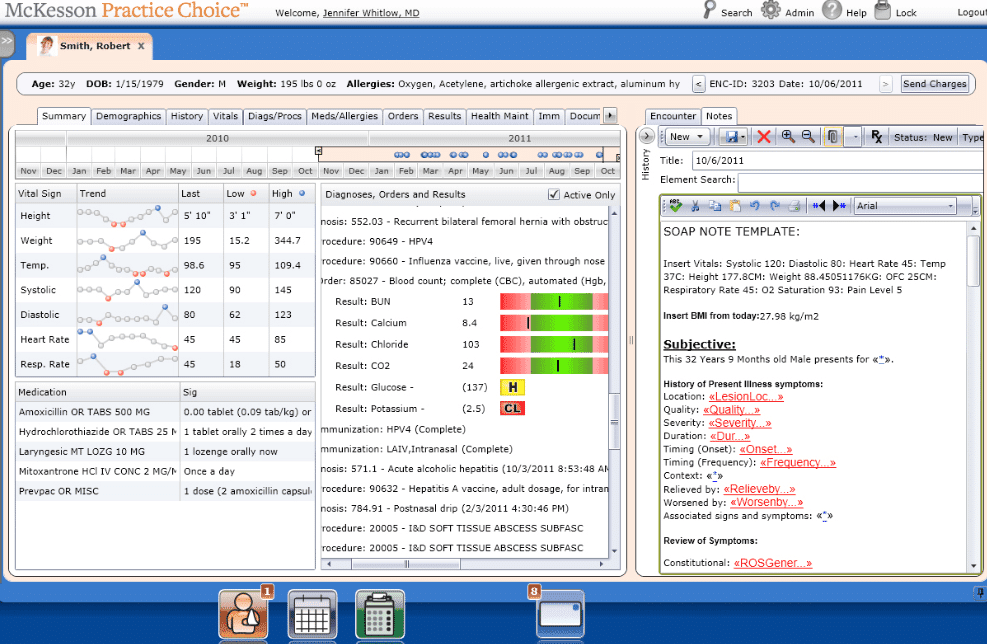
Captura del panel de resumen del paciente en McKesson Oncology Practice Solutions McKesson Oncology Practice Solutions es una herramienta integral de gestión de consultorios de oncología. Su objetivo es agilizar los aspectos administrativos, clínicos y financieros de la atención oncológica, por lo que es la opción más adecuada para centros oncológicos completos que buscan una solución integral.
Por qué elegí McKesson Oncology Practice Solutions: Elegí McKesson Oncology Practice Solutions por su capacidad de abarcar todos los aspectos de la gestión de una consulta oncológica. Su principal fortaleza radica en ofrecer una solución integral, cubriendo tanto tareas clínicas como administrativas. Esto también la convierte en la mejor opción para grandes centros oncológicos que requieren funcionalidades diversas y extendidas.
Características destacadas e integraciones:
Entre las principales características de McKesson Oncology Practice Solutions se encuentran su contenido clínico integrado, la gestión del ciclo de ingresos y sus sólidas capacidades de reporte, además de proporcionar a las consultas las herramientas necesarias para optimizar sus operaciones. También se integra eficazmente con varios sistemas clínicos y de EHR, permitiendo un flujo de información del paciente más fluido a través de diferentes plataformas.
Pros and Cons
Pros:
- Funcionalidades clínicas y administrativas integradas
- Robustas capacidades de reporte
- Amplias integraciones con sistemas
Cons:
- Los precios no están disponibles directamente
- Puede ser abrumador para consultas pequeñas
- Requiere tiempo para una implementación efectiva debido a la gran cantidad de funcionalidades
Learn more about McKesson Oncology Practice Solutions: Mejor para la gestión integral en oncología
- Precio bajo consulta.

Captura de pantalla del sitio web de Varian ARIA Oncology Information System Varian ARIA Oncology Information System es un software integral que integra información de oncología radioterápica, médica y quirúrgica en una historia clínica electrónica (EMR) específica para oncología. Con su conjunto completo de herramientas dedicadas a gestionar los aspectos clínicos, administrativos y financieros de la oncología, es especialmente útil para centros que buscan una solución totalmente integrada.
Por qué elegí Varian ARIA Oncology Information System: Elegí el sistema Varian ARIA por su enfoque integral hacia la atención oncológica. Su capacidad para reunir varias áreas de la oncología en un solo sistema lo distingue. Esta herramienta destaca como una solución completa para centros que buscan una plataforma unificada que pueda optimizar los distintos aspectos del cuidado oncológico.
Funciones y compatibilidades destacadas:
Varian ARIA ofrece una amplia gama de funciones, incluyendo programación, planificación de tratamientos, oncología médica, oncología radioterápica e historiales médicos de pacientes. En cuanto a integraciones, funciona bien con la gama de herramientas y servicios de Varian y ofrece la capacidad de integrarse con PACS, dispositivos de tratamiento y otros sistemas informáticos de salud.
Pros and Cons
Pros:
- Plataforma integral que integra diferentes áreas de la oncología
- Compatible con una amplia variedad de dispositivos y sistemas
- Las funciones cubren los aspectos clínicos, administrativos y financieros de la atención
Cons:
- La información sobre precios no está disponible directamente
- Puede requerir formación significativa debido a la complejidad del sistema
- Puede tener más funciones de las necesarias para consultas más pequeñas
Learn more about Varian ARIA Oncology Information System:
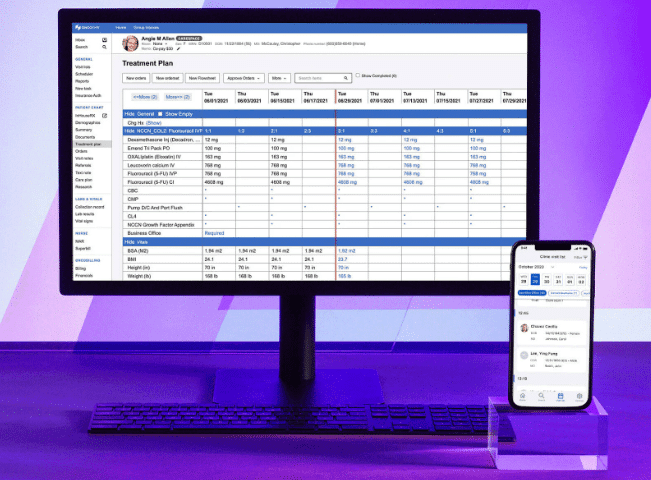
Muestra del resumen del paciente en OncoEMR OncoEMR es un sistema de historia clínica electrónica (EHR) especializado en oncología que optimiza la atención oncológica al integrar una variedad de datos de pacientes y procesos médicos. Además, su capacidad para mejorar los flujos de trabajo clínicos y proporcionar una plataforma unificada para los datos de los pacientes lo hace especialmente adecuado para prácticas oncológicas que buscan mejorar la eficiencia y la atención al paciente.
Por qué elegí OncoEMR: Elegí OncoEMR debido a su enfoque en flujos de trabajo específicos de oncología. Este enfoque lo diferencia de muchos otros sistemas EHR que son más generalistas. Creo que es el más adecuado para prácticas oncológicas porque ofrece funcionalidades específicas que atienden las necesidades únicas de estas prácticas, como la gestión y solicitud integrada de quimioterapia, planes de tratamiento y gestión de ensayos clínicos.
Características destacadas e integraciones:
Las características más destacadas de OncoEMR incluyen su sistema integrado de solicitud y gestión de quimioterapia, planificación de tratamientos y gestión de ensayos clínicos. Estas funciones también contribuyen a un sistema integral de gestión de pacientes que optimiza la atención. Además, OncoEMR se integra con diversos sistemas, incluyendo integraciones con laboratorios, recetas electrónicas y sistemas de facturación, creando una plataforma unificada para toda la información del paciente.
Pros and Cons
Pros:
- Funcionalidades específicas para oncología
- Gestión y solicitud de quimioterapia integradas
- Diversas integraciones con laboratorios, recetas electrónicas y sistemas de facturación
Cons:
- El precio no está disponible directamente
- Puede ser más complejo que los sistemas EHR genéricos
- Utilidad limitada fuera de prácticas oncológicas
Learn more about OncoEMR:
Cómo evalúo los sistemas de historia clínica electrónica oncológica
Divido mi evaluación en tres partes y doy mayor peso a la funcionalidad principal: crear y verificar planes de quimioterapia de múltiples ciclos, y realizar el seguimiento de la estadificación, la patología y la respuesta al tratamiento. Después, busco características destacadas, como las revisiones compartidas del comité de tumores. Por último, considero factores adicionales a las funcionalidades, incluidos la incorporación específica para oncología, un servicio de asistencia atento y precios que se ajusten al tamaño de la consulta.
Funcionalidad principal (requisitos imprescindibles para esta lista)
Cuando selecciono herramientas para mi lista, puntúo cada una en una escala de 0 (no ofrece la funcionalidad) a 5 (sobresale en esta área) para cada funcionalidad principal que se indica a continuación. Después, convierto el total en un porcentaje para ayudar a evaluar la adecuación general de cada herramienta, dando un peso adicional a las funcionalidades que he considerado esenciales.
- Órdenes de quimioterapia (esencial): Busco planes estructurados de múltiples ciclos con cálculos de dosis y pasos de verificación antes de administrar una infusión.
- Documentación oncológica (esencial): Evalúo si los equipos pueden registrar la estadificación, la patología, las características del tumor y la respuesta al tratamiento en campos estructurados a lo largo del tiempo.
- Biblioteca de regímenes: Compruebo la disponibilidad de protocolos actualizables para distintos tipos de cáncer y de opciones para adaptar los regímenes al plan de tratamiento de cada paciente.
- Integración de resultados: Busco resultados estructurados de laboratorio, patología y genómica que los profesionales clínicos puedan revisar y cuya evolución puedan seguir junto con el historial de tratamiento.
- Apoyo a la toma de decisiones oncológicas: Evalúo los cálculos de dosis vinculados al régimen, las comprobaciones de interacciones y las alertas de seguridad que ayudan a realizar la revisión antes del tratamiento.
- Coordinación entre entornos: Considero cómo comparten los equipos los registros pertinentes entre los servicios de infusión, radioterapia, cirugía y los profesionales remitentes.
Una vez que tengo una lista de herramientas que cumplen los criterios, considero qué diferencia a cada plataforma.
Factores diferenciadores (lo que distingue a los proveedores)
Así es como comparo y contrasto los distintos proveedores:
Características destacadas
Compruebo si una plataforma admite revisiones virtuales del comité de tumores, en las que oncólogos, radiólogos y patólogos pueden consultar imágenes compartidas y notas del caso en una única sesión. La búsqueda de coincidencias con ensayos clínicos es otro factor diferenciador: busco sistemas que señalen a los pacientes elegibles según el diagnóstico, la estadificación y los datos genómicos sin necesidad de revisar manualmente las historias clínicas. También evalúo el seguimiento de los resultados comunicados por los pacientes, ya que registrar los síntomas entre las visitas proporciona a los equipos asistenciales señales más tempranas para ajustar el tratamiento antes de una cita programada.
Más allá de las funcionalidades
Busco proveedores que dispongan de especialistas en contenido clínico oncológico durante la puesta en marcha, ya que los errores al crear regímenes en el lanzamiento pueden retrasar el tratamiento y generar riesgos para la seguridad. La interoperabilidad es igualmente importante: compruebo si un sistema se conecta con plataformas de oncología radioterápica, registros de tumores y laboratorios de pruebas genómicas mediante los estándares HL7 o FHIR. También evalúo la flexibilidad de las licencias, porque una consulta que añada sillones de infusión o centros satélite no debería necesitar una reimplementación completa para crecer.
Cómo elegir un EMR oncológico
Es fácil perderse entre largas listas de funciones y estructuras de precios complejas. Para ayudarte a mantener la concentración mientras avanzas en tu proceso específico de selección de software, aquí tienes una lista de factores que debes tener en cuenta:
| Factor | Qué debes tener en cuenta |
|---|---|
| FactorEscalabilidad | Qué debes tener en cuenta¿Puede el software crecer junto con tu consulta? Ten en cuenta el volumen de pacientes, el número de usuarios y la expansión futura. Asegúrate de que pueda gestionar mayores cargas de datos. |
| FactorIntegraciones | Qué debes tener en cuenta¿Funciona con tus sistemas actuales? Comprueba la compatibilidad con herramientas como el software de facturación y los sistemas de laboratorio. |
| FactorPersonalización | Qué debes tener en cuenta¿Puedes adaptarlo a tus necesidades? Busca opciones para ajustar los flujos de trabajo y los campos de datos a fin de que se adapten a los procesos de tu consulta. |
| FactorFacilidad de uso | Qué debes tener en cuenta¿Es intuitiva la interfaz? Asegúrate de que tu equipo pueda utilizarla sin una formación exhaustiva. Un diseño sencillo ahorra tiempo. |
| FactorImplementación e incorporación | Qué debes tener en cuenta¿Cuánto tiempo lleva la configuración? Evalúa el tiempo necesario para la implementación completa y la formación. Busca asistencia durante la transición. |
| FactorCoste | Qué debes tener en cuenta¿Qué opción se ajusta a tu presupuesto? Compara los planes de precios y presta atención a las tarifas ocultas. Evalúa el valor a largo plazo frente a los costes iniciales. |
| FactorMedidas de seguridad | Qué debes tener en cuenta¿Cómo se protegen los datos de los pacientes? Busca cifrado, controles de acceso de los usuarios y cumplimiento de normativas sanitarias como HIPAA. |
| FactorRequisitos de cumplimiento | Qué debes tener en cuenta¿Cumple las normas legales? Asegúrate de que cumple las leyes sanitarias locales y nacionales para evitar sanciones. |
¿Qué es un EMR oncológico?
Un EMR oncológico es un software de historias clínicas electrónicas diseñado específicamente para gestionar la atención de pacientes con cáncer. Los oncólogos, enfermeros y demás personal médico suelen utilizar estas herramientas para hacer un seguimiento de los planes de tratamiento y la evolución de los pacientes. La programación de citas, la integración de la facturación y la gestión de los datos de los pacientes contribuyen a agilizar los flujos de trabajo y a garantizar el cumplimiento normativo. En general, estas herramientas mejoran la atención al paciente al organizar la información y respaldar las decisiones clínicas.
Características
Al seleccionar una HCE oncológica, presta atención a las siguientes características clave:
- Gestión de datos de pacientes: Centraliza los historiales de los pacientes, lo que facilita el acceso y la actualización de la información durante el tratamiento.
- Planificación del tratamiento: Ayuda a diseñar y ajustar los planes de tratamiento en función de las necesidades y la evolución del paciente.
- Programación de citas: Simplifica la reserva y gestión de citas, garantizando un uso eficiente de los recursos y del tiempo.
- Integración de facturación: Se conecta con los sistemas de facturación para facilitar la emisión puntual y precisa de facturas y la gestión de reclamaciones de seguros.
- Seguimiento del cumplimiento normativo: Ayuda a mantener el cumplimiento de las normativas sanitarias, reduciendo el riesgo de problemas legales.
- Flujos de trabajo personalizables: Permite a las consultas adaptar los procesos a sus necesidades específicas y mejorar la eficiencia.
- Seguridad de los datos: Protege la información de los pacientes mediante cifrado y controles de acceso, garantizando la confidencialidad.
- Funciones de telemedicina: Permite realizar consultas a distancia, ampliando el acceso de los pacientes a la atención sanitaria.
- Análisis predictivo: Ofrece información sobre los resultados de los tratamientos, facilitando la toma de decisiones clínicas.
- Portales de pacientes: Proporciona a los pacientes acceso a su información sanitaria y facilita la comunicación con los profesionales sanitarios.
Beneficios
La implementación de una HCE oncológica ofrece varios beneficios para tu equipo y tu empresa. Estos son algunos de los que puedes esperar:
- Mejora de la atención al paciente: La gestión centralizada de datos y la planificación del tratamiento conducen a decisiones clínicas mejor fundamentadas y a mejores resultados para los pacientes.
- Mayor eficiencia: Funciones como la programación de citas y la integración de facturación ahorran tiempo y reducen la carga de trabajo administrativo.
- Mayor cumplimiento normativo: El seguimiento del cumplimiento garantiza el respeto de las normativas sanitarias y minimiza los riesgos legales.
- Mayor seguridad de los datos: El almacenamiento seguro y los controles de acceso protegen la información sensible de los pacientes y mantienen la confidencialidad.
- Mayor accesibilidad: Las funciones de telemedicina amplían el acceso de los pacientes a la atención sanitaria, especialmente para quienes viven en zonas remotas.
- Flujos de trabajo personalizados: Los flujos de trabajo personalizables permiten a las consultas adaptar los procesos para satisfacer necesidades específicas y aumentar la productividad.
- Análisis útiles: El análisis predictivo proporciona información valiosa sobre los resultados de los tratamientos, lo que favorece una toma de decisiones más eficaz.
Costes y precios
La selección de una HCE oncológica requiere comprender los distintos modelos de precios y planes disponibles. Los costes varían en función de las características, el tamaño del equipo, los complementos y otros factores. La siguiente tabla resume los planes habituales, sus precios medios y las características que suelen incluir las soluciones de HCE oncológica:
Tabla comparativa de planes de HCE oncológica
| Tipo de plan | Precio medio | Características habituales |
|---|---|---|
| Tipo de planPlan gratuito | Precio medio$0 | Características habitualesGestión básica de datos de pacientes, programación de citas y asistencia limitada. |
| Tipo de planPlan personal | Precio medio$25-$50/usuario/mes | Características habitualesGestión de datos de pacientes, planificación del tratamiento, integración de facturación e informes básicos. |
| Tipo de planPlan empresarial | Precio medio$50-$100/usuario/mes | Características habitualesPlanificación avanzada del tratamiento, seguimiento del cumplimiento normativo, flujos de trabajo personalizables y asistencia mejorada. |
| Tipo de planPlan corporativo | Precio medio$100+/usuario/mes | Características habitualesFunciones completas de integración, análisis predictivo, telemedicina y gestión exclusiva de cuentas. |
Preguntas frecuentes
¿Puede un EMR oncológico integrarse con otros sistemas sanitarios?
Sí, la mayoría de las soluciones EMR oncológicas ofrecen capacidades de integración. Compruebe si el EMR puede conectarse con sus sistemas de laboratorio, software de facturación y portales para pacientes existentes. El intercambio fluido de datos entre sistemas mejora la eficiencia y reduce los errores de introducción manual. Confirme las opciones de integración con el proveedor y analice sus necesidades específicas durante la demostración.
¿Es difícil migrar los datos a un nuevo EMR oncológico?
La migración de datos puede ser complicada, pero muchos proveedores ofrecen asistencia para facilitar el proceso. Prepárese organizando y depurando sus datos existentes. Elija un proveedor de EMR que ofrezca planes de migración detallados, formación y asistencia. Pregunte por los plazos habituales de migración y las posibles interrupciones del servicio para minimizar las alteraciones en su consulta.
¿Qué medidas de seguridad debe tener un EMR oncológico?
Un EMR oncológico debe contar con medidas de seguridad sólidas, como cifrado, autenticación de usuarios y controles de acceso, para proteger los datos de los pacientes. Asegúrese de cumplir con normativas sanitarias como la HIPAA. Las actualizaciones y auditorías de seguridad periódicas son esenciales para protegerse frente a filtraciones. Analice los protocolos de seguridad con los proveedores para garantizar la seguridad de sus datos.